Families trying dark chocolate in a bake
If a recipe calls for dark chocolate, compare plain bars around 70% cocoa first, then decide whether the children eating the bake would welcome a stronger cocoa flavour.


When a family recipe calls for dark chocolate, a plain 70% cocoa bar is a practical starting point: Lindt describes its 70% bar as suitable for baking, while M&S recommends 70% cocoa for an intense baking flavour. Consider a 72% or 74% bar if the family already enjoys a stronger cocoa flavour. Before a child handles the chocolate or eats the finished bake, check the current wrapper for ingredients and warnings relevant to their allergies; a vegan label is not a substitute.
If a recipe calls for dark chocolate, compare plain bars around 70% cocoa first, then decide whether the children eating the bake would welcome a stronger cocoa flavour.
Check the exact bar’s current ingredients and precautionary allergen statement before a child handles the chocolate or eats the bake. Neither “dark” nor “vegan” establishes suitability for a particular allergy.
A plain bar avoids adding an unplanned filling or flavour to the recipe. Organic or Fairtrade credentials may also matter to your household, but they do not replace an allergen check.
Start with the recipe and the flavour your family wants, then check the bar’s ingredients, allergen information and size.
| Priority | What to check | Your needs |
|---|---|---|
| Cocoa flavour | Check whether the recipe specifies a cocoa percentage. Compare a plain 70% bar with 72% or 74% options if you want a stronger cocoa flavour; M&S recommends 70% cocoa for intense baking flavour. | I want the finished bake to suit the children eating it, rather than choosing the highest cocoa percentage by default. |
| Allergens | Read the current ingredient list and any “may contain” statement for the specific allergen. The Food Standards Agency explains that precautionary allergen labelling indicates possible unintended allergen presence. | If a child has an allergy, I need to check the exact bar before it goes into a shared bake. A vegan label alone does not settle milk-allergy suitability. |
| Ingredients | Check whether the bar is plain or contains fillings or added flavours. Read its ingredient list rather than assuming all dark bars have the same composition. | For brownies or cookies, I may want chocolate without an added flavour or inclusion that the recipe does not call for. |
| Bar size | Compare the bar’s stated weight with the quantity in the recipe. The named single-bar options here include 90g, 100g and 125g formats. | I want to know whether one bar supplies the amount my recipe requires before I start baking. |
Lindt says its 70% bar is made to a vegan recipe but is not suitable for people with a milk allergy.
Check both the ingredients and precautionary allergen statement on the exact current pack before using it for a child with a milk allergy.
M&S describes 70% cocoa dark chocolate as having an intense baking flavour. A higher-percentage bar may not give the flavour your family expects from the recipe.
When the recipe simply calls for dark chocolate, consider a plain 70% bar first; choose a stronger cocoa profile if it suits the recipe and the people eating it.
The warnings differ between bars: Green & Black’s 70% bar may contain nuts and milk, Divine’s 70% bar may contain gluten, milk and nuts, and Montezuma’s FitzRoy may contain milk, nuts and peanuts.
Check the named allergens on the exact wrapper against the child’s allergy before the chocolate is handled or served.
Ingredients and allergen information can change, so a previously purchased wrapper or online listing may not describe the bar in your hand.
Read the physical wrapper again before baking, particularly when preparing food for someone with an allergy.
These are references to specific bars and ranges, not assurances that every product from a brand has the same ingredients or allergen information.
Lindt describes its EXCELLENCE 70% Dark 100g bar as an option for baking and cooking.
Its Organic 70% Dark bar is a 90g single bar; the brand also has a separate cooking bar.
Divine’s 90g 70% Dark Chocolate bar is a plain dark option with Fairtrade ingredient sourcing stated by the brand.
FitzRoy is a 90g organic plain dark bar containing 74% cocoa solids.
M&S lists a 125g Swiss Extra Fine Dark Chocolate bar with at least 72% cocoa solids.
The 70% Dark Chocolate Slab Selector offers a slab format rather than a standard plain single bar.
These single bars cover a 70% cooking-chocolate option, another 70% dark bar and a 72% bar for comparing cocoa flavour. Check the recipe quantity and each current wrapper before baking with children.
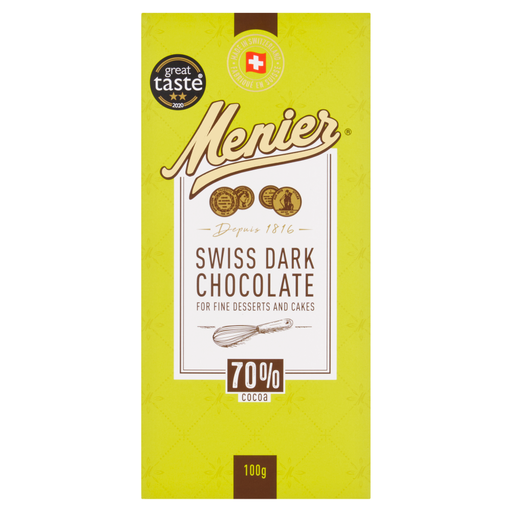 No image available
A 100g cooking-chocolate bar to consider when the recipe calls for dark chocolate. Its listed allergen information says it contains milk and may contain eggs, gluten and tree nuts; check the current wrapper for the child’s specific allergy.
 No image available
A 90g dark bar to compare with the recipe’s required quantity when you want a 70% cocoa option. Its listed precautionary information says it may contain almonds, hazelnuts, other nuts and milk; check the current wrapper before use.
 No image available
A 100g bar to consider if a 72% cocoa option suits the recipe and your family’s taste. Check the current wrapper for its exact ingredients and flavouring: the listed allergen information says it contains soya and may contain milk, nuts, peanuts and cereals containing gluten.
If the recipe calls for dark chocolate without specifying a percentage, a plain 70% bar is a practical starting point. Lindt describes its 70% bar as suitable for baking and cooking, while M&S recommends 70% cocoa for an intense baking flavour. Consider 72% or 74% if the family already enjoys a stronger cocoa flavour.
Not automatically. Lindt states that its 70% bar is made to a vegan recipe but is not suitable for people with a milk allergy. The Food Standards Agency explains that “may contain” labelling indicates possible unintended allergen presence, so check the exact current pack for the child’s allergy.
Yes. M&S advises reading the current label because ingredients and allergen information may change. Check it again before a child handles the chocolate or eats the finished bake.
Yes, when the warning names an allergen relevant to the person eating the bake. The Food Standards Agency says precautionary allergen labelling communicates possible unintended allergen presence; adding the chocolate to a recipe does not remove the need to assess that warning.
Choose a plain bar if the recipe calls for plain dark chocolate and you do not want an added flavour or inclusion. If you prefer a flavoured bar, check its ingredients against the recipe and any allergies before using it.