Bakers melting chocolate
If you are making a glaze, sauce, ganache or batter, buttons give you small pieces without chopping a bar. M&S describes its chocolate buttons as quick and easy to melt.


Choose dark chocolate buttons when you want pieces that are easy to portion and melt; choose drops explicitly sold as bake-stable when pieces need to remain defined in cookies, muffins or brownies. Mini bars offer small portions but are not necessarily baking chips, while a standard bar suits a recipe that specifies chopped chocolate or squares. Match the cocoa percentage to the recipe and check the current pack label for allergens.
If you are making a glaze, sauce, ganache or batter, buttons give you small pieces without chopping a bar. M&S describes its chocolate buttons as quick and easy to melt.
Look for drops explicitly described as bake-stable if the chocolate needs to hold its shape. For a loose brownie batter, smaller chips are also worth considering: King Arthur Baking notes that mini chips can sink more slowly than standard chips.
A standard bar or slab makes sense when the recipe calls for a weighed amount of chopped chocolate or squares placed on top. Lindt UK recipes use 100g of finely chopped 70% chocolate for a glaze and individual 70% squares on shortbread.
Start with what the chocolate must do in the recipe: melt, form visible pieces or provide a measured amount. Then check its cocoa percentage and allergen information.
| Priority | What to check | Your needs |
|---|---|---|
| Melting | Look for buttons if you want small pieces ready to melt; M&S describes buttons as quick and easy to melt. A bar can work when the recipe calls for chocolate chopped by weight, as in Lindt UK’s glaze recipe. | I’m making a sauce, ganache or batter and want to portion the chocolate without chopping it first. |
| Defined pieces | Check for an explicit bake-stable description and the stated baking uses. Callebaut describes its bake-stable dark drops as holding their shape in cookies, muffins, brownies and cakes; small bars and ordinary buttons should not be assumed to do the same. | I want recognisable chocolate pieces after baking, rather than chocolate that melts into the mixture. |
| Portion and size | Check the weight or piece size against the recipe. Divine’s 70% mini bars weigh 4.2g each; for a recipe specifying finely chopped chocolate or a particular chip size, the format may need further preparation. | A small, countable addition would be useful, but I still need the right size of piece for the bake. |
| Cocoa percentage | Follow the recipe’s specified percentage where possible. For example, Montezuma’s lists 60% dark buttons, while Lindt UK recipes use 70% chocolate; these are different ingredients, not an automatic one-for-one flavour match. | If I substitute chocolate, I want to know its cocoa percentage before changing the recipe’s flavour balance. |
| Allergens | Read the ingredients and precautionary statements on the current pack. The Food Standards Agency says allergens present in UK prepacked food must be emphasised in its ingredients list; a description such as “dark” does not establish allergy suitability. | I’m baking for someone with an allergy and need to assess the particular product before using it. |
| Even distribution | Consider the batter and chip size if pieces tend to sink. King Arthur Baking says mini chips can sink more slowly than standard chips in brownie batter; this is separate from whether a chip is bake-stable. | For brownies, I want the pieces spread through the bake rather than concentrated at the bottom. |
A mini bar, button or chopped bar is not necessarily intended to remain a defined piece in the oven. That matters when visible inclusions are part of the recipe.
For cookies, muffins or brownies that need recognisable pieces, check that the product is explicitly described as bake-stable and suitable for that baking use.
Dark products can have different cocoa percentages. Montezuma’s 60% buttons and the 70% chocolate used in Lindt UK recipes should not be treated as identical ingredients.
Check the percentage the recipe specifies before substituting another chocolate.
A dietary description does not replace the ingredients list or precautionary allergen statement. The M&S 70% dark bar, for example, is marked as unsuitable for people with milk, nut or peanut allergies.
Check the current pack for the particular chocolate before baking for someone with an allergy.
Chocolate pieces may settle before the batter sets, changing where they appear in the finished brownie.
If the recipe permits, consider smaller chips. King Arthur Baking reports that mini chips can sink more slowly than standard chips.
These examples illustrate different chocolate formats; a brand name alone does not tell you whether a particular product will melt readily or hold its shape in a bake.
Divine lists 70% dark chocolate mini bars in a bag of 100, with each bar weighing 4.2g.
Montezuma’s lists Giant 60% Dark Chocolate Buttons and describes its organic button range as suitable for baking.
M&S describes chocolate buttons as quick and easy to melt and lists a 70% dark chocolate bar.
Lindt UK recipes use EXCELLENCE 70% Cocoa Dark Chocolate both finely chopped for a glaze and as squares on shortbread.
Hotel Chocolat lists 70% and 85% dark chocolate slabs in its UK dark-chocolate range.
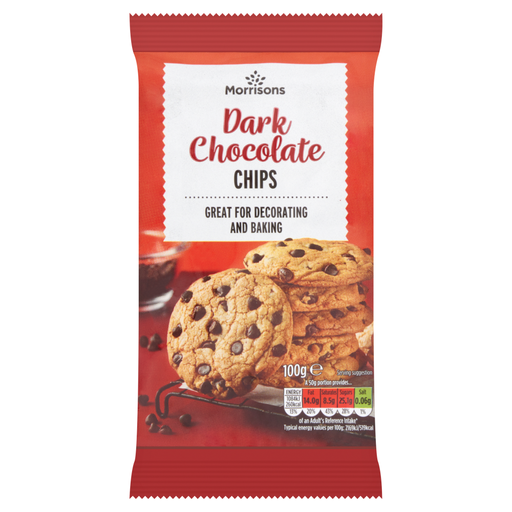
These options cover chocolate chips for baking and decorating alongside two standard dark chocolate bars for recipes where a bar suits the preparation. Check the recipe before treating any of them as bake-stable drops.
 No image available
Described for baking and decorating, these chips offer a ready-sized alternative to chopping a bar. The product description states at least 50% cocoa solids and lists soya and a precautionary milk warning. If your recipe needs a particular chip size or pieces that remain defined after baking, check those requirements before choosing them.
 No image available
This 100g cooking-chocolate bar is described for baking and melting, including sauces, rather than as a pre-portioned mini. Its description states at least 70% cocoa solids and that it contains milk and may contain eggs, gluten and tree nuts. Check the current pack before use.
 No image available
This standard 90g bar is an option when a recipe allows chocolate to be portioned or chopped rather than requiring minis or ready-sized chips. Its description states at least 70% cocoa solids and mentions dessert use; check the recipe for the preparation it requires. The product information warns of possible milk and nut traces, so read the current pack before use.
No. Mini bars provide small portions, but that does not mean they will hold their shape in the oven. If the recipe needs defined pieces, look for drops explicitly sold as bake-stable; Callebaut describes its bake-stable dark drops as retaining their shape in cookies, muffins, brownies and cakes.
Buttons are a practical starting point when you want to avoid chopping a bar. M&S describes chocolate buttons as quick and easy to melt in a microwave or double boiler; follow the recipe’s melting instructions for the quantity you need.
Check whether the recipe depends on the specified cocoa percentage before substituting. Montezuma’s dark buttons are listed at 60%, whereas Lindt UK recipes give examples using 70% chocolate, so the ingredients are not identical.
No. Check the particular product’s ingredients and precautionary allergen statement. A dietary description does not tell you everything about allergens that may be present or mentioned on the pack.
Read the current physical pack for the exact chocolate you plan to use, including its ingredients and precautionary statements. The Food Standards Agency says allergens present in UK prepacked food must be emphasised in the ingredients list; the product’s label is the relevant check before you bake.