Families baking biscuits or traybakes
Buttons and baking chunks let children help measure or add chocolate without someone first unwrapping each piece. Choose between smaller pieces and larger chunks according to the recipe.


For a recipe needing small, unwrapped pieces, choose plain dark chocolate buttons or chips; purpose-labelled chunks suit bakes where you want larger pieces. Individually wrapped mini bars make more sense when separate portions matter, but add unwrapping and possibly chopping before baking. Check the exact pack’s cocoa content and allergens, and do not assume a small piece is suitable for a young child to eat.
Buttons and baking chunks let children help measure or add chocolate without someone first unwrapping each piece. Choose between smaller pieces and larger chunks according to the recipe.
Individually wrapped mini bars can be divided between activity kits before baking. Divine’s examined pack contains 100 bars of 4.2 g each, though each bar must be unwrapped before it goes into a recipe.
Read the current pack’s ingredients and precautionary allergen statements for the exact chocolate you plan to use. Products described as dark or vegan can still carry milk warnings, and statements differ between products.
Start with the pieces your recipe calls for, then compare cocoa content and the current pack label before deciding what children will help handle or eat.
| Priority | What to check | Your needs |
|---|---|---|
| Format | Check whether the recipe needs small pieces, larger chunks or melted chocolate. Wrapped mini bars need unwrapping and may need breaking or chopping. | I’d like children to help add chocolate without extensive preparation, or I need separate portions for a group. |
| Cocoa content | Read the stated cocoa-solids percentage and compare it with the recipe. Marks & Spencer’s baking guidance says cocoa percentage and milk content influence flavour; its examined chunks state 47% minimum cocoa solids, while Divine’s examined mini bars state 70%. | I want the chocolate’s flavour to fit the bake rather than assuming every product labelled dark will taste alike. |
| Allergens | Read the ingredients, highlighted allergens and any “may contain” statement on the current pack. Check the exact product rather than relying on “dark” or “vegan” wording. | Someone eating the finished bake has an allergy, so I need to assess the chocolate and the other ingredients before serving it. |
| Serving young children | Consider the size, shape and texture of food offered for eating. NHS guidance identifies firm foods and small round foods as potentially more risky for babies and young children and advises supervision while they eat. | A child may want to taste pieces during baking; I cannot use the word “mini” as a serving-safety check. |
Filled or flavoured pieces can add ingredients and textures the recipe did not call for. Hotel Chocolat’s dark range, for example, includes batons alongside pralines and truffles.
For melting or mixing through dough, check that the product is plain chocolate in a format suited to the recipe, and read its ingredients before substituting an assortment.
The examined M&S chunks state 47% minimum cocoa solids; the examined Divine mini bars state 70%. Marks & Spencer’s baking guidance says cocoa percentage and milk content affect flavour.
Check the recipe and the pack’s cocoa percentage before switching formats, particularly when the recipe specifies a particular type of dark chocolate.
Divine’s examined mini bars may contain milk, and Lindt says its examined vegan-recipe 70% bar is not suitable for people with a milk allergy because it is made in a facility using milk.
For anyone with an allergy, assess the ingredients and allergen statements on the exact current pack.
According to NHS guidance, the size, shape and texture of food matter for babies and young children, and small round or firm foods can present greater choking risks.
Keep the baking task separate from tasting, supervise young children while they eat and consider the food served in light of each child’s eating ability.
Its dark chocolate buttons are a small-piece option; Montezuma’s describes its button range as suitable for baking.
Its Dark Chocolate Chunks are described by Marks & Spencer as an ingredient for home bakes rather than an individually portioned mini bar.
Its individually wrapped dark mini bars suit separating pieces for a group, rather than adding many unwrapped pieces to a bake.
Its examined Excellence Dark 70% bar is described by Lindt as suitable for baking and cooking when a recipe calls for a bar rather than ready-to-use small pieces.
Its dark range includes batons and slabs as well as filled and flavoured products, so the exact item matters when choosing chocolate for a recipe.
These options cover chips for adding to bakes and a cooking-chocolate bar for recipes that call for melting or prepared pieces.
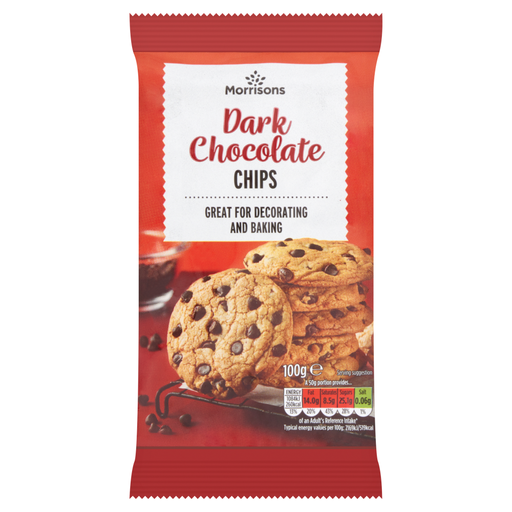 Image unavailable
The chip format suits a recipe calling for small chocolate pieces rather than a bar to break up. Check the current pack for soya and a possible milk warning before serving the bake.
 Image unavailable
This 100 g cooking-chocolate bar is an option when the recipe calls for 70% cocoa chocolate to melt or prepare before children add it. It is not a ready-portioned mini format. Check the current pack for milk and precautionary allergen statements.
Yes, when a recipe needs small, unwrapped pieces that children can help measure or add. Montezuma’s describes its button range as suitable for baking; choose chunks instead if the recipe calls for larger pieces. Button shape alone does not establish whether a piece is suitable for a young child to eat.
Yes, but unwrap them first and check whether the recipe requires them to be broken into smaller pieces. Divine’s examined 70% dark mini bars come as 100 separate 4.2 g portions, which may be useful when dividing chocolate between activity kits.
Not automatically. The examined Divine mini bars and Montezuma’s buttons carry precautionary milk statements, while Lindt says its examined vegan-recipe bar is not suitable for people with a milk allergy. Check the exact current pack.
Read the ingredient list, highlighted allergens and any precautionary “may contain” statement on the specific pack. Chocolate products differ, and the current physical label is the decision point if someone eating the bake has an allergy.
Do not decide from the word “mini” alone. NHS guidance says size, shape and texture affect choking risk for babies and young children, and advises supervising them while they eat. Consider the individual child’s eating ability and the form in which the food is served.