What matters when choosing?
Start with the recipe’s cocoa percentage and intended use, then check the pack for ingredients that matter to everyone eating the finished bake.
| Priority | What to check | Your needs |
|---|
| Cocoa percentage |
Compare the stated cocoa solids with the recipe. Menier’s cooking bar is at least 70% cocoa, according to Menier; Tesco lists Dr. Oetker’s baking bar at 72%. |
If the recipe specifies 70%, I want a bar close to that figure rather than any product labelled “dark”. |
| Bar type |
Look for a plain bar and a stated baking or melting use. Check whether a wafer, caramel, nougat or nut filling is part of the product. |
For a brownie batter or ganache, I want the chocolate the recipe calls for, not extra snack-bar components. |
| Allergens |
Read the current ingredients and “may contain” wording for the exact bar. Check the other ingredients in the bake as well. |
If a child or guest has an allergy, I need to assess the whole recipe before preparing or sharing it. |
| Sugar information |
Compare sugars per 100g or per serving on current packs, and account for sugar, icing and fillings elsewhere in the recipe. Cocoa percentage alone does not give the finished bake’s sugar content. |
I want to understand what is in the complete bake, rather than assuming that a dark wrapper tells me its sugar content. |
Brand references for dark-chocolate baking
These examples describe particular bars, not every product made by each brand.
Menier
Menier describes its 100g dark bar as cooking chocolate for desserts and cakes.
- At least 70% cocoa solids, according to Menier.
- Contains milk-derived butterfat and may contain egg, gluten and tree nuts; check the current pack.
Dr. Oetker
Tesco describes the 100g Extra Dark 72% bar as created for bakers and labelled for smooth melting.
- A dedicated baking-bar option marked 72% cocoa solids.
- Contains soya and may contain milk; check the current pack if either matters to your household.
Green & Black’s
Tesco lists a 150g organic cooking chocolate with 70% cocoa solids.
- The listed cooking bar matches a recipe asking for 70% cocoa.
- The cooking bar may contain nuts and milk; its label should be checked before sharing a bake.
Lindt
Lindt Excellence 70% is a plain dark eating bar that Lindt also describes for baking and cooking projects.
- At least 70% cocoa solids, according to Lindt.
- Lindt says this vegan-recipe bar is not suitable for people with a milk allergy; it may also contain nuts, soya and sesame.
Cadbury
Bournville is a familiar dark eating bar, but it has a different cocoa percentage from the 70% cooking bars discussed here.
- An option when a recipe calls for Bournville or does not specify 70% chocolate.
- Dunnes Stores lists Bournville at a minimum of 36% cocoa solids and identifies milk, soya and a may-contain-nuts statement.
Dark chocolate options on Joybuy
These bars cover a dedicated 70% cooking chocolate and two plain dark bars near the cocoa percentage used in the recipes discussed here. Check each product’s current pack against your recipe and the needs of everyone eating it.
 No image available
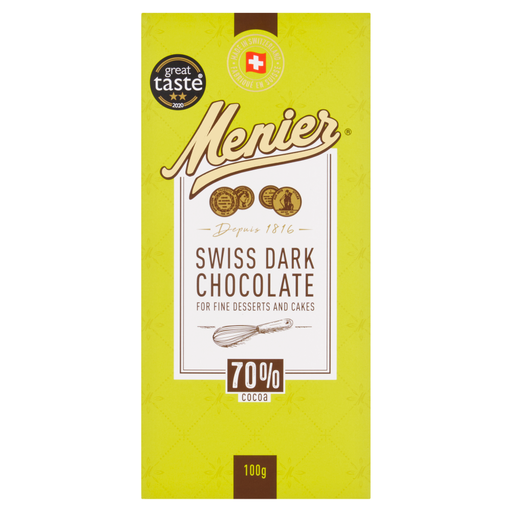
Menier Dark Cooking Chocolate 70% Cocoa 100g
A cooking bar for a recipe calling for around 70% dark chocolate; Menier describes its dark chocolate for cakes and desserts. It contains milk and may contain egg, gluten and tree nuts, so check the current pack before baking for others.
View on Joybuy
 No image available
Morrisons The Best Dominican Republic 72% Cocoa Dark Chocolate 100g
A plain 72% cocoa bar to consider when the recipe allows a dark eating bar close to 70%; its product information describes baking use. It contains soya and may contain gluten, milk, nuts and peanuts. Check the current pack before sharing the bake.
View on Joybuy
 No image available
Green & Black’s Dark Chocolate 70% 90g
A plain 70% dark bar for a recipe that permits an eating bar rather than a dedicated cooking chocolate. Check its suitability for the recipe’s intended preparation. It may contain almonds, hazelnuts, other nuts and milk; read the current pack before sharing.
View on Joybuy
Questions about baking with dark chocolate
What cocoa percentage should I use for a children’s baking recipe?
Follow the percentage in the recipe. For one specifying 70%, a plain bar marked 70% is the closest match among the examples from Menier, Green & Black’s and Lindt; Tesco also lists a 72% Dr. Oetker baking bar. A 90% bar has a different cocoa percentage, so check whether the recipe accommodates that change.
Can a dark KitKat or a filled snack bar replace plain baking chocolate?
Not as a like-for-like ingredient: KitKat UK describes its dark bar as chocolate-covered wafer, and Snickers UK lists peanuts and other filling ingredients. Use a snack bar when the recipe specifically calls for its components; otherwise, choose the plain chocolate specified.
How should I check allergens when baking with children?
Read the exact chocolate pack’s ingredients and precautionary statements, then check the other ingredients in the recipe before preparing or sharing the bake. Do not assume a dark bar is free from milk or nuts: Lindt, for example, says its vegan-recipe Excellence 70% bar is not suitable for people with a milk allergy.
Which baking steps need an adult’s help?
An adult should handle the oven, hot pans and hot melted chocolate. The NHS also advises washing hands before preparing food; make sure children’s hands and the preparation equipment are clean before they handle ingredients.
Does dark chocolate make the finished bake low in sugar?
No such conclusion follows from the word “dark” or the cocoa percentage. Compare sugar information on the chocolate’s current pack and consider the amounts of sugar, icing and fillings in the whole recipe when assessing the finished bake.


