Hosts with mixed guest preferences
A plain bar around 70–75% cocoa leaves out fruit, biscuit and other inclusions that guests may not expect. Cocoa percentage is a starting clue, though the flavour of individual bars still differs.


For mixed adult guests, a plain bar around 70% cocoa is a practical starting point: it keeps the choice focused on dark chocolate without assuming everyone wants added flavours or a higher-cocoa bar. Choose fruit, nibs or other inclusions when guests welcome them, and check the current pack’s allergen information before serving anyone with a food allergy.
A plain bar around 70–75% cocoa leaves out fruit, biscuit and other inclusions that guests may not expect. Cocoa percentage is a starting clue, though the flavour of individual bars still differs.
Consider a plain bar in the 74–75% range when guests actively want a more pronounced cocoa flavour. The researched Montezuma’s FitzRoy and M&S bars offer examples with different stated flavour profiles.
Screen the exact bar and current pack against each guest’s allergens. A vegan description does not cancel a milk-related precautionary statement: Divine’s plain 70% bar may contain milk, while Lindt says its Excellence 70% bar is not suitable for people with a milk allergy.
Start with the guests’ flavour preferences, then check inclusions and the exact pack before deciding what to serve.
| Priority | What to check | Your needs |
|---|---|---|
| Cocoa and flavour | Compare the stated cocoa percentage and the maker’s flavour description. A 70% bar and a 74–75% bar need not taste alike; percentage alone cannot establish which guests will prefer. | For a mixed group, I’d start with a plain bar around 70%. If my guests ask for a more cocoa-led tasting bar, I’d consider the higher-cocoa options. |
| Texture and inclusions | Check whether the bar is plain or contains nibs, fruit, praline or biscuit. Montezuma’s describes cocoa nibs as adding crunch to Lordy Lord; Hotel Chocolat describes praline, biscuit and cherry in its Better Way Bar. | I’d choose added flavours only if the guests want them, rather than assuming an inclusion bar will suit everyone. |
| Allergens | Read the current pack’s ingredients and precautionary allergen statements for the exact bar. Check those statements even when a product is described as vegan. | If a guest has a food allergy, I need a bar whose current labelling is suitable for that guest, not one selected by cocoa percentage or a vegan claim alone. |
| Ingredient preferences | Look for the particular organic, Fairtrade or palm-oil-free statement that matters to you, and check what the statement applies to. These descriptions do not establish flavour or allergen suitability. | I may want a bar with a particular sourcing or ingredient claim, while still checking whether its flavour and labelling suit the gathering. |
Divine describes its plain 70% bar as vegan but says it may contain milk. Lindt says its Excellence 70% bar is made to a vegan recipe but is not suitable for people with a milk allergy because it is made in a facility using milk.
For a guest with an allergy, check the current pack for the relevant ingredient and precautionary statements before choosing a bar.
Cocoa nibs change the texture; praline, biscuit and cherry change both flavour and the ingredients that need checking.
Choose a plain bar when preferences are unknown. Pick an inclusion bar when its flavours and ingredient information suit the guests being served.
England’s 2014 school-food regulations define chocolate as confectionery. Separately, Department of Health and Social Care guidance addresses promotion and placement of certain high-fat, sugar or salt products by businesses operating in and selling to England; it is not a general ban on buying chocolate.
For a school-provided event in England, check the Department for Education’s school-food standards for what may be supplied during the school day. Do not use retail-promotion rules to decide the school menu.
Divine’s plain 70% dark chocolate 90g bar is an option when a straightforward cocoa profile and its stated ingredient claims matter.
Lindt Excellence Dark 70% 100g is a plain bar that Lindt describes through its cocoa, fruit and vanilla notes.
The brand offers two distinct styles in this selection: plain FitzRoy Organic 74% and Lordy Lord 70% with cocoa nibs.
The Better Way Bar takes an inclusion-led route rather than serving as a plain dark-chocolate tasting bar.
M&S offers a plain 75% single-origin 100g bar for guests interested in its stated cocoa and flavour profile.
These single bars include plain options around 70% cocoa, a raspberry bar and two 85% bars for guests who specifically prefer that higher cocoa percentage. Check the current pack’s allergen information before serving.
 No image available
A plain bar to consider when guests prefer dark chocolate without inclusions. The listing identifies soya and says the bar may contain gluten, milk, nuts and peanuts; check the current pack against guests’ allergies.
 No image available
A plain 70% bar for guests who do not want added fruit or crunchy inclusions. The listing says it may contain milk and nuts; check the current pack if either matters to a guest.
 No image available
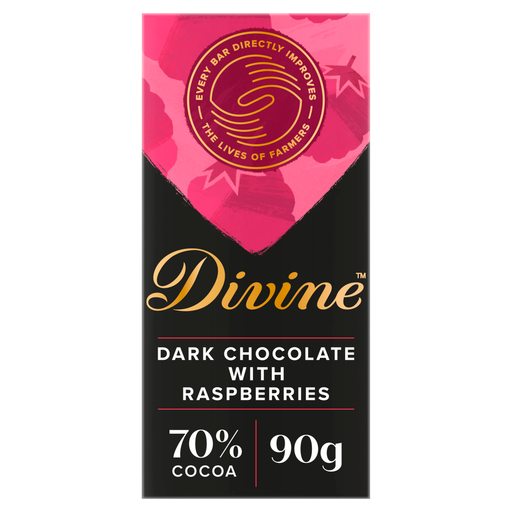
Consider this bar when guests welcome raspberry with their dark chocolate rather than expecting a plain bar. The listing’s vegan-friendly wording conflicts with its milk allergen information; it also says the bar may contain gluten and nuts. Check the current pack for dietary and allergy suitability.
 No image available
A plain 85% bar to consider when guests specifically ask for a higher-cocoa choice, rather than as the default for an unknown group. The listing says it may contain almonds, hazelnuts and milk; check the current pack.
 No image available
Another plain 85% option for guests who deliberately prefer a higher cocoa percentage. The listing names nuts, milk, soya and sesame in its allergen information; check the current pack before serving.
Start by considering a plain bar around 70% cocoa. Divine and Lindt each describe a 70% bar with cocoa flavour alongside more rounded notes; move to a higher-cocoa or inclusion bar when you know guests prefer it. Percentage alone cannot predict everyone’s preference.
Not necessarily. Divine says its plain 70% vegan bar may contain milk, and Lindt says its vegan-recipe Excellence 70% bar is not suitable for people with a milk allergy. Check the exact current pack rather than relying on the vegan description.
Use the Department for Education’s school-food standards when planning what the school will provide during the school day. England’s 2014 school-food regulations define chocolate as confectionery; the separate HFSS retail-promotion rules do not determine what belongs on a school menu.
No. Department of Health and Social Care guidance describes restrictions on promotion and placement of certain high-fat, sugar or salt foods by businesses operating in and selling to England. It does not describe a general prohibition on consumers buying or serving chocolate.
Follow the instructions on its current pack. M&S, for example, says to store its 75% bar in a cool, dry place away from sunlight; check the instructions for the bar you choose.