Coffee-focused dark chocolate sharers
A solid bar with a stated cocoa percentage gives guests a clear starting point for tasting chocolate alongside espresso or another coffee. Check the pack size if several people will be sharing it.


For a cocoa-led accompaniment, choose a solid bar with a stated cocoa percentage; Lindt lists Double Espresso as a pairing for its EXCELLENCE Dark 70% bar. A larger Cadbury Bournville Classic Dark block gives you more chocolate to break and share, although the cited product pages do not state its cocoa percentage. KitKat 4 Finger Dark offers crisp wafer fingers instead of a solid dark bar. Check the current pack for ingredients, allergens and nutrition before serving guests.
The choice depends on whether the chocolate is the focus of the coffee catch-up, something familiar to pass around, or an option that needs careful checking for guests.
A solid bar with a stated cocoa percentage gives guests a clear starting point for tasting chocolate alongside espresso or another coffee. Check the pack size if several people will be sharing it.
Cadbury Bournville Classic Dark comes in 100 g and 180 g blocks. The larger block is an option when you want to break off pieces for a group rather than put out individual bars.
Ask guests about their requirements and check each current pack before serving. A dark label does not establish whether a product contains milk, wheat or nuts, or carries a precautionary allergen statement.
Start with the type of chocolate your guests would enjoy, then check how it can be shared. Read the exact pack when ingredients, allergens or nutrition affect the choice.
| Priority | What to check | Your needs |
|---|---|---|
| Cocoa and coffee | For a solid tasting bar, look for a stated cocoa percentage. Check any pairing suggestion for the exact product: Lindt lists Double Espresso with EXCELLENCE Dark 70%. A dark coating on a wafer is a different format. | I want the chocolate itself to be part of the coffee tasting, rather than choosing a wafer snack simply because its coating is dark. |
| Sharing format | Compare pack weights and how the bar divides. Cadbury lists Bournville Classic Dark in 100 g and 180 g blocks; KitKat lists four wafer fingers in its 41.5 g Dark bar. | For a group, I need enough pieces to put out. Defined fingers might suit a small accompaniment, while a block lets me break off shared pieces. |
| Guest requirements | Read the current ingredient list and any precautionary allergen wording. Lindt says its EXCELLENCE Dark 70% has a vegan recipe but is not suitable for people with a milk allergy; KitKat Dark contains wheat and milk ingredients. | If a guest has an allergy or dietary requirement, I cannot decide from the word “dark” or a vegan-recipe description alone. |
| Nutrition and portions | Compare nutrition values on the same basis, such as per 100 g or per stated serving. Check the portion size and any front-of-pack traffic-light label on the current pack. | I want to know what a piece or bar represents before putting it out with coffee, rather than assuming a dark label tells me its sugar or calorie content. |
KitKat 4 Finger Dark is wafer covered in dark chocolate. It does not serve the same purpose as a solid bar with a stated cocoa percentage, such as Lindt EXCELLENCE Dark 70%.
If cocoa content matters to your coffee pairing, check the percentage and product type. Choose wafer fingers when their crisp texture and portions are what you want.
Lindt says its vegan-recipe EXCELLENCE Dark 70% is not suitable for people with a milk allergy, while KitKat Dark contains milk and wheat ingredients.
Ask about requirements before serving, then read the ingredient list and any “may contain” statement on the exact pack.
One 41.5 g KitKat four-finger bar and a 180 g Cadbury Bournville block provide different amounts and ways to serve chocolate to a group.
Match the pack weight and number of pieces to your guests; use more than one small bar if each person needs a defined portion.
Recipes and stated serving sizes differ, so a dark coating or higher cocoa percentage does not by itself tell you a product’s sugar or calorie values.
Read the current nutrition panel and compare like with like—per 100 g or per stated serving. Front-of-pack traffic-light labels can provide another way to view the labelled values.
These examples show why a brand name alone is not enough: check the particular bar for its chocolate type, format and ingredients.
Cadbury’s Bournville Classic Dark is a solid dark-chocolate block listed in 100 g and 180 g formats.
Lindt EXCELLENCE Dark 70% is a 100 g solid bar with 70% minimum cocoa solids; Lindt lists Double Espresso as a pairing.
KitKat 4 Finger Dark is a 41.5 g wafer bar with four fingers covered in dark chocolate.
Galaxy’s cited 100 g bar is milk chocolate, not a dark-bar option for this choice.
The cited Mars 40 g caramel bar is labelled milk chocolate rather than solid dark chocolate.
The cited Snickers 40 g bar combines milk chocolate with peanuts, caramel and nougat.
These bars offer solid dark-chocolate options for serving with coffee, including bars with stated cocoa percentages and a rum-and-raisin variation. Compare the flavour, pack size and current label against what your guests need.
 No image available
A solid dark bar to consider when guests want a stated cocoa percentage alongside coffee. The product name specifies 72% cocoa and a 100 g bar. Check the current pack’s allergen wording before sharing.
 No image available
Consider this 90 g bar if guests would prefer raspberry with their dark chocolate and coffee. Its name states 70% cocoa. Check the current ingredients and allergen information for dietary suitability rather than relying on a vegan-friendly description.
 No image available
This 90 g solid bar is an option when a stated 70% cocoa percentage matters more than a divided wafer format. Check the current pack’s dairy and nut wording before offering it to guests with allergies.
 No image available
For guests who specifically want an 85% cocoa bar, this 100 g format offers a different stated percentage from the 70% options here. Do not transfer the coffee-pairing guidance or allergen details for Lindt’s separate EXCELLENCE Dark 70% bar to this product; check this pack.
 No image available
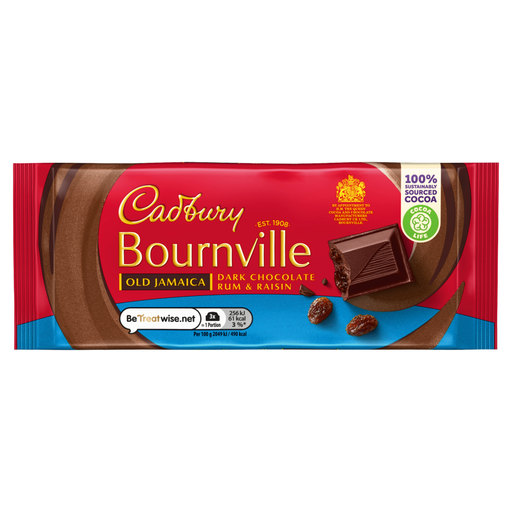
This 100 g bar offers a rum-and-raisin variation for guests who want a flavoured dark chocolate with coffee. Check the pack if a particular cocoa percentage matters, and confirm the ingredients are suitable for everyone you are serving.
Choose a stated percentage if a cocoa-led solid bar is the aim, rather than treating every dark-labelled product as equivalent. Lindt states 70% minimum cocoa solids for EXCELLENCE Dark 70% and lists Double Espresso as a pairing. A Bournville Classic Dark block is another sharing format, but check its pack if you need to confirm a particular cocoa percentage.
No. Lindt describes EXCELLENCE Dark 70% as made to a vegan recipe but says it is not suitable for people with a milk allergy. Ask about the guest’s requirement and check the exact current pack; “dark” and “vegan recipe” do not establish allergy suitability.
Check the ingredient list and precautionary statement on every pack you intend to serve. KitKat Dark contains wheat and milk ingredients, while the cited Snickers bar contains peanuts, milk, soya and egg white powder and may contain other nuts. Lindt’s EXCELLENCE Dark 70% carries its own milk-allergy warning. The Food Standards Agency explains that precautionary allergen labelling communicates possible unintended allergen presence.
Compare the same measure—such as values per 100 g—or account for each product’s stated serving size. Read the current nutrition panel rather than inferring values from the word “dark”. A front-of-pack traffic-light label, where present, provides another view of the labelled nutrition information.