An individually wrapped dark chocolate bar can be a small treat alongside breakfast, but it is a poor substitute for food chosen to provide longer-lasting energy: the British Heart Foundation advises choosing foods rich in fibre and complex carbohydrates for that purpose. If cocoa content matters, check the stated cocoa percentage rather than the word “dark”, then compare nutrition per 100g and check the current pack for allergens.
Who might choose a morning chocolate bar?
Commuters wanting a small portable treat
An individually wrapped bar makes the portion easy to recognise when you are leaving in a hurry. For longer-lasting morning energy, the British Heart Foundation advises choosing foods rich in fibre and complex carbohydrates rather than relying on chocolate.
Shoppers looking for a stated cocoa percentage
If high cocoa content drives your choice, look for a cocoa percentage on the product label. Lindt lists at least 70% cocoa solids for its EXCELLENCE Dark 70% bar, while Galaxy describes its Fusions dark chocolate as 70% cocoa.
Shoppers checking food allergens
Read the ingredients and precautionary allergen statement on the current pack. The relevant KitKat dark wafer product contains milk and wheat; Lindt says its EXCELLENCE Dark 70% bar may contain nuts, milk, soya and sesame.
What should you check before choosing?
Start with the role the bar will play in your morning, then check cocoa content, the amount you plan to eat and the current allergen label.
| Priority | What to check | Your needs |
|---|
| Breakfast role |
Decide whether the bar is an accompaniment or the main food you are taking. The British Heart Foundation recommends fibre- and complex-carbohydrate-rich foods for longer-lasting energy. |
I want something small to take with breakfast, rather than counting on chocolate alone to carry me through the morning. |
| Cocoa content |
Look for a stated cocoa or cocoa-solids percentage. KitKat says dark chocolate makes up 67.1% of its finished 2 Finger Dark wafer bar; that is not a cocoa-solids percentage. |
If a high-cocoa bar is the point of the purchase, I want the cocoa percentage stated clearly, not just the word “dark”. |
| Portion and nutrition |
Compare sugars and saturated fat per 100g across different bars, then check the amount you intend to eat. The NHS advises per-100g comparisons because serving sizes vary and classifies more than 5g saturates per 100g as high. |
A single wrapped bar gives me a defined portion; with a larger bar, I would decide how much to take before leaving. |
| Allergens |
Read the current ingredients and any “may contain” statement for the exact product. Do not assume dark chocolate is free from milk, wheat, nuts, soya or sesame. |
Where an allergen matters to me, I need the current pack information rather than an assumption based on the type of chocolate. |
Common mistakes to avoid
-
Taking “dark” to mean high cocoa solids
KitKat states that dark chocolate is 67.1% of its finished 2 Finger Dark wafer bar. That describes how much of the bar is chocolate, not the cocoa-solids percentage within that chocolate.
If high cocoa content matters, check for a separately stated cocoa percentage on the exact product.
-
Relying on chocolate for a sustaining breakfast
The British Heart Foundation says chocolate can give a quick energy lift followed by a dip.
Treat a small bar as an accompaniment. If longer-lasting energy is your aim, choose a breakfast food rich in fibre and complex carbohydrates.
-
Comparing nutrition by the bar alone
One 20.7g wafer bar and one 100g chocolate bar represent different amounts of food, even though each is sold as a bar.
Follow NHS advice to compare nutrition per 100g first, then use the serving or pack weight to assess the portion you will actually take.
-
Assuming dark chocolate is free from allergens
KitKat 2 Finger Dark contains milk and wheat. Lindt states that its EXCELLENCE Dark 70% bar may contain nuts, milk, soya and sesame.
Check the current physical pack, including precautionary statements, before eating a product when allergens matter.
Relevant dark chocolate ranges
These ranges illustrate different ways to choose a dark bar; each product’s stated cocoa content, portion and label still need to be considered separately.
KitKat
The 2 Finger Dark wafer bar offers a defined 20.7g serving for a portable treat.
- KitKat UK lists 104kcal, 9.2g sugars and 2.9g saturated fat per 20.7g bar.
- Its stated 67.1% dark chocolate is a proportion of the finished wafer bar, not a cocoa-solids claim; the product contains milk and wheat.
Lindt
EXCELLENCE Dark 70% is a 100g bar with a stated minimum of 70% cocoa solids.
- Lindt Shop UK lists 29g sugars and 24g saturated fat per 100g, allowing a per-100g nutrition comparison.
- The larger bar needs portioning for a small morning serving. Lindt says it may contain nuts, milk, soya and sesame.
Galaxy
Galaxy Fusions Dark Chocolate with 70% Cocoa has a stated 70% cocoa content.
- The cocoa percentage is explicit on Galaxy UK’s Fusions product page.
- Check the specific pack’s serving size, nutrition and ingredients before choosing it for a morning portion.
Cadbury
Bournville Classic Dark is a 100g dark chocolate bar that Cadbury describes as vegetarian-friendly.
- It is an identifiable conventional dark-bar option for shoppers choosing by product and flavour.
- If a particular cocoa percentage or nutrition value determines your choice, check the current pack before buying.
Joybuy dark chocolate options
These options include larger dark chocolate bars to portion yourself and a KitKat dark wafer multipack with eight defined 20.7g bars. A chocolate bar remains an accompaniment rather than a substitute for a more sustaining breakfast.
 No image available
Green & Black's Dark Chocolate Dark 70% 90g
The 90g format is one to portion before taking a small piece on the go; individual wrapping is not stated.
Check the current pack if almonds, hazelnuts, other nuts or milk matter to you: the product information carries precautionary warnings for them.
View on Joybuy
 No image available
Morrisons The Best 72% Cocoa Dominican Republic Dark Chocolate 100g
This 100g bar states 72% cocoa; decide how much to take with you rather than treating the whole bar as a morning portion.
Its product information lists soya and precautionary warnings for gluten-containing cereals, milk, nuts and peanuts. Check the current pack if these matter to you.
View on Joybuy
 No image available
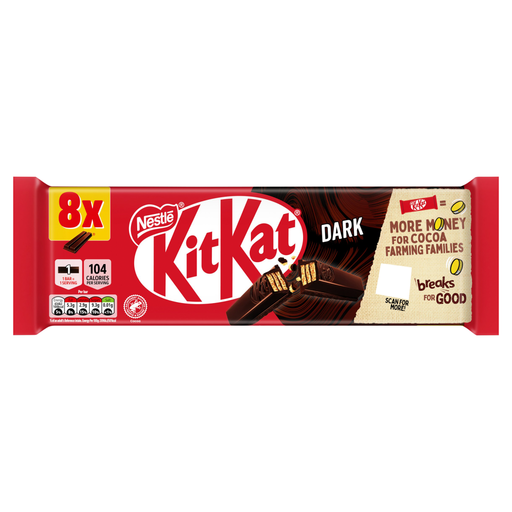
KitKat 2 Finger Dark 8 x 20.7g
The eight individually portioned 20.7g wafer bars offer a defined amount to take alongside breakfast. KitKat UK lists 104kcal, 9.2g sugars and 2.9g saturated fat per bar.
KitKat says dark chocolate forms 67.1% of the finished bar; this is not a cocoa-solids percentage. The product contains milk and wheat.
View on Joybuy
 No image available
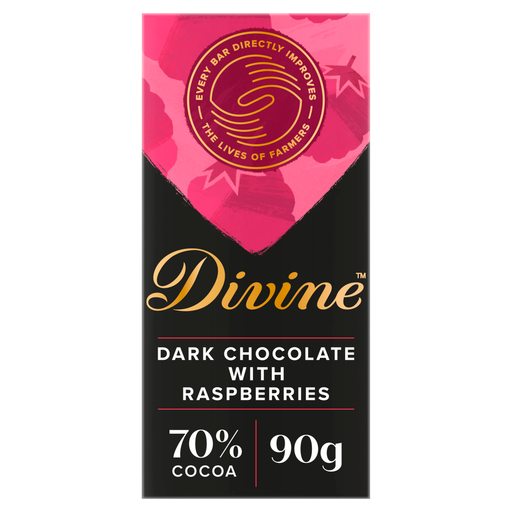
Divine Chocolate 70% Dark Chocolate with Raspberries 90g
This 90g raspberry dark chocolate bar needs portioning if you want to take a small amount; individual wrapping and a defined serving portion are not stated.
Do not rely on its vegan or soya-free wording to judge allergen suitability: the product information gives conflicting milk and soya statements. Check the current physical pack before buying, particularly if allergens matter.
View on Joybuy
Questions about dark chocolate at breakfast
Can a dark chocolate bar be my grab-and-go breakfast?
It can be a portable treat alongside breakfast, but it is not a substitute to rely on for longer-lasting energy. The British Heart Foundation says chocolate can give a quick lift followed by a dip and recommends foods rich in fibre and complex carbohydrates when sustained energy is the aim.
Does a higher cocoa percentage settle the nutrition choice?
No. A cocoa percentage tells you about cocoa content, not the bar’s sugars or saturated fat. Check both the percentage and the nutrition panel: Lindt Shop UK lists 29g sugars and 24g saturated fat per 100g for its EXCELLENCE Dark 70% bar.
How do I compare bars of different sizes?
Compare nutrition per 100g first, then consider the amount you expect to eat. The NHS advises per-100g comparisons because serving sizes vary; a single 20.7g wafer bar and a 100g bar should not be compared solely by their per-bar figures.
Is dark chocolate automatically free from milk or other allergens?
No. KitKat 2 Finger Dark contains milk and wheat, while Lindt says its EXCELLENCE Dark 70% bar may contain nuts, milk, soya and sesame. Check the current pack’s ingredients and precautionary statement for the exact product rather than relying on the description “dark chocolate”.


