Choose a dark chocolate bar as an optional training snack, not as a substitute for a carbohydrate-and-fluid plan. A labelled, portioned bar makes its carbohydrate contribution easier to count; a plain dark slab is better treated as a chocolate preference unless you check and measure the portion you intend to use. Try any food you plan to carry on a run during training, and check the exact pack for ingredients that matter to you.
Who is this for?
Runners who want dark chocolate during training
If you enjoy dark chocolate, the choice is whether a bar is an occasional snack or a measured part of what you carry on a long run. Those are different jobs: cocoa flavour alone tells you nothing about the carbohydrate in a portion.
Runners who count their training snacks
A stated serving and its carbohydrate value make a bar easier to account for alongside other food and drink. KitKat UK lists defined portions for its 2 Finger Dark and 4 Finger Dark bars.
Runners with ingredient requirements
Check the exact bar rather than relying on the word ‘dark’. KitKat UK lists wheat and milk in 2 Finger Dark, while Galaxy describes its Dairy Free range as made with hazelnut paste; the two ranges answer different dietary questions.
What matters when choosing a bar?
Decide whether you want a snack or a countable contribution to your run plan, then compare the portion label, carrying format and ingredients.
| Priority | What to check | Your needs |
|---|
| Carbohydrate per portion |
Read the grams of carbohydrate for the amount you will eat, not just the bar weight or cocoa percentage. KitKat UK lists 12.1 g for a 20.7 g 2 Finger Dark bar and 24.3 g for a 41.5 g 4 Finger Dark bar. World Athletics lists 30–60 g of carbohydrate per hour for endurance exercise lasting 1–2.5 hours; neither bar reaches the lower end alone. |
I want to know what one portion contributes before counting it alongside the rest of my food and drink. |
| Carrying and eating |
Check whether the bar has a defined serving or needs dividing before you leave. Consider how you will carry and eat it, and try your intended food during training rather than making race day its first test. |
A portion I can pack and count matters if I plan to eat while out running. For a snack at another time, I may prefer a slab I divide myself. |
| Ingredients |
Read the current pack’s ingredients, highlighted allergens and precautionary statements for the exact variant. KitKat UK lists wheat and milk in 2 Finger Dark; Galaxy describes Dairy Free as a vegan-registered range, but does not identify the range as dark chocolate. |
If I avoid particular ingredients, the individual bar’s label matters more than its brand or dark-chocolate description. |
What should you avoid assuming?
-
Assuming dark chocolate is a complete running fuel
Darkness and cocoa flavour do not establish how much carbohydrate a portion provides, and a chocolate bar does not provide the fluid in your plan. World Athletics expresses its endurance guidance in grams of carbohydrate per hour, not bars per hour.
Plan what you will carry for the run, then count any chocolate you choose by its labelled carbohydrate contribution.
-
Judging carbohydrate by the size of the wrapper
KitKat UK lists 12.1 g of carbohydrate for 2 Finger Dark and 24.3 g for 4 Finger Dark. Although the bars have different weights, neither alone reaches World Athletics’ 30 g-per-hour lower figure for exercise lasting 1–2.5 hours.
Compare carbohydrate per serving with your plan and account for your other food and drink.
-
Assuming ‘dark’ answers an allergen question
KitKat UK lists wheat and milk in 2 Finger Dark. Galaxy’s Dairy Free range is described as made with hazelnut paste, so a dairy-free description does not answer a nut question.
Check the current ingredients and precautionary statements on the precise pack you intend to use.
Relevant brand references
These ranges illustrate different formats and label checks; a brand name alone does not establish that every product in its range is dark chocolate or suitable for a run.
Cadbury
Cadbury UK describes Bournville Classic as a 100 g plain dark-chocolate bar. Its separate Darkmilk bar is described by Cadbury in terms of cocoa and creaminess, rather than as the same plain-dark format.
- Bournville Classic offers a slab format for shoppers who want plain dark chocolate.
- Check the current pack’s serving and carbohydrate information before counting a piece in a running plan.
KitKat
KitKat UK lists 2 Finger Dark at 20.7 g with 12.1 g carbohydrate and 4 Finger Dark at 41.5 g with 24.3 g carbohydrate.
- The stated portions allow either bar’s labelled carbohydrate to be counted.
- Neither portion alone reaches World Athletics’ 30 g-per-hour lower figure for exercise lasting 1–2.5 hours. Check the current pack for ingredients; KitKat UK lists wheat and milk in 2 Finger Dark.
Galaxy
Galaxy describes its Dairy Free range as Vegan Society registered and made in a dairy-free and gluten-free environment.
- The range provides a separate starting point for shoppers looking specifically for dairy-free chocolate.
- Galaxy does not identify the range as dark chocolate on its range page. Check the individual flavour’s ingredients, including hazelnut, if they matter to you.
Dark chocolate options on Joybuy
These dark chocolate slabs suit shoppers looking for a chocolate snack they can divide into portions. Check the current pack and measure what you eat before counting a piece towards a running plan.
 No image available
Green & Black's Dark Chocolate 85% 90g
This 90 g dark chocolate bar is an option if you want to divide a snack yourself. Its name states 85% cocoa; check the pack’s carbohydrate information and the weight of your portion before counting it towards a run.
 No image available
Morrisons The Best 85% Cocoa Ecuador Dark Chocolate 100g
This 100 g slab gives you a dark-chocolate format to divide for a snack. The name specifies 85% cocoa; use the current nutrition label and your actual portion weight if you intend to count its carbohydrate.
 No image available
Morrisons The Best 72% Cocoa Dominican Republic Dark Chocolate 100g
Choose this 100 g slab if its stated 72% cocoa level matches the dark-chocolate format you want for a snack. Cocoa percentage is not a carbohydrate amount, so check the nutrition label for the portion you divide.
 No image available
Lindt Excellence 85% Cocoa Dark 100g
This 100 g bar has an 85% cocoa description and can be divided for a snack. Weigh the piece you intend to eat and check its carbohydrate against the current pack rather than treating the whole bar as one running portion.
 No image available
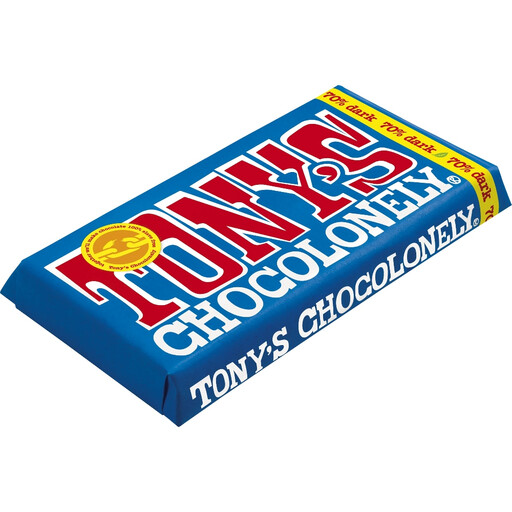
Tony's Dark Chocolate 180g
This 180 g dark chocolate slab is a format to divide if you want a separate snack portion. Check the current pack and weigh that portion before using its carbohydrate figure in a running plan.
Questions about dark chocolate and running
Can a dark chocolate bar replace gels or sports drinks on a long run?
Do not assume one bar covers the run’s carbohydrate and fluid plan. World Athletics lists 30–60 g of carbohydrate per hour for endurance exercise lasting 1–2.5 hours; KitKat UK lists 12.1 g in 2 Finger Dark and 24.3 g in 4 Finger Dark. Count a bar as one part of what you plan to carry, and try that choice during training.
Which dark bar is simpler to count into a running plan?
A bar with a stated portion and carbohydrate value is simpler to count than an unmeasured piece of a slab. KitKat UK lists 12.1 g carbohydrate in its 20.7 g 2 Finger Dark bar and 24.3 g in its 41.5 g 4 Finger Dark bar; you still need to account for the rest of your food and drink.
Does ‘dark’ mean a bar is free from wheat or milk?
No. KitKat UK lists wheat and milk in 2 Finger Dark. Read the current ingredients and precautionary statements for the exact bar if either ingredient matters to you.
Is Galaxy Dairy Free necessarily dark chocolate?
Galaxy describes Dairy Free as a vegan-registered range, but its range description does not identify it as dark chocolate. If you need both dairy-free and dark chocolate, check the individual product’s description and ingredients rather than relying on the range name.


