Who is each format for?

Hosts with a larger guest list

Counted pieces make it easier to plan how many guests can take one. Divine Chocolate lists a pack of 160 dark mini bars at 12.5g each. If you prefer bowls of loose chocolate, compare each bag’s weight with the number of bowls you plan to fill.

Hosts arranging a smaller adult celebration

A baton pack or dark-chocolate selection can be served alongside dessert. Hotel Chocolat lists 15 pieces in its 85% Dark Chocolate Batons pack; check whether that count and cocoa level suit the guests rather than relying on the pack’s presentation.

Hosts serving guests with allergies

Keep the exact packaging available so guests or carers can check ingredients and precautionary warnings. Lindt says its Excellence Dark 70% bar is made to a vegan recipe but is not suitable for people with a milk allergy because it is manufactured in a facility that uses milk.

What should you check before buying?

Choose a serving format first, then compare the stated quantity, cocoa level and label of the exact chocolate you intend to put out.

Priority What to check Your needs
Serving format Compare counted bars or batons with loose buttons and sharing boxes. Divine Chocolate lists 160 mini bars; Hotel Chocolat lists 15 batons in its 85% pack. I want guests to take a countable piece, or I would rather set out a bowl for people to serve themselves.
Pack quantity Read the net weight or piece count on each pack. Montezuma's lists a 120g button bag, while Lindt lists a 130g dark-chocolate sharing box; neither weight specifies a number of servings. Will one pack cover the serving plan, or do I need several packs for the bowls I intend to fill?
Flavour and cocoa Compare the stated cocoa percentage and any fillings or coatings. A plain bar, a wafer box and chocolate-coated fruit offer different choices; percentage alone does not establish which guests will prefer. Some guests may enjoy an 85% dark option, but I do not want to assume everyone wants the same cocoa level or added flavours.
Ingredients and allergens Read the current ingredient list, named allergens and any precautionary wording for each exact pack. Retain the packaging when serving loose pieces. The Food Standards Agency distinguishes ingredient allergen information from precautionary cross-contact warnings. I need guests or their carers to be able to check the chocolate they are actually offered, especially when several products share a table.

What is easy to overlook?

  • Assuming dark or vegan-recipe chocolate suits every allergy

    Ingredients and potential cross-contact differ between products. Lindt expressly says its vegan-recipe Excellence Dark 70% bar is unsuitable for people with a milk allergy.

    Check the current pack’s ingredients and precautionary wording. For an allergic guest, ask them or their responsible carer to confirm whether the exact product is appropriate.

  • Reading “sharing” as a serving-size promise

    A bag’s weight does not tell you how many guests it will serve. The formats here range from Montezuma's 120g button bag to Hotel Chocolat’s 15-piece baton pack and Divine Chocolate’s 160 mini bars.

    Plan around your guest count and serving method: counted pieces make allocation straightforward, while an open bowl may call for more than one bag.

  • Choosing cocoa percentage without considering guests

    A stated percentage helps distinguish products, but it cannot establish the preferred flavour for a mixed group. Hotel Chocolat’s cited batons are 85% dark chocolate, while Montezuma's cited buttons are 60%.

    Check what the guests are likely to enjoy, or offer a choice of cocoa levels if you plan to serve more than one product.

  • Applying school-food rules to every birthday gathering

    A home party and food provided at a school are different settings. The Department for Education’s school-food guidance addresses food and drink provided in state-funded schools in England; that scope does not establish one rule for every UK birthday party.

    If the celebration is at a school, check its food policy and the rules applicable to that setting before arranging the chocolate.

Which brands offer relevant formats?

Montezuma's

An open-bag option for a birthday bowl: Montezuma's lists Giant 60% Dark Chocolate Buttons in a 120g bag.

  • Buttons can be set out for guests to serve themselves.
  • Use the 120g weight to plan the number of bags; the format does not give you counted portions.

Divine

Divine Chocolate lists 70% dark mini bars in a pack of 160, with each bar stated as 12.5g.

  • The stated piece count helps with a planned distribution.
  • Check allergens on the exact product: Divine’s separate 70% dark bar carries a precautionary warning for gluten, milk and nuts.

Lindt

Lindt lists a 130g Choco Wafer Dark Chocolate Sharing Box as an alternative to loose buttons or plain bars.

  • The box offers a defined pack weight for a shared snack table.
  • Do not apply the ingredients or allergy advice for one Lindt product to another. Lindt says its Excellence Dark 70% bar is unsuitable for people with a milk allergy despite being made to a vegan recipe.

Hotel Chocolat

Its 85% Dark Chocolate Batons are a counted option for a smaller dessert-table selection.

  • Hotel Chocolat states that the 85% pack contains 15 batons.
  • Check both the piece count and whether guests want an 85% dark chocolate before using it as the sole party option.

M&S

M&S lists dark-chocolate sharing bags with added ingredients, including 70% Dark Chocolate Coated Sour Cherries 130g and 70% Dark Chocolate Cocoa Dusted Almonds 100g.

  • Fruit-coated and nut-containing products offer alternatives to plain dark chocolate.
  • Check each exact pack’s ingredients and allergen information before adding it to a shared table.

Green & Black's

Green & Black's presents organic ingredients and high-cocoa chocolate as part of its range, making it a reference point for a selection assembled from separate products.

  • Its stated ingredient positioning may be relevant if that matters to your choice.
  • Check the format, quantity and label of the particular product rather than treating brand positioning as a serving plan.

A Joybuy option for a birthday table

This boxed dark-chocolate assortment is an option for a shared birthday spread, rather than an open sharing bag or a pack of counted mini bars.
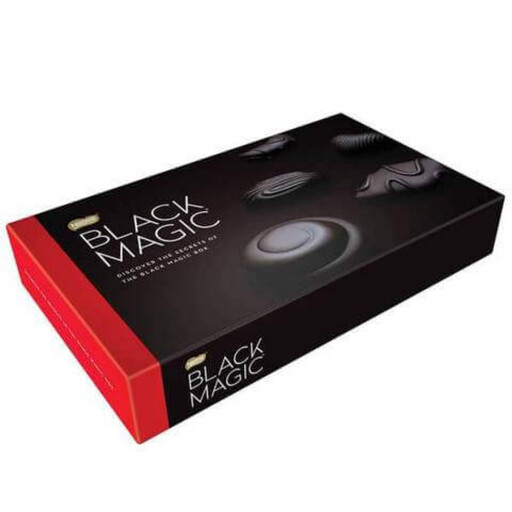
Nestle Black Magic Dark Chocolate Box 348g

Nestle Black Magic Dark Chocolate Box 348g

The 348g box provides a dark-chocolate assortment for a shared birthday table. Check the exact pack before serving: the listing identifies almonds, hazelnuts, eggs and milk, notes possible peanuts, other tree nuts and soya, and says the product is unsuitable for children under 4. If you need counted portions, confirm the number of pieces and whether they are individually wrapped.

View on Joybuy

Questions about serving dark chocolate

How much dark chocolate should I buy for a birthday party?

Start with the guest count and whether you will hand out pieces or fill a bowl. Divine Chocolate’s 160-pack of 12.5g mini bars gives a count for planning, while Montezuma's 120g button bag gives a weight, not a promised serving count. Hotel Chocolat’s cited 85% baton pack contains 15 pieces.

Is vegan-recipe dark chocolate suitable for someone with a milk allergy?

Not necessarily. Lindt states that its Excellence Dark 70% bar is made to a vegan recipe but is unsuitable for people with a milk allergy because it is manufactured in a facility that uses milk. Check the ingredients and precautionary wording on the exact pack, and let the guest or their responsible carer assess whether it is appropriate.

Should I choose the highest cocoa percentage for a party?

No cocoa percentage suits every guest. A stated percentage helps you distinguish products, but guest preferences still matter: consider a choice of cocoa levels, or choose an 85% option when you know the intended guests want it.

What if the birthday celebration is at a school?

Check the school’s current food policy before bringing or arranging chocolate. The Department for Education’s guidance concerns legal requirements for food and drink provided in state-funded schools in England; it does not, by itself, settle every privately supplied school celebration or the rules in other UK nations.