Families choosing an occasional treat at home
Compare the biscuit and chocolate the child would enjoy, then read the serving information and sugars on the whole-biscuit label. “Dark” does not make a biscuit a routine snack choice.


For an occasional treat at home, choose a dark-chocolate biscuit by the child’s preferred biscuit, the chocolate’s cocoa-solids declaration, the whole-biscuit nutrition label and the pack’s allergens—not the word “dark” alone. For a routine after-school snack, NHS Healthier Families suggests options such as fruit and vegetables instead of biscuits. Food supplied by a school or club needs a separate check against the rules for its setting.
Compare the biscuit and chocolate the child would enjoy, then read the serving information and sugars on the whole-biscuit label. “Dark” does not make a biscuit a routine snack choice.
Check the purchased pack before serving it. Dark-chocolate biscuit listings differ in their ingredients and precautionary allergen statements.
Establish who supplies the food, where it is served and which UK nation’s rules apply. A biscuit chosen for home is not automatically suitable for a school setting.
Start with the kind of snack you need, then compare chocolate declarations, serving information and allergens on the particular pack.
| Priority | What to check | Your needs |
|---|---|---|
| Chocolate and biscuit | Read the chocolate’s minimum cocoa solids separately from its share of the biscuit. Tesco Groceries lists 48% minimum cocoa solids in the chocolate of its 300g digestives, which contain 30% chocolate; its Fox’s Rounds listing states 35% minimum cocoa solids in chocolate making up 71% of the biscuit. | I’m choosing an occasional treat the child will enjoy, rather than assuming that more coating means higher-cocoa chocolate. |
| Serving and sugars | Compare sugars using the same basis—per biscuit or per 100g—and check the size actually served. Tesco Groceries lists 4.2g sugars per 17g biscuit for its dark-chocolate digestives; its Fox’s Rounds listing gives 45.6g per 100g, not a per-biscuit figure. | For a regular after-school snack, I’d consider the fruit or vegetables suggested by NHS Healthier Families instead of relying on a “dark” label. |
| Allergens | Read the purchased pack’s ingredients and “may contain” statement. The Food Standards Agency says allergens present in prepacked food must be emphasised in the ingredients list. | I need to check the precise product and pack against the child’s allergies before serving it. |
| Where it is served | Identify the food provider, premises and UK nation. Department for Education guidance addresses food provided in state-funded schools in England; its school-food materials cover chocolate-coated products across the school day. | If I’m supplying a club rather than choosing a treat to eat at home, I need to confirm which rules apply to that arrangement. |
A biscuit can have a larger share of chocolate without that chocolate having a higher declared cocoa-solids minimum. Tesco Groceries’ listings distinguish these two measures for its digestives and Fox’s Rounds.
Compare the chocolate’s cocoa-solids statement and its proportion of the biscuit as separate figures.
The description of the chocolate does not tell you the sugars in a serving or whether the biscuit is suitable for a particular allergy.
Read the whole-biscuit nutrition information and the purchased pack’s ingredients and precautionary statements. For routine snacks, consider the alternatives suggested by NHS Healthier Families.
Rules for food provided in state-funded schools in England are a separate question from what a family buys to eat at home. Department for Education materials address chocolate-coated products across the school day.
Confirm whether the standards apply to the particular provider and setting; do not use a retail product description in place of that check.
These examples describe particular listed biscuits, not every product from each brand.
Tesco Groceries lists a 300g own-label dark-chocolate digestive with both a chocolate-content figure and a cocoa-solids declaration.
Tesco Groceries lists Fox’s Dark Chocolate Rounds as a chocolate-coated shortcake biscuit.
A Sainsbury’s listing describes a 266g pack of McVitie’s dark-chocolate digestives.
Sainsbury’s lists an own-label 300g pack of dark-chocolate digestives.
These biscuit, wafer and chocolate-coated options are for considering an occasional treat at home. Check each purchased pack before deciding what to serve a child.
 No image available
A dark-chocolate digestive format for an occasional home treat, supplied as two 266g packs. Check the purchased pack for allergens and per-biscuit nutrition.
 No image available
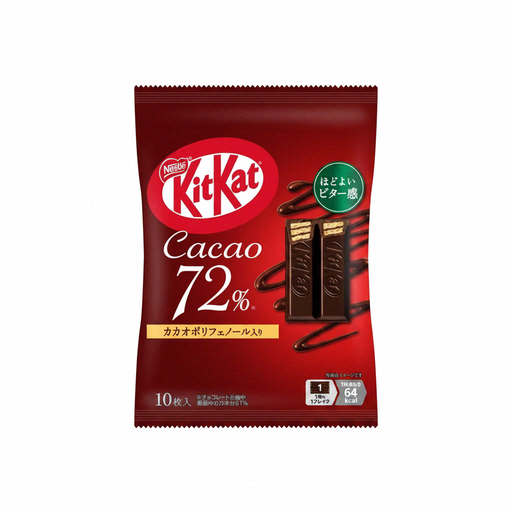
A KitKat cookie option for an occasional home treat. Check the pack to see what its “Cacao 72%” declaration refers to, as well as its allergens and serving information.
 No image available
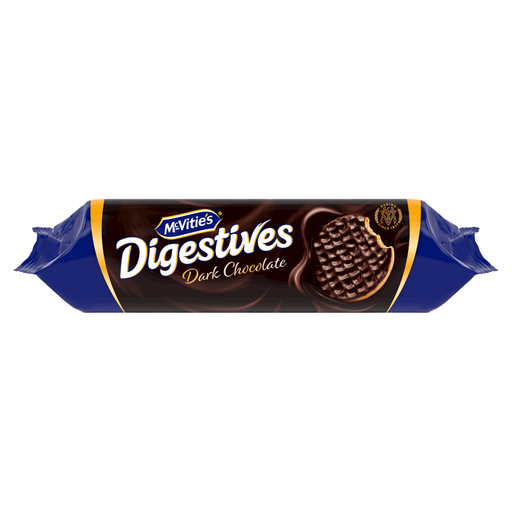
A 400g dark-chocolate digestive pack for an occasional home treat. Read this pack’s cocoa declaration, allergens and serving information rather than applying figures from another McVitie’s pack.
 No image available
A ginger-and-oat biscuit option with dark chocolate in a 285g pack. Check its ingredients, allergen statements and nutrition panel before serving; the name alone does not establish its sugars per serving.
 No image available
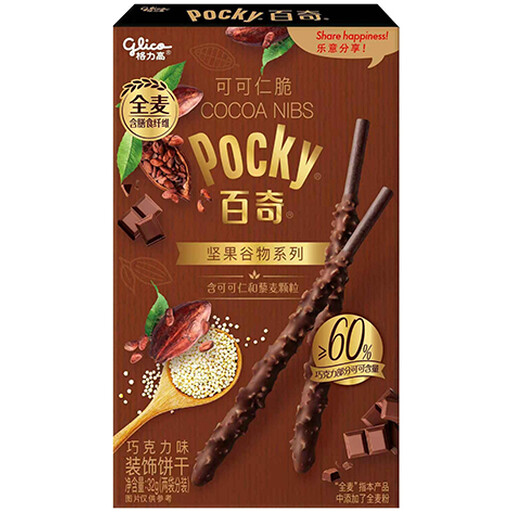
A 32g cocoa-nuts chocolate biscuit option. Check the pack’s chocolate description, ingredients and allergen statements to decide whether it fits the intended treat.
No: read the chocolate’s cocoa-solids declaration and the whole-biscuit nutrition label separately. Tesco Groceries lists 30% chocolate containing at least 48% cocoa solids for its 300g digestives, while its Fox’s Rounds listing states 71% chocolate containing at least 35% cocoa solids; neither chocolate percentage is a sugars figure.
A home-snack choice does not establish what a club may provide. Current Department for Education materials for state-funded schools in England address confectionery and chocolate-coated products across the school day, and the Requirements for School Food Regulations 2014 include products partly or wholly coated with chocolate in their definition of confectionery. Confirm whether those standards apply to the club’s provider and setting. Government guidance says proposed updated standards for September 2027 remain subject to Parliamentary approval.
No: the Department for Education school-food guidance cited here applies to state-funded schools in England. For provision elsewhere in the UK, check the relevant nation’s requirements and the club’s arrangements rather than applying the English guidance automatically.
Read the ingredients and precautionary allergen statement on the pack you receive. The listed Tesco and Fox’s biscuits have different allergen warnings; the Food Standards Agency says allergens present in prepacked food must be emphasised in its ingredients list.
For a routine snack, NHS Healthier Families suggests swapping after-school biscuits for options such as fruit and vegetables. A dark-chocolate biscuit can instead be chosen as an occasional treat, with its serving information and allergens checked.