People planning a snack before exercise
If you are considering a biscuit before activity, the time available and the carbohydrate and fat in the portion matter more to this decision than a dark-chocolate name.


A dark-chocolate biscuit can suit someone who wants a biscuit before exercise, but its coating does not tell you how much carbohydrate or fat your portion contains. Compare the amount you plan to eat and the time before activity: University College London Hospitals NHS Foundation Trust’s exercise-snack advice favours carbohydrate with minimal fat in a diabetes-care context, while North East and North Cumbria NHS prehabilitation guidance gives a banana or cereal bar as examples of a lower-fat carbohydrate snack 90–120 minutes before exercise. Neither source establishes a universal timing rule or an exercise benefit for dark chocolate.
If you are considering a biscuit before activity, the time available and the carbohydrate and fat in the portion matter more to this decision than a dark-chocolate name.
If chocolate taste or biscuit style is your starting point, distinguish the amount of chocolate in the biscuit from the cocoa solids in that chocolate. Check the serving and the current pack’s ingredients and allergen information too.
Decide whether you want a biscuit at all, then compare the portion you would eat rather than treating a digestive, cookie and bar as equal servings.
| Priority | What to check | Your needs |
|---|---|---|
| Timing and portion | Consider when you last ate and how long remains before activity. Read carbohydrate and fat per stated biscuit, cookie or bar; use the figures for the amount you expect to eat. | If I am eating shortly before exercise, I want to decide whether I need a snack and compare its full portion, not assume a dark coating makes it suitable. |
| Chocolate description | Check whether an ingredient percentage describes chocolate’s share of the biscuit or cocoa solids within the chocolate. Read the product’s per-serving nutrition separately. | I may prefer a dark-chocolate taste, but I do not want to mistake a coating figure for the cocoa content of the whole biscuit. |
| Format and carrying | Check whether you are choosing a digestive, cookie, biscuit stick or wrapped bar. Compare their stated serving sizes before comparing nutrition. | A separate bar may be easier for me to take along; if I specifically want dark chocolate, I will check the exact variant rather than assume every chocolate bar is dark. |
| Ingredients | Read the chosen pack’s ingredient list, allergen statements and serving information, particularly if an online listing differs from the pack. | When ingredients or allergens affect my choice, I need information for the particular variant I will eat, not another biscuit in the same range. |
In Tesco’s listing for Fox’s Dark Chocolate Rounds, dark chocolate makes up 71% of the recipe, while that chocolate contains at least 35% cocoa solids. The figures have different bases.
Read the ingredient percentage and cocoa-solids statement separately, then use the biscuit’s serving information for a food comparison.
Tesco lists the checked Fox’s half-coated cookie as a 25g serving and its own dark-chocolate digestive as 17g per biscuit. A one-for-one comparison therefore compares different amounts of food.
Compare the nutrition for the amount you intend to eat, whether that is a cookie, digestive or complete bar.
The checked Penguin Original and Club Orange listings describe milk-chocolate-flavour coatings, despite their usefulness as separately portioned formats.
Choose a wrapped bar for that format only if its exact coating and serving information meet your preferences.
Retailer listings for the checked dark digestives caution that product details can change. This matters when ingredients or allergen warnings determine what you can eat.
Check the current pack’s ingredients and warnings before eating.
These references describe particular listed products, not every biscuit made by each brand or the products in the Joybuy selection below.
Tesco lists a 266g dark-chocolate digestive pack with per-biscuit nutrition.
Its listed 300g dark-chocolate digestives offer a biscuit-sized serving for comparison.
Its listed 300g dark-chocolate digestives provide another same-format reference.
The checked rounds and half-coated cookies are distinct dark-chocolate biscuit formats.
The checked Original biscuit bar is a wrapped-bar reference, not a dark-chocolate example.
The checked Orange biscuit bar offers another coated-bar format rather than a verified dark-chocolate choice.
These Joybuy options include dark-chocolate digestives, other biscuit formats and a cereal bar. The cereal bar is an alternative snack format, not a chocolate biscuit; compare each product’s current serving information for your own timing and portion.
 No image available
Consider this cereal-bar format if you want a separately portioned snack rather than a biscuit. The named pack contains six 21.5g bars; check its current nutrition and ingredients for the portion you plan to eat.
 No image available
This twin pack suits a preference for dark-chocolate digestives rather than a single wrapped snack. It contains two 266g packs; use the purchased pack’s per-biscuit nutrition to judge your portion.
 No image available
This is a ginger-and-dark-chocolate oat-biscuit option rather than a plain digestive. For a before-exercise comparison, check the 285g pack’s portion, nutrition, sweetener information and any pack warnings.
 No image available
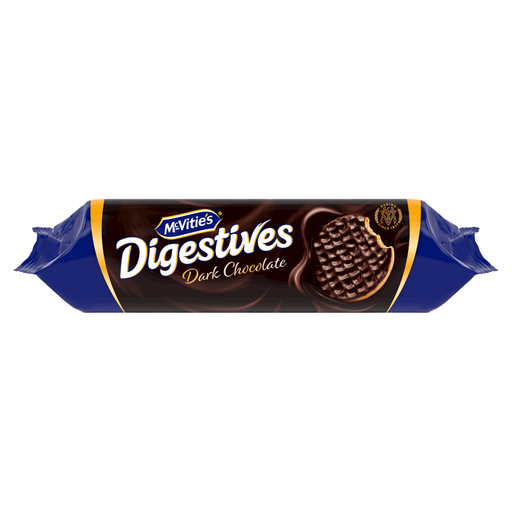
Choose this format if you want a 400g pack of dark-chocolate digestives. Check this pack’s per-biscuit carbohydrate and fat rather than applying figures from a different pack size.
 No image available
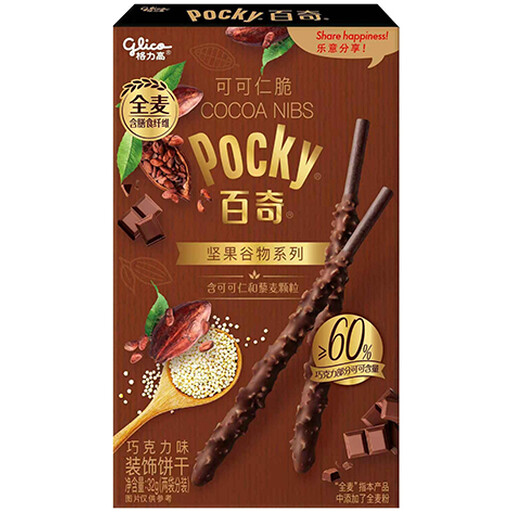
This 32g biscuit-stick pack offers a different format from a digestive. Check its coating description and nutrition for the amount you would eat; the product name alone does not establish a cocoa-solids percentage.
No. A dark-chocolate description does not establish an exercise benefit or tell you the carbohydrate and fat in the portion. Compare those per-serving figures and consider when you last ate; the cited NHS exercise-snack and prehabilitation advice addresses specific care contexts, not a rule that everyone needs a biscuit before activity.
Check the current pack’s ingredient and allergen information before eating, particularly if you need to avoid an ingredient. The checked Tesco and Sainsbury’s listings warn that product details can change; one variant’s listing cannot establish another variant’s ingredients.
No general consumer purchase ban follows from England’s Food (Promotion and Placement) (England) Regulations 2021. The Department of Health and Social Care’s guidance addresses specified promotions and placement by qualifying businesses for qualifying products; regulations 5 and 6 took effect on 1 October 2025. A “dark” label alone does not determine a product’s classification, and these England rules must not be assumed to apply across the UK.
For settings covered by England’s school-food standards, the Department for Education’s guidance excludes chocolate-coated products from provision across the school day, and biscuits allowed at lunchtime must not contain confectionery. This school-provision requirement does not govern a private adult’s snack purchase. On 14 September 2026, the Department described changes proposed for September 2027 as subject to parliamentary approval, not as current requirements.
Follow the purchased pack’s storage directions. The checked Tesco and Sainsbury’s dark-digestive listings say to keep the biscuits in a cool, dry place and use an airtight container after opening.