Hosts looking for a cocoa-forward biscuit
Compare the declared cocoa solids in the chocolate component. The word “dark” and the amount of coating answer different questions.


For a more cocoa-forward Bonfire Night choice, start with the cocoa-solids declaration for the chocolate, then consider the biscuit base, pack size and guests’ allergens. Tesco lists 48% minimum cocoa solids in the chocolate on its dark digestives, while the checked Sainsbury's digestives and Fox's Rounds list 35%; those figures do not describe the whole biscuit or establish how each one tastes.
Compare the declared cocoa solids in the chocolate component. The word “dark” and the amount of coating answer different questions.
Keep the current packaging beside the biscuits so guests can inspect the ingredients and allergen warnings. The Food Standards Agency recommends retaining packs when serving food at community events.
Check both the proportion of chocolate and the pack weight. Fox's Rounds are a 130g shortcake option in the checked Tesco listing; the checked Tesco and Sainsbury's dark digestives come in 300g packs.
Choose the kind of biscuit your guests will want, then compare cocoa declarations and pack information on the exact varieties you are considering.
| Priority | What to check | Your needs |
|---|---|---|
| Cocoa declaration | Read the minimum cocoa-solids percentage for the chocolate, separately from the percentage of the biscuit made up of chocolate. Tesco lists 48% minimum cocoa solids in its chocolate; Sainsbury's and Fox's list 35% for their checked products. | If I want a declared cocoa content, I need the figure for the chocolate component—not just “dark” on the front of the pack. |
| Biscuit and pack | Check whether the base is digestive or shortcake, plus the pack weight and any stated serving count. The checked Sainsbury's listing gives 300g and approximately 18 servings; Tesco's Fox's Rounds listing gives 130g and eight servings. | For a group, I want enough of a biscuit style people will enjoy; a thicker chocolate coating does not by itself tell me how far the pack will go. |
| Allergens | Read the current pack’s ingredients and precautionary warnings. Keep the packaging available when serving; the Food Standards Agency recommends this for community events so guests can check it. | Guests need to be able to check their own allergens. I cannot assume a biscuit is milk-free because its chocolate is described as dark. |
| Nutrition comparison | Compare sugar figures on the same basis, such as per 100g or per biscuit, using the labels on the packs being considered. A cocoa-solids figure is not a sugar figure. | If I am comparing portions or recipes, I want the whole biscuit’s nutrition information rather than an assumption based on the chocolate description. |
Tesco’s listing describes Fox's Rounds as 71% dark chocolate by biscuit weight, while that chocolate contains at least 35% cocoa solids. The two percentages have different meanings.
Read both declarations on the exact pack, then decide whether the chocolate’s cocoa content or the amount of coating matters more to you.
A dark-chocolate description does not establish that a biscuit is milk-free or suitable for every guest. Ingredient lists and precautionary statements vary by product.
Keep each biscuit’s original packaging available so guests can check the current label before taking one.
These examples describe the checked varieties, not every biscuit made by each brand.
Tesco’s 300g Dark Chocolate Digestives provide separate declarations for the coating and its cocoa content.
Dark Chocolate Rounds offer a chocolate-coated shortcake rather than a digestive base.
Sainsbury's 300g Dark Chocolate Digestives are another digestive option with a declared cocoa-solids minimum.
McVitie's has a dark-chocolate digestive in its range alongside other biscuit-bar products.
Penguin Original is a McVitie's biscuit-bar alternative when that format matters more than dark chocolate.
Club Mint is a flavoured biscuit-bar alternative, not the dark variety sought here.
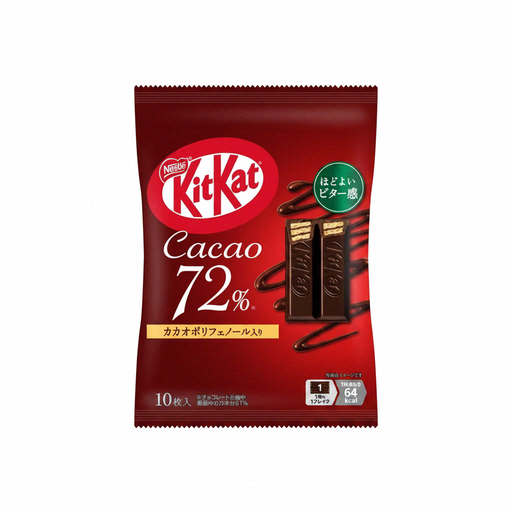
These options include dark-chocolate digestives in two pack formats and Nestle KitKat Cacao 72% Cookies as a different biscuit-style choice. Check the exact pack details against the cocoa declaration, quantity and allergen information you need for your gathering.
 No image available
The twin-pack format gives you two 266g packs of dark-chocolate digestives for serving at a gathering. Check the current packaging for the chocolate’s cocoa declaration and allergen information before choosing it for guests.
 No image available
This is an alternative to a dark-chocolate digestive. Check the pack to see precisely what the “Cacao 72%” declaration describes, as well as its quantity and allergen information, before planning portions for a group.
 No image available
This 400g pack is a dark-chocolate digestive option when pack weight matters for the table. If you are selecting by declared cocoa content, check the chocolate-component figure on the current pack rather than assuming it from the word “dark”.
No. Tesco’s checked Fox's Rounds listing uses 71% for the proportion of dark chocolate in the biscuit; it states that the chocolate itself contains at least 35% cocoa solids. Read the two declarations separately.
Keep each biscuit’s original packaging available and ask guests to check the current ingredients and precautionary warnings. The Food Standards Agency recommends retaining packaging at community events so people can inspect it; “dark chocolate” alone does not mean milk-free.
Follow the storage instructions on the pack you buy. The checked listings advise a cool, dry place and an airtight container after opening; keep the packaging available if guests need its ingredient information.
No. UK government food-labelling guidance says best-before dates concern quality, whereas use-by dates concern safety. Check the actual date label and storage instructions; a biscuit may be stale after its best-before date.