The cocoa-focused buyer
If you want a more cocoa-forward chocolate with your coffee, compare the declared cocoa solids in the chocolate separately from how much of the biscuit is chocolate.


For a continental breakfast, choose the biscuit style you want alongside coffee, then check what any cocoa percentage actually measures. Tesco lists 48% minimum cocoa solids in the chocolate on its dark digestives, while Sainsbury’s lists 35% for its own; neither figure describes the whole biscuit. Compare sugar per biscuit and check the current pack’s allergen wording separately, particularly when serving guests.
The useful checks change depending on whether cocoa flavour, portion size or guests’ ingredients are your main concern.
If you want a more cocoa-forward chocolate with your coffee, compare the declared cocoa solids in the chocolate separately from how much of the biscuit is chocolate.
If you plan to have a biscuit alongside other breakfast foods, compare the figures per biscuit as well as per 100g. The word ‘dark’ does not tell you how much sugar a serving contains.
When serving other people, check the current pack for relevant ingredients, emphasised allergens and precautionary wording. Do not assume different dark biscuits have the same recipe.
Settle on a biscuit format, then compare the chocolate declaration, serving figures and pack information on the same basis.
| Priority | What to check | Your needs |
|---|---|---|
| Cocoa declaration | Separate the chocolate’s share of the biscuit from its minimum cocoa-solids figure. Tesco lists 30% chocolate and 48% minimum cocoa solids in that chocolate for its dark digestives; Sainsbury’s lists 27% and 35% respectively for its own. | I want to compare the chocolate itself, rather than take ‘dark’ or a coating percentage as a cocoa-solids measurement. |
| Serving size | Check sugar per biscuit for the portion you intend to serve, and per 100g when biscuit sizes differ. Tesco lists 4.4g sugar and 83 kcal per biscuit for the checked 266g McVitie’s dark digestives; Nairn’s lists 1.9g and 45 kcal for its dark chocolate chip oat biscuit. | One or two biscuits will sit alongside the rest of my breakfast, so the figures for an actual serving matter to me. |
| Ingredients | Read the current pack’s ingredient list, emphasised allergens and any precautionary statements. The Food Standards Agency advises that the 14 regulated allergens must be emphasised in the ingredients list of prepacked food. | If I’m serving a guest with an allergy, I need to check the particular pack against their requirements before putting it out. |
| Format and storage | Compare a coated digestive, an oat biscuit and a chocolate-coated shortcake for the texture and amount of chocolate you want. Check pack size and follow the storage directions, including any instruction to use an airtight container after opening. | Will we finish the pack over several breakfasts, or would a different biscuit format suit the spread better? |
Tesco’s listing for Fox’s dark chocolate rounds says chocolate makes up 71% of the biscuit, but that chocolate contains 35% minimum cocoa solids.
Look for the chocolate proportion and the cocoa-solids declaration separately before comparing it with another biscuit.
Chocolate colour does not establish a biscuit’s sugar content, and per-biscuit figures are affected by portion size.
Compare total sugar per 100g for the recipes, then check the figure for the number of biscuits you expect to serve.
Ingredients and precautionary statements differ between biscuits, and Sainsbury’s cautions that product ingredients can change.
Check the physical pack you will serve against the guest’s specific allergy requirements.
These references describe particular listed biscuits, not every product made by each brand or what is available on Joybuy.
Tesco’s own-label dark digestives provide both a chocolate proportion and a cocoa-solids declaration for that chocolate.
The checked 266g dark digestives offer a coated-digestive format with per-biscuit nutrition in Tesco’s listing.
Sainsbury’s own-label dark digestives offer another coated digestive with a stated figure for the chocolate.
Fox’s dark chocolate rounds are a chocolate-coated shortcake alternative to a digestive.
Nairn’s dark chocolate chip oat biscuits are an oat-based alternative to coated digestives.
These options include dark-chocolate digestives, a cacao-labelled KitKat wafer cookie and oat-based biscuits. Their formats and pack sizes differ, so check the relevant cocoa declaration, serving figures and ingredients for the one you choose.
 No image available
A twin pack of dark-chocolate digestives suits a breakfast spread where the coated-digestive format is the priority.
Check the current packs for their cocoa declaration, per-biscuit nutrition and allergens; figures for another McVitie’s pack should not be assumed to apply to this twin pack.
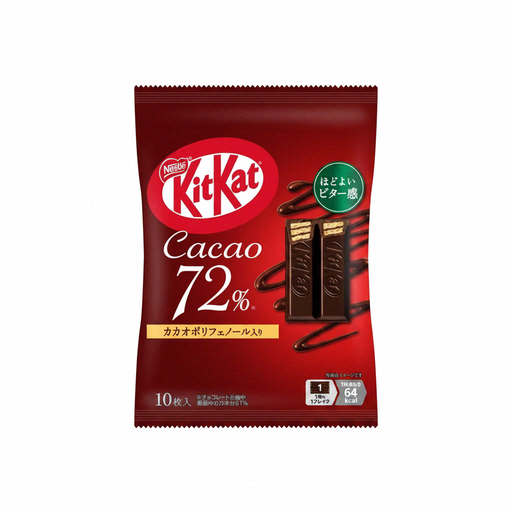 No image available
This KitKat cookie option offers a different format from a coated digestive.
Check the pack to see precisely what its Cacao 72% wording describes, along with its serving figures and allergens; the name alone does not give the chocolate’s share of the whole product.
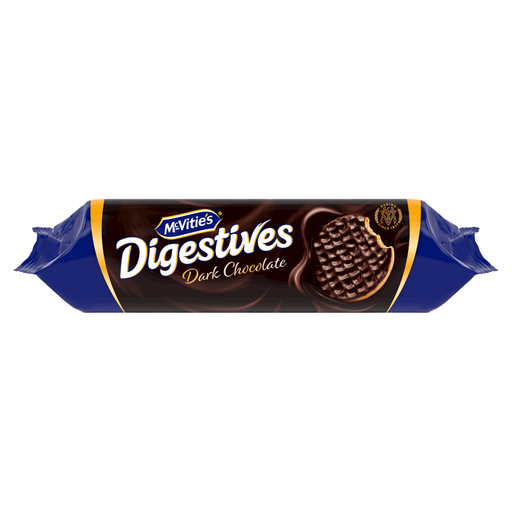 No image available
This 400g pack is another coated-digestive option when planning biscuits for more than one breakfast.
Use this variant’s own pack to compare its cocoa declaration, per-biscuit nutrition and allergen wording rather than carrying figures across from the 266g listing.
 No image available
Oats, dark chocolate and coconut distinguish this biscuit-break format from a chocolate-coated digestive.
If serving someone with an allergy or intolerance, check this variant’s current ingredient and precautionary wording. Do not apply figures from Nairn’s different dark chocolate chip oat biscuit to this pack.
 No image available
This 285g oat-biscuit option combines dark chocolate and ginger rather than offering a plain coated digestive.
Check the current pack for what ‘Zero’ refers to, its sugar figures, cocoa declaration and allergen information before comparing it with another biscuit.
No. Tesco lists chocolate as 30% of its dark digestive and says that chocolate contains at least 48% cocoa solids. Its listing for Fox’s dark chocolate rounds gives 71% chocolate but 35% minimum cocoa solids in the chocolate. Check what each percentage measures before comparing packs.
Follow the directions on the purchased pack. The checked Tesco, Fox’s and McVitie’s listings call for cool, dry storage and an airtight container after opening.
No. Check the current pack’s ingredients and precautionary statements against that person’s requirements before serving. For example, Nairn’s describes its checked dark chocolate chip oat-biscuit recipe as wheat-free but says it cannot guarantee the absence of wheat traces.
Check the product name, ingredients, allergens, quantity and date marking on the pack you are buying. GOV.UK says prepacked food requires a label with mandatory information; the applicable food-law framework differs between Great Britain and Northern Ireland. The Food Standards Agency advises that regulated allergens must be emphasised in the ingredients list.