Coeliac shoppers who prefer dark chocolate
Start with the exact biscuit’s gluten-free labelling and ingredients. Once those meet your requirements, compare a coating with chocolate pieces.


Check that the exact biscuit is labelled gluten free before choosing between a dark-chocolate coating, chocolate chips or a shortbread-based treat. Then read the current pack for oats and other relevant ingredients: a dark-chocolate name does not make a wheat biscuit suitable, and a cocoa-solids percentage for its chocolate is not the cocoa content of the whole biscuit.
Start with the exact biscuit’s gluten-free labelling and ingredients. Once those meet your requirements, compare a coating with chocolate pieces.
Check whether a gluten-free recipe contains oats rather than assuming the two descriptions mean the same thing. Coeliac UK says a small number of people with coeliac disease are sensitive even to gluten-free oats.
Read the full ingredient and precautionary statements on the exact pack when milk, soya, coconut or nuts also matter to the recipient.
Establish gluten-free suitability first, then narrow the choice by oats, chocolate format and any other ingredients the recipient needs to avoid.
| Priority | What to check | Your needs |
|---|---|---|
| Gluten-free suitability | Check the gluten-free label and current ingredients on the exact biscuit. The Food Standards Agency states that gluten-free food contains no more than 20 mg/kg of gluten as sold; the cited McVitie’s Dark Chocolate Digestives and Fox’s Triple Chocolate Cookies list wheat flour. | I need a biscuit suitable for a gluten-free diet, not one identified only by its dark-chocolate flavour. |
| Oats | Look for gluten-free oats in oat-based recipes, or inspect a recipe without oats listed if avoiding them. Coeliac UK says a small number of people with coeliac disease are sensitive to gluten-free oats. | If oats are a concern, I want to check the actual recipe before choosing an oat biscuit or a shortbread-based alternative. |
| Chocolate format | Distinguish the chocolate share of the biscuit from cocoa solids within that chocolate. Sainsbury’s lists 35% dark chocolate in its Free From Stem Ginger & Dark Chocolate Cookies and at least 47% cocoa solids in the chocolate; neither figure gives the whole cookie’s cocoa content. | I might prefer a coating to chips, but I want each percentage to tell me what it measures. |
| Other ingredients | Read the exact pack’s ingredient and precautionary statements. Sainsbury’s listed cookie contains butter and carries a nut-allergy warning; Nairn’s Dark Chocolate & Coconut Chunky Oat Biscuit Breaks list soya lecithin and warn that milk traces may be present. | Gluten free alone does not answer my questions about milk, soya or nuts. |
McVitie’s Dark Chocolate Digestives and Fox’s Triple Chocolate Cookies list wheat flour, despite their chocolate descriptions.
Check the gluten-free label and ingredients of the exact biscuit before comparing chocolate styles.
Sainsbury’s states that dark chocolate makes up 35% of its Free From Stem Ginger & Dark Chocolate Cookies; the 47% minimum cocoa-solids figure describes that chocolate.
Check what each percentage measures before comparing packs with coatings or chips.
Coeliac UK says most people with coeliac disease can eat gluten-free oats, but a small number remain sensitive to them. Other ingredient and precautionary statements also differ between the cited biscuits.
Check the recipient’s approach to oats and read the exact pack for any other relevant ingredients.
These examples describe specified biscuits, not every product made by each brand or retailer.
Its Free From Stem Ginger & Dark Chocolate Cookies are described by Sainsbury’s as suitable for coeliacs.
Its Dark Chocolate & Coconut Chunky Oat Biscuit Breaks combine gluten-free oats with dark-chocolate chips.
Its gluten-free Millionaire’s Shortbread is a caramel-layered alternative to the cited oat biscuits.
Its Free From Chocolate Chip Cookies are a gluten-free oat-based option with dark-chocolate chips.
The specified Dark Chocolate Digestives, Penguin Original and Club Orange show why familiar product names cannot replace an ingredient check.
Its Triple Chocolate Cookies are an example of a chocolate-rich biscuit that does not meet this gluten-free selection need.
This oat-based biscuit option is relevant if the recipient eats gluten-free oats and prefers dark-chocolate pieces with coconut.
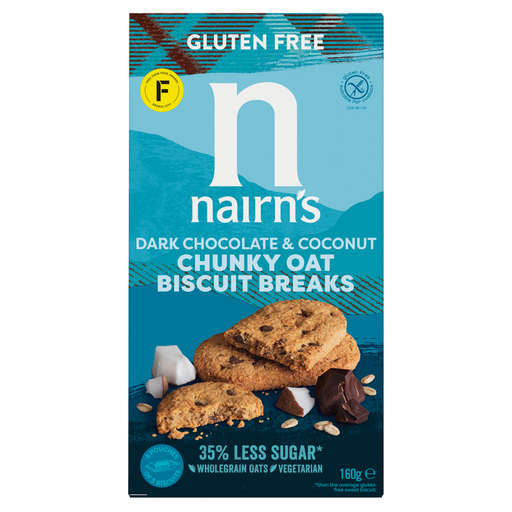 No image available
An oat-biscuit choice for someone who eats gluten-free oats and wants dark-chocolate chips with coconut. The stated recipe contains 57% gluten-free wholegrain oats and 10% dark-chocolate chips. Nairn’s warns that this product is unsuitable for people who react to avenin; check the pack for its current ingredients and precautionary allergen statements.
No. McVitie’s Dark Chocolate Digestives and Fox’s Triple Chocolate Cookies both list wheat flour. Check the gluten-free labelling and ingredients of the exact biscuit rather than relying on its chocolate description.
No. Coeliac UK says most people with coeliac disease can eat gluten-free oats, but a small number remain sensitive to them. If oats are a concern for the recipient, check the exact recipe before choosing an oat biscuit.
Compare them as different measures: the chocolate percentage describes its share of the biscuit, while a cocoa-solids figure describes the chocolate component. Sainsbury’s lists 35% dark chocolate in its Free From Stem Ginger & Dark Chocolate Cookies and at least 47% cocoa solids in that chocolate; neither is a whole-cookie cocoa figure.