Buyers stocking a shared biscuit tin
A familiar coated digestive may suit a communal tea break. Compare the amount in each biscuit and keep the pack available so colleagues can check its ingredients and allergens.


For a shared office biscuit tin, a dark-chocolate-coated digestive offers a familiar format. If the amount in each biscuit matters more, Nairn's lists 45 kcal and 1.9g sugars per dark chocolate chip biscuit, compared with 83 kcal and 4.4g sugars for McVitie's Dark Chocolate Digestives, according to their product information. A ‘dark’ label does not establish a particular cocoa-solids percentage or nutritional profile, so check the current pack before choosing.
For an office supply, the useful starting point is whether colleagues will share a biscuit tin, select individual portions or expect a stated cocoa percentage.
A familiar coated digestive may suit a communal tea break. Compare the amount in each biscuit and keep the pack available so colleagues can check its ingredients and allergens.
Use the per-biscuit nutrition panel rather than assuming that dark chocolate means less sugar. Nairn's, McVitie's and Sainsbury's list different amounts per biscuit for the products discussed here.
If a stated cocoa-solids percentage is important, check for that figure on the label. Sainsbury's declares a minimum of 35% cocoa solids in the dark chocolate on its own-label digestives; a product name alone does not give the same information.
Decide on the biscuit format, then compare portions, chocolate declarations and allergen statements on the products you are considering.
| Priority | What to check | Your needs |
|---|---|---|
| Portion nutrition | Compare energy, sugars and saturates per biscuit, not just per 100g. Nairn's lists 45 kcal and 1.9g sugars for its dark chocolate chip biscuit; McVitie's lists 83 kcal and 4.4g sugars for a Dark Chocolate Digestive. | I want to know what one biscuit contributes before choosing a pack for regular tea breaks. |
| Cocoa declaration | Look for a cocoa-solids percentage if you require one. Sainsbury's states a minimum of 35% cocoa solids in the dark chocolate on its own-label digestives. The percentage of chocolate in a recipe measures something different. | ‘Dark chocolate’ on the front of a pack is not enough for me; I want a stated cocoa figure. |
| Allergens | Read the current ingredients and precautionary statements for each pack. Nairn's gives a wheat-and-nut precaution for its dark chocolate chip biscuits, while Sainsbury's warns that its dark digestives are unsuitable for customers with an oat allergy because of manufacturing methods. | Colleagues with allergies need access to the label, rather than an assumption that every biscuit in the tin suits them. |
| Snack format | Check whether the pack contains coated digestives, chocolate-chip oat biscuits or filled rounds, and compare the pack details with how the office will serve them. | A shared tin calls for a different choice from an individually selected biscuit alongside tea or coffee. |
Chocolate content and cocoa-solids content are not interchangeable figures. Sainsbury's declares at least 35% cocoa solids in the chocolate on its own-label digestives, while McVitie's Dark Chocolate Digestives product information does not state a cocoa-solids percentage.
If you need a stated minimum, make the declaration on the current label part of your buying check.
One biscuit is not a standard serving across these ranges. Product information lists 45 kcal per Nairn's dark chocolate chip biscuit, 79 kcal per Sainsbury's dark digestive and 83 kcal per McVitie's Dark Chocolate Digestive.
Compare the per-biscuit figures alongside the number and type of biscuits you expect colleagues to take.
The reviewed products have different ingredient and precautionary statements. Tesco's listing for McVitie's Signature Dark Chocolate Rounds, for example, says they may contain nuts and egg.
Keep original packaging accessible when serving and check each current label before supplying biscuits for colleagues with allergies.
These product lines illustrate different office-snack formats; a brand name alone does not settle portion size, cocoa content or allergen suitability.
Its Dark Chocolate Digestives provide a coated digestive format; Signature Dark Chocolate Rounds are a separate caramel-filled option.
Its Dark Chocolate Chip Biscuits are an oat-biscuit alternative to a fully chocolate-coated digestive.
Its own-label Dark Chocolate Digestives are a coated-biscuit option with an explicit cocoa declaration.
These options include a twin pack of dark-chocolate digestives, two oat-based dark-chocolate biscuits and a dark-chocolate cereal bar. The bar offers a different snack format rather than another biscuit.
 No image available
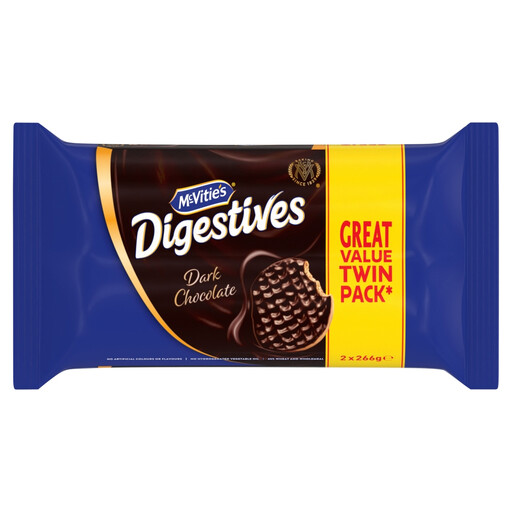
A twin pack of dark-chocolate digestives for a shared biscuit tin. Check the current pack's per-biscuit nutrition and allergen statement before putting it out for colleagues.
 No image available
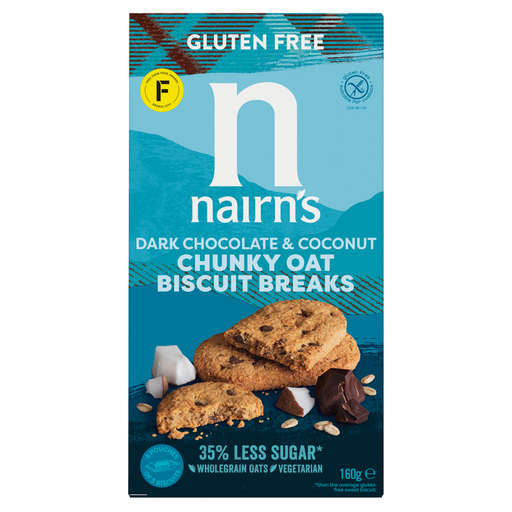
Consider this oat, dark-chocolate and coconut biscuit if the office wants an alternative to coated digestives. It is a different Nairns product from the Dark Chocolate Chip Biscuits discussed above, so use this pack's own nutrition and allergen information when comparing portions.
 No image available
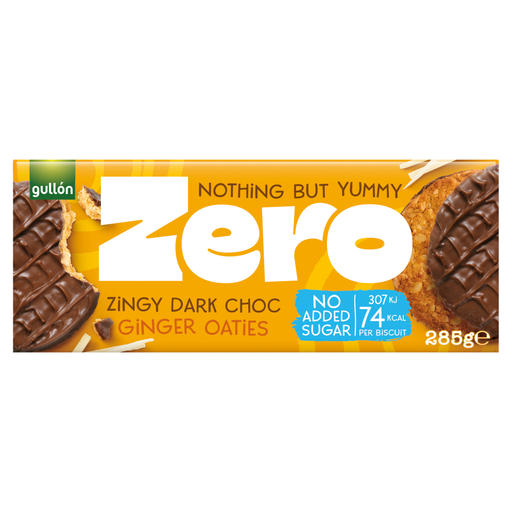
This 285g oat-biscuit pack combines dark chocolate and ginger. If comparing it with other office biscuits, read its own per-biscuit nutrition and ingredients rather than inferring sugar content or cocoa solids from the name.
 No image available
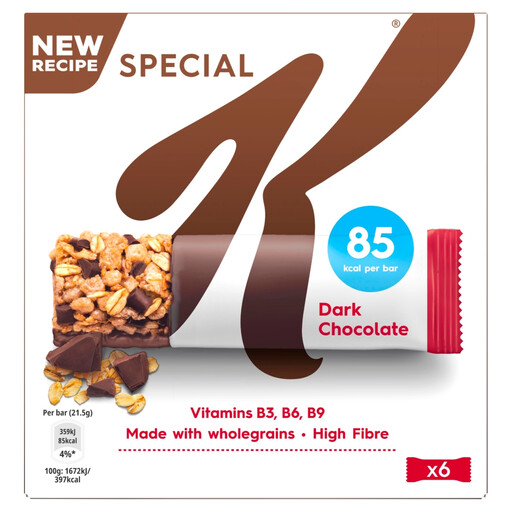
This six-pack offers individual dark-chocolate cereal bars for an office snack drawer. Each bar is listed as 21.5g, but it is not a biscuit; compare its own per-bar label if portion nutrition is the reason for choosing it.
No particular cocoa-solids percentage or sugar amount follows from the name alone. Sainsbury's states at least 35% cocoa solids in the chocolate on its own-label digestives, while McVitie's Dark Chocolate Digestives information does not state a cocoa-solids percentage. Check the cocoa declaration and nutrition panel separately.
No classification follows from the words ‘dark chocolate biscuits’ alone. The Department of Health and Social Care describes the Nutrient Profiling Model as a calculation based on a product's nutritional composition; a classification for a particular biscuit requires the applicable product figures and calculation.
The Department for Education's school-food guidance addresses food and drink provided in state-funded schools in England, not ordinary office purchasing. If biscuits are being supplied in a school setting, assess that setting against its applicable requirements rather than treating an office snack decision as the same question.
Check the current label for each product and keep its packaging accessible when biscuits are served. Ingredient lists and precautionary statements differ: Nairn's gives a wheat-and-nut precaution for its Dark Chocolate Chip Biscuits, while Sainsbury's says its own-label dark digestives are unsuitable for customers with an oat allergy because of manufacturing methods.
Start with the energy, sugars and saturates stated per biscuit, then consider how many biscuits people are likely to take. For example, Nairn's lists 45 kcal per Dark Chocolate Chip Biscuit, whereas McVitie's lists 83 kcal per Dark Chocolate Digestive; those figures describe different products and individual portions, not equal weights of biscuit.