Hosts of a small, informal group
Loose buttons can go into a bowl for guests to help themselves. Montezuma’s lists 120g dark-button bags, including 60% and organic 74% varieties; check the chosen pack’s ingredients before putting it out.


For an informal book club sharing from a bowl, a bag of loose dark-chocolate buttons is a straightforward choice. Countable mini bars make it easier to plan for a larger or uncertain group, while a boxed assortment suits a discussion built around different centres. Whichever format you choose, check the current pack against attendees’ allergies and dietary needs before serving.
The serving format matters as much as the chocolate style: a communal bowl, countable bars and a tasting box solve different hosting problems.
Loose buttons can go into a bowl for guests to help themselves. Montezuma’s lists 120g dark-button bags, including 60% and organic 74% varieties; check the chosen pack’s ingredients before putting it out.
Countable mini bars make it easier to plan a portion for each person. Divine Chocolate lists a bag of 100 dark mini bars weighing 4.2g each. Confirm the packaging if individually sealed portions matter to your group.
A selection of filled chocolates or contrasting cocoa percentages gives the group different styles to discuss. Check every variety’s ingredients first, particularly when attendees have allergies or dietary requirements.
Decide how the chocolate will be served, then check suitability and flavour before choosing a pack size.
| Priority | What to check | Your needs |
|---|---|---|
| Serving format | Check the piece count as well as pack weight. Montezuma’s lists 120g loose-button bags; Divine Chocolate lists 100 mini bars of 4.2g each. For a box, check how many pieces it contains. | For a small gathering, I’m happy to put chocolate in a shared bowl. If numbers may change, I’d rather count out portions beforehand. |
| Allergens | Read the exact pack’s ingredients and any precautionary allergen statements. Do not assume that a dark-chocolate name or a vegan recipe makes a product suitable for someone with a milk allergy: Lindt gives that warning for its Excellence 85% bar. | Everyone should be able to check whether the chocolate is suitable for them before it is served. |
| Cocoa and flavour | Compare the stated cocoa percentage and whether the chocolate is plain, filled or flavoured. Montezuma’s lists 60% and 74% dark buttons; Hotel Chocolat describes an 80% fruit-and-nut selector containing almonds and hazelnuts. | I’d choose an intense or nut-containing option only if I know the group’s preferences and dietary needs. |
| Stated sourcing | If sourcing matters to the club, check the claim on the exact product. Divine Chocolate says its business is co-owned by cocoa farmers; Green & Black’s describes its use of organic ingredients. | I want to know what a brand’s sourcing statement actually covers, rather than assume it describes every product in the same way. |
“Dark” describes the chocolate style, not its suitability for every guest. Lindt says its Excellence 85% bar is made to a vegan recipe but is not suitable for people with a milk allergy.
Ask guests about allergies where possible, and check the current pack’s ingredients and precautionary statements for the exact variety you plan to serve.
A loose bag, a box of filled chocolates and a bag of mini bars distribute differently. Weight alone cannot tell you whether there is a piece for each attendee.
Estimate attendance and decide between a shared bowl and individual portions before checking the pack’s piece count.
Montezuma’s lists dark buttons at 60% and 74% cocoa as well as a 100% cocoa bar bundle. Those are distinct choices, not a quality ranking for a mixed group.
Choose a very high-cocoa option when attendees have said they want it; otherwise, ask about preferences or offer contrasting styles.
Ingredients and allergen information can change. Marks & Spencer advises customers to check the ingredients list to establish whether a food suits their diet.
Read the physical pack before the meeting, especially when an attendee has an allergy or a strict dietary requirement.
These brand examples illustrate different formats and flavours; check the exact product rather than assuming every item in a range has the same ingredients.
Its dark-button bags are a direct option for serving from a bowl. Montezuma’s lists 120g bags at 60% cocoa and organic 74% cocoa.
Divine Chocolate lists a 70% dark-chocolate bag containing 100 mini bars of 4.2g each, a countable alternative to loose buttons.
Marks & Spencer’s 292g dark-chocolate selection is an assortment of filled chocolates for a tasting-style gathering rather than a loose sharing bag.
Its selectors offer specific flavours for a planned tasting, including an 80% dark fruit-and-nut chocolate and a 70% dark rum, ginger and lime variety.
Lindt Excellence 85% is a 100g dark-chocolate bar for a group that specifically wants that cocoa percentage.
Green & Black’s describes its use of organic ingredients. Its dark chocolate is worth considering when that stated approach matters more to the host than a loose-bag format.
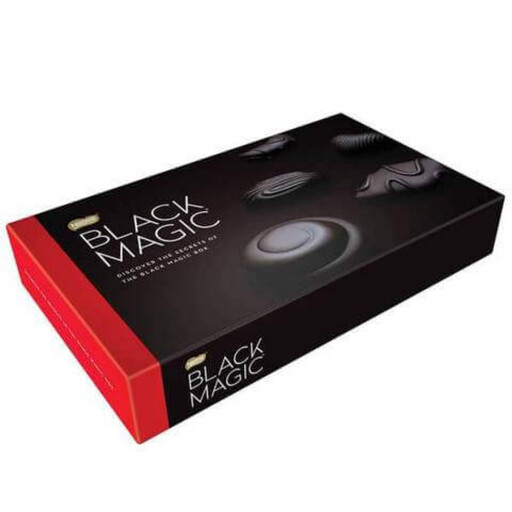
This dark-chocolate box is an option when the book club wants to pass around a selection rather than serve a loose sharing bag. Check its piece count if you intend to offer one chocolate per person.
 No image available
This 348g box provides a dark-chocolate selection for a book-club tasting. Check the current pack for almonds, hazelnuts, eggs and milk, and for precautionary statements concerning peanuts, other tree nuts and soya. Confirm the piece count and wrapping if you need equal or sealed portions.
Choose loose buttons if guests are comfortable sharing from a bowl; choose countable mini bars if planning a portion for each person matters more. Montezuma’s lists 120g dark-button bags, while Divine Chocolate lists a bag containing 100 mini bars.
Not necessarily. Lindt says its Excellence 85% bar is made to a vegan recipe but is not suitable for people with a milk allergy. Check the exact chocolate’s current ingredients and precautionary allergen statements before serving it.
Check the ingredients and precautionary statements on each current pack, then let guests see the information for the chocolate they may eat. Do not rely on “dark chocolate” or an online description alone to establish suitability.
Yes, when trying different filled chocolates is part of the gathering and the contents suit the guests. Marks & Spencer’s 292g dark selection is an example, but its allergy warnings make checking the exact pack particularly important.
Choose a very high-cocoa chocolate when you know the group wants that style, not simply because its percentage is higher. Montezuma’s lists 60% and 74% dark buttons as well as a 100% cocoa bar bundle, giving hosts distinct options to discuss with their group.