Hosts with mixed tastes to consider
If one bar needs to serve the whole group, a plain 70–75% cocoa option gives everyone a dark-chocolate starting point without making a 100% cocoa tasting the default.


For a book club with mixed tastes, a plain bar around 70–75% cocoa is a sensible starting point; save an 85–100% cocoa bar for a group that wants a more intense tasting. A flavoured bar can work when the added flavour is part of the plan, but check the current pack’s ingredients and allergen wording before sharing any bar.
If one bar needs to serve the whole group, a plain 70–75% cocoa option gives everyone a dark-chocolate starting point without making a 100% cocoa tasting the default.
If the chocolate itself is a discussion topic, consider an 85% bar or Montezuma’s Absolute Black 100% cocoa bar. Montezuma’s describes its bar as having no added sugar; agree on that style of tasting before choosing it for everyone.
Ask about attendees’ allergies, then read the ingredients and precautionary allergen wording on the exact pack. A vegan recipe alone does not establish suitability for someone with a milk allergy.
Choose the style of tasting first, then check the pack and the claims that matter to your group.
| Priority | What to check | Your needs |
|---|---|---|
| Cocoa level | Compare the stated cocoa percentage and whether the bar has added sugar. Divine and Lindt each offer a 70% bar; Montezuma’s describes Absolute Black as 100% cocoa with no added sugar. | I’m sharing one bar with people who have different tastes, so I’d start around 70–75%. If everyone wants a higher-cocoa tasting, I can choose that deliberately. |
| Allergens | Read both the ingredient list and any ‘may contain’ wording on the current pack. Lindt says its Excellence 70% bar is made to a vegan recipe but is not suitable for people with a milk allergy. | Before I bring chocolate for the group, I need to know whether anyone must avoid an ingredient or a stated cross-contact risk. |
| Flavour | Decide whether the discussion is about plain dark chocolate or an added flavour. For example, Divine’s raspberry bar is a different tasting choice from a plain 70% bar. | If we want to compare cocoa character, I’d choose a plain bar. Raspberry makes more sense when the club wants to discuss that flavour too. |
| Provenance | Look for a specific origin or sourcing statement on the bar rather than relying on its presentation. Divine describes its business as farmer co-owned; treat product-level sourcing statements as the maker’s claims. | When cocoa origin or sourcing is part of our conversation, I want a claim I can read on the particular bar we are sharing. |
Lindt explicitly says its vegan-recipe Excellence 70% bar is not suitable for people with a milk allergy. The Food Standards Agency explains that precautionary allergen wording signals that an allergen could be unintentionally present.
Ask attendees about allergies and check the ingredients and warnings on the exact pack before serving it.
Montezuma’s describes Absolute Black as 100% cocoa with no added sugar. That makes it a distinct choice from the 70–75% bars considered for a mixed-taste group.
Start with a 70–75% bar for a general shared tasting; choose 100% when the group specifically wants to try it.
A fruit-flavoured bar gives the group something different to discuss from a plain dark bar, and inclusions call for their own ingredient and allergen checks.
Choose plain chocolate when cocoa is the focus. Bring a flavoured bar when the group has agreed to explore the flavour pairing.
Divine offers a plain 70% dark chocolate bar and describes its business as farmer co-owned.
Lindt’s Excellence range includes a 70% dark chocolate bar in a 100 g format.
Montezuma’s Absolute Black is a 100% cocoa bar that the maker describes as having no added sugar.
Hotel Chocolat offers an 85% Dark Chocolate Slab Selector for a higher-cocoa tasting.
M&S lists a 75% cocoa single-origin bar and an 85% dark chocolate bar.
These single bars sit around the 70–75% cocoa starting range. Two are options to consider for a plain-chocolate discussion; the Divine raspberry bar suits a group that wants an added flavour.
 No image available
A 70% cocoa single bar to consider when the group wants to start with plain dark chocolate. Check the current pack’s milk and nut precautionary wording before sharing it.
 No image available
A 72% cocoa single bar for a group considering the 70–75% range. Its listing identifies Dominican Republic cocoa; check the current pack for ingredients and allergen warnings before serving.
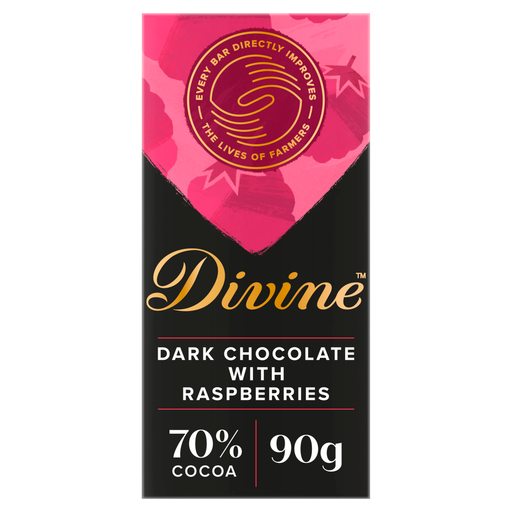 No image available
Choose this 70% cocoa bar when raspberry is intended to be part of the tasting, rather than as a plain-chocolate baseline. The listing calls it vegan-friendly but also lists milk; do not rely on the vegan wording, and check the current pack before serving.
No. For a group with mixed tastes, a plain bar around 70–75% cocoa is a practical starting point. Choose an 85% bar or Montezuma’s 100% cocoa Absolute Black when the group specifically wants to discuss a higher-cocoa style.
Not necessarily. Lindt says its Excellence 70% bar is made to a vegan recipe but is not suitable for people with a milk allergy. Check the exact pack’s ingredients and precautionary allergen wording for any bar you intend to share.
The Food Standards Agency explains that precautionary allergen labelling communicates that a regulated allergen could be unintentionally present. If a guest needs to avoid that allergen, ask them what is appropriate and check the wording on the bar you have bought.
Use it to narrow your choices, then read the current pack before serving. M&S advises shoppers that product ingredients and allergen information can change, so an earlier description should not stand in for the bar in your hand.