Choose dark chocolate identified for cooking or baking, then match its cocoa percentage to the cake you want: a bar around 51% gives a sweeter profile, while 70% or higher gives a more intense, less sweet one, as described in M&S baking guidance. A 70% cooking bar is a starting point for a cocoa-led cake, but follow any percentage specified by the recipe and check the current pack for allergens.
Who is this choice for?
Bakers making cocoa-led cakes
If chocolate is a prominent ingredient in a sponge, brownie or torte, check both the recipe’s cocoa percentage and whether the bar is intended for baking. Lindt and Green & Black's describe their 70% cooking bars for these kinds of bakes.
Bakers choosing a sweeter profile
A lower-cocoa dark cooking bar is worth considering when a distinctly bitter cake would not suit the people eating it. Lindt offers separate 51% and 70% cooking bars, while M&S describes higher-cocoa dark chocolate as more intense and less sweet.
People baking for someone with an allergy
Check the exact product’s current ingredient and precautionary allergen statements before baking and serving. Dark chocolate or a vegan recipe is not, by itself, an assurance that a bar is suitable for someone with a milk or nut allergy.
What should you check before buying?
Start with the recipe’s chocolate type and cocoa percentage. Then check the product’s stated baking use and its current allergen information.
| Priority | What to check | Your needs |
|---|
| Cocoa and sweetness |
Check the percentage specified by the recipe and the percentage on the pack. M&S describes higher-cocoa dark chocolate as more intense and less sweet; its guidance points to 70% for an intense bake. |
I want the chocolate flavour to come through without making the cake more bitter than intended. For a sweeter result, I would consider a lower-cocoa dark bar and follow the recipe’s sugar quantities. |
| Baking use |
Look for a cooking-chocolate designation or an explicit statement that the bar can be used in baking. Check the recipe if it calls for chocolate to be melted into the batter or used in icing. |
The chocolate will be a main ingredient in my cake, so I want to know that the product is intended for baking rather than choosing it on cocoa percentage alone. |
| Allergens |
Read the current pack’s ingredients and precautionary statements for the exact product. Check again before serving an allergy-sensitive bake; dark chocolate and vegan-recipe descriptions do not replace that check. |
When baking for someone else, I need to confirm that this particular bar is appropriate for them, including any milk or nut warnings. |
What can go wrong?
-
Assuming all dark chocolate gives the same result
Lindt sells both 51% and 70% cooking bars, and M&S describes higher-cocoa chocolate as more intense and less sweet. Changing the percentage can therefore change the flavour balance a recipe is designed around.
Use the percentage named in the recipe where possible. If none is given, decide whether you want a sweeter dark-chocolate flavour or a more pronounced cocoa flavour before selecting a bar.
-
Reading “dark” or “vegan recipe” as an allergen assurance
Dark cooking chocolates can carry milk and nut warnings. A description of the recipe does not settle whether the finished product is suitable for someone with an allergy.
Check the exact pack’s ingredients and precautionary statements before using the chocolate and again before serving the cake.
-
Choosing an eating bar on cocoa percentage alone
A high cocoa percentage describes the chocolate’s composition, not whether its maker identifies it for the baking method in your recipe. Waitrose, for example, explicitly describes its 72% bar as usable in baking, although it is not a dedicated cooking bar.
For a cake in which chocolate is a main ingredient, check the product’s stated use and the recipe’s requirements as well as the percentage.
Relevant brand references
These examples show distinctions between particular cooking bars and other dark chocolate; a brand name alone does not establish baking or allergen suitability.
Lindt
Lindt Shop UK describes separate 51% and 70% COOKING bars for cakes and other bakes.
- The two stated cocoa percentages offer a choice between a sweeter and a more intense dark-chocolate profile.
- Check the current pack’s milk and nut information; a vegan-recipe description is not an allergy assurance.
M&S
M&S lists a dark chocolate with at least 70% cocoa solids in its cooking-chocolate range.
- Its baking guidance links 70% dark chocolate with a more intense flavour.
- The product information identifies its dark chocolate as unsuitable for people with a milk allergy; check the current pack for the full allergen statement.
Waitrose
Waitrose & Partners describes its own-label 72% Belgian dark chocolate as usable in baking for an intense chocolate flavour.
- The stated 72% minimum cocoa-solids content makes the percentage clear when matching a recipe.
- It is not presented as a dedicated cooking bar; check the intended baking method and the current allergen statement.
Green & Black's
Waitrose & Partners lists a Green & Black's Organic Cooking Dark Chocolate bar with 70% cocoa solids.
- The cooking designation and stated percentage make this particular bar relevant to a recipe calling for 70% baking chocolate.
- Check the exact bar’s current allergen statement; its organic designation does not answer that question.
Dark chocolate options on Joybuy
These options include dark chocolate chips, a cooking bar and other dark bars to consider against your cake recipe. For bars not identified as cooking chocolate, check that their stated use suits your baking method.
 No image available
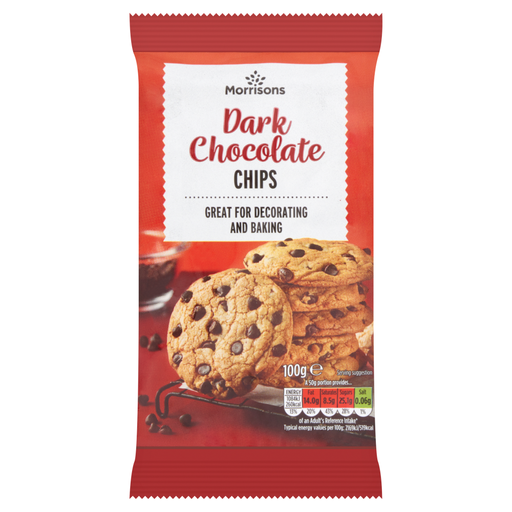
Morrisons Dark Chocolate Chips 100g
Chip format is an option when the recipe calls for chocolate pieces mixed into a cake batter or used on top. Check the current pack’s allergen statement before using it for an allergy-sensitive bake.
 No image available
Menier Dark Cooking Chocolate 70% Cocoa 100g
This 70% cooking-chocolate bar is a candidate for a cake recipe calling for dark chocolate to be used as an ingredient. Check the recipe’s specified percentage and the current pack’s allergen statement.
 No image available
Morrisons The Best Dominican Republic Dark Chocolate 72% Cocoa 100g
The stated 72% cocoa content offers a higher-cocoa option for a recipe seeking that profile. This is a dark bar rather than one identified as cooking chocolate, so check the recipe’s method and the current pack’s allergen statement.
 No image available
Green & Black's Dark Chocolate 70% 90g
This 70% dark bar can be considered when matching a recipe’s cocoa percentage. It is distinct from Green & Black's 70% cooking bar: confirm that this bar suits the intended cake recipe, and check its current allergen statement.
 No image available
Green & Black's Dark Chocolate 85% 90g
The stated 85% cocoa content makes this a choice to investigate when a recipe calls for very high-cocoa dark chocolate. Confirm that this bar suits the baking method and check the current pack’s allergen statement.
Questions about baking with dark chocolate
Can I swap white chocolate for dark chocolate in a cake?
Not without changing the intended result. M&S distinguishes white chocolate, which contains cocoa butter but no cocoa solids, from dark chocolate; the two give different flavour and sweetness profiles. Use a recipe written for the chocolate type you plan to bake with.
Should I use 51% or 70% dark chocolate for a cake?
Choose a lower-cocoa dark chocolate for a sweeter profile, or 70% for a more intense, less sweet one, in line with M&S baking guidance. Lindt sells cooking bars at both 51% and 70%; if your recipe specifies a percentage, follow it rather than swapping bars without considering the cake’s flavour balance.
Is dark chocolate suitable for a guest with a milk allergy?
Do not assume it is. The stated allergen information for individual dark chocolates can include milk warnings, including products described as made to a vegan recipe. Check the exact current pack and its precautionary statements before baking or serving.


