Bakers following a dark-chocolate recipe
If the chocolate will be melted into a sponge, brownie, ganache or frosting, the recipe’s cocoa guidance and the product’s composition matter more than the word “dark” alone.


For a cake recipe that measures dark chocolate into the batter or ganache, choose a plain bar and compare its stated cocoa percentage with the recipe: Good Food’s chocolate cake calls for about 60% cocoa solids. Keep boxed assortments and filled or nut-containing chocolates for toppings or mix-ins when their flavours and textures are intentional. Check the current pack for ingredients and allergen warnings before baking for others.
If the chocolate will be melted into a sponge, brownie, ganache or frosting, the recipe’s cocoa guidance and the product’s composition matter more than the word “dark” alone.
If you already have an assortment, decide whether individual pieces belong in a topping or mix-in. Their centres and coatings may not suit a recipe’s measured melted-chocolate ingredient.
If someone eating the cake needs to avoid particular ingredients or allergens, check the exact current pack, including its ingredient list and any precautionary warning. A “dark” label alone does not settle suitability.
Start with the recipe’s chocolate quantity and cocoa guidance, then decide whether any fillings or added textures belong in the cake.
| Priority | What to check | Your needs |
|---|---|---|
| Cocoa level | Compare the product’s stated cocoa solids with the recipe. Good Food specifies about 60% for one chocolate cake; Lindt states a 70% minimum for its EXCELLENCE Dark 70% bar. | My recipe names a cocoa percentage, so I want to check the bar against it rather than assume all dark chocolate will give the intended flavour. |
| Chocolate format | For measured melted chocolate, check whether the product is a plain bar or contains centres, nuts or other additions. Nestlé describes Quality Street as a mixed assortment; its dark chocolate is listed at 35% cocoa solids minimum. | I want a consistent chocolate ingredient in the batter or ganache. For a topping, I might deliberately choose the flavours and textures of individual boxed chocolates. |
| Ingredients and allergens | Read the current pack’s ingredients, highlighted allergens and any precautionary statement. Check each product separately, including one described as vegan or dark. | Someone eating the cake needs to avoid an ingredient or allergen, so the exact pack information matters more than the product name. |
| Melting method | Follow the recipe’s method and avoid overheating. Good Food instructs bakers to warm chocolate and butter over low heat only until melted in its chocolate cake recipe. | If the chocolate goes into the batter or ganache, I need to melt it as the recipe directs, rather than treat a decorative chocolate piece the same way. |
Centres and coatings change what goes into the measured chocolate portion. Nestlé’s Quality Street tin, for example, contains milk and dark chocolates alongside toffees and fruit creams.
Use a plain dark bar when the recipe calls for melted dark chocolate; reserve assorted pieces for toppings or mix-ins whose flavours you want in the finished cake.
Ferrero Rocher describes its Dark 70% hazelnut bar as a product containing 60% dark chocolate. It is not the same composition as a plain 70% bar.
Read the full product description and ingredients before using a filled or nut-containing chocolate in place of a plain bar.
Dark products can still contain milk or nuts, or carry precautionary allergen warnings. Lindt says its EXCELLENCE Dark 70% bar is made to a vegan recipe but is not suitable for someone with a milk allergy.
Check the current pack for the particular people eating the cake, including any “may contain” statement.
Good Food’s chocolate cake method calls for gentle warming only until the chocolate and butter have melted.
Follow the method in your chosen recipe and stop heating once the chocolate has melted.
A plain-bar reference when a cake recipe specifies a cocoa percentage. Lindt lists its EXCELLENCE Dark 70% bar at 70% cocoa solids minimum and describes it as suitable for baking and cooking.
Cadbury’s Bournville Classic is a dark bar, while Roses and Heroes are assortments with different purposes in a bake.
An assortment to consider for selected toppings or mix-ins, rather than as a uniform plain-dark ingredient.
A range to examine when hazelnut flavour or texture is deliberate, not when a recipe requires plain melted dark chocolate.
These options include dark bars for comparing cocoa levels and chocolate chips for recipes or decoration that call for that format. Match the percentage and form to your recipe before substituting one for another.
 No image available
A cooking-chocolate bar to consider when the recipe allows 70% cocoa. Its stated percentage is higher than the about 60% specified in Good Food’s chocolate cake recipe; check the current pack for ingredients and allergens.
 No image available
A dark bar for a bake where 72% cocoa suits the recipe. That percentage is not an exact match for a recipe specifying about 60%; check the current pack for ingredients and allergens.
 No image available
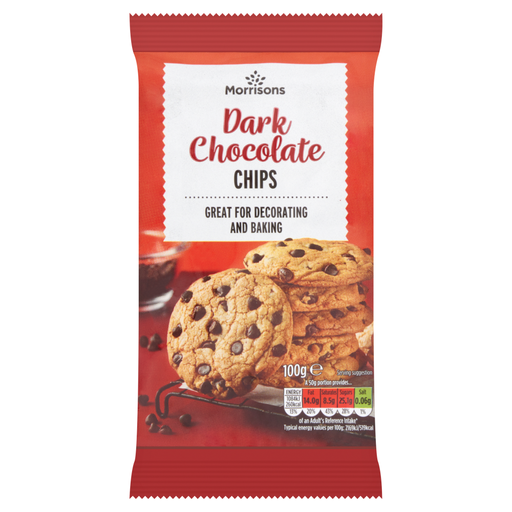
A chip-format option when the recipe calls for chocolate chips or when chips suit the intended decoration. Check the pack’s cocoa percentage before using them in a recipe that specifies one, and do not assume they are interchangeable with a measured quantity of melted bar chocolate.
 No image available
A dark bar with a stated 70% cocoa level, useful for checking against a recipe’s specified percentage. Its 90g pack size also matters if the recipe measures chocolate by weight; check the current pack for ingredients and allergens.
 No image available
A dark bar to consider when the recipe calls for, or allows, an 85% cocoa product. That is a substantial change from Good Food’s example of about 60%, so check the recipe before substituting it and read the current pack for allergens.
Use a plain dark bar for a recipe’s measured melted-chocolate ingredient unless the recipe calls for the assortment’s particular pieces. Boxed chocolates may contain milk chocolate, toffee, fruit centres or nuts, which change the ingredients and texture; selected pieces can instead be used as intentional toppings or mix-ins.
Start with the recipe’s specification. Good Food’s chocolate cake calls for dark chocolate at about 60% cocoa solids; a plain 70% bar has a different stated cocoa level and should not be treated as an identical substitute.
No: check the current ingredients and allergen statement for the exact product. Lindt says its EXCELLENCE Dark 70% bar is made to a vegan recipe but is not suitable for someone with a milk allergy, while Ferrero Rocher’s Dark 70% hazelnut bar contains milk ingredients.
Read the current pack’s ingredient list, emphasised allergens and any precautionary statement before baking for someone with an allergy. Food Standards Scotland states that 14 allergens must be declared by law in the UK; a product name or “dark” description is not a substitute for its pack information.
Follow the method in your chosen recipe and avoid overheating. In its chocolate cake recipe, Good Food instructs bakers to warm chopped dark chocolate and butter over low heat only until melted.