Hosts offering refreshments to a mixed crowd
If you want to offer chocolate without breaking up a large bar at the stall, compare bite-size buttons with products sold in sharing packs. Check how each pack can be kept closed between servings.


Choose bite-size dark buttons if you want to offer pieces without breaking up a bar at the stall. A wafer sharing box offers a different texture, while chocolate-coated fruit adds another flavour; check the exact pack for allergens and storage instructions before serving either. If refreshments are supplied as part of a food business, check the duties that apply to your activity and location.
If you want to offer chocolate without breaking up a large bar at the stall, compare bite-size buttons with products sold in sharing packs. Check how each pack can be kept closed between servings.
Dark chocolate is not automatically free from milk, wheat or nuts. Read the current label for the exact product and keep its ingredient and allergen information available.
Keep the product information needed to answer ingredient and allergen questions. Food Standards Agency guidance requires food businesses in England, Northern Ireland and Wales to provide allergen information for prepacked and non-prepacked food; check with your local authority whether your activity is a food business.
Start with how people will take a portion, then compare the exact labels and the conditions at your stall.
| Priority | What to check | Your needs |
|---|---|---|
| Serving format | Look for separate pieces or a sharing pack. Check whether portions need handling or unwrapping at the stall, and whether the pack closes between servings. | I want guests to take a piece without my breaking up a bar. Buttons and a sharing box are different formats, so I would check how the chosen pack presents its contents. |
| Ingredients and allergens | Read the exact pack’s ingredients and allergen statements, including any precautionary warnings. Keep that information available if the chocolate is offered outside its original pack. | Some guests may need to avoid particular ingredients. I cannot use the words “dark chocolate” or a cocoa percentage as a substitute for the product label. |
| Flavour and cocoa content | Compare plain 60% dark buttons, 70% dark-chocolate-coated fruit and 100% cocoa buttons as distinct products. Check for fruit, wafer or other additions if you want plain chocolate. | I might choose plain buttons for straightforward portions, or fruit-coated pieces for a different flavour. A 100% cocoa option needs to be clearly identified for guests who want that style. |
| Outdoor storage | Follow the chosen pack’s storage and after-opening instructions. For its sour cherries, M&S specifies a cool, dry place away from sunlight and resealing after opening. | At an outdoor stall, I need somewhere shaded and dry to keep the chocolate, with the pack information close to hand. |
Lindt’s dark Choco Wafer box lists wheat, milk, lactose and soya, as well as possible further allergens. M&S labels its dark-chocolate-coated sour cherries unsuitable for people with several specified allergies.
Read the current label of the exact product before buying for guests with allergies, and keep its allergen information available when serving.
Montezuma’s 100% cocoa buttons are a different choice from its 60% dark buttons or M&S’s fruit-coated chocolate. The cocoa percentage alone does not establish what every guest will prefer.
Identify the 100% cocoa option clearly. If you want to offer a choice of formats or flavours, compare the other packs separately rather than treating them as interchangeable.
The packaging also carries the instructions guests and hosts may need. M&S tells buyers to keep its dark-chocolate-coated sour cherries cool and dry, away from sunlight, and to reseal them after opening.
Plan a shaded, dry place for the pack, close it between servings and follow its own after-opening directions.
These ranges illustrate different ways to offer dark chocolate; check the particular product rather than assuming one brand’s labels apply across its range.
Montezuma’s lists 120g bags of 60% dark buttons and 100% cocoa buttons, both in bite-size formats.
Lindt’s 130g dark Choco Wafer box is labelled for sharing, but its wafer-and-filling format is not plain dark chocolate.
M&S lists 130g sour cherries coated in 70% dark chocolate among its sharing bags.
Divine’s dark-chocolate bundle contains three 90g bars: plain 70%, raspberry, and ginger and orange.
Hotel Chocolat lists dark-chocolate Selectors alongside dark batons, including 70% and 85% varieties.
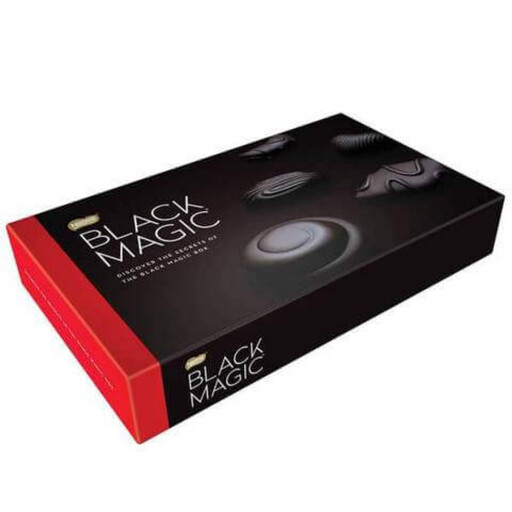
This dark-chocolate box is an option for offering pieces at a car boot sale rather than choosing a loose sharing bag. Check its presentation if guests need to take individually wrapped portions.
 No image available
A dark-chocolate box to consider when offering pieces rather than a loose bag. Check the pack if individual wrapping matters for serving, and review its milk, egg and nut information before offering it to guests with allergies. Keep it closed in a cool, dry place away from direct sunlight.
Bite-size buttons avoid breaking up a bar at the stall; a product sold as a sharing box is another format to compare. Montezuma’s lists dark buttons, while Lindt labels its dark Choco Wafer box for sharing. Check how the chosen pack closes and how guests will take a portion.
No. Lindt’s dark Choco Wafer box contains milk ingredients and lists possible hazelnuts and almonds; M&S labels its dark-chocolate-coated sour cherries unsuitable for people with milk, nut and peanut allergies. Check the current label of the exact pack rather than relying on its name or cocoa percentage.
Follow that product’s label and keep the pack protected from the conditions it warns about. For its 70% dark-chocolate-coated sour cherries, M&S specifies cool, dry storage away from sunlight, then resealing and eating within one week of opening; do not apply that one-week instruction to other products without checking their labels.
If you operate a food business in England, Northern Ireland or Wales, Food Standards Agency guidance requires allergen information for both prepacked and non-prepacked food. Whether a particular occasional refreshment activity is a food business needs checking against its circumstances; ask the relevant local authority about your arrangement and local requirements.
For an activity that is a food business, the Food Standards Agency’s registration service says to register with the local authority at least 28 days before trading or starting food operations. Check with the local authority whether your car boot sale refreshments fall within that requirement rather than assuming every private or occasional activity does.