Hosts serving mixed tastes
A bar around 70% cocoa gives guests a high-cocoa dark option without making a 100% cocoa bar the only choice. A more intense bar can sit alongside it for guests who want one.


For a coffee morning with mixed tastes, a clearly labelled bar around 70% cocoa is a sensible dark-chocolate starting point; offer a higher-cocoa bar as an additional choice if you know some guests prefer a more intense cocoa flavour. Check each current packet before serving, particularly its ingredients and allergen statements: neither a high cocoa percentage nor vegan wording establishes allergy suitability.
The useful starting point is not the highest cocoa figure, but whose preferences and dietary requirements the chocolate needs to accommodate.
A bar around 70% cocoa gives guests a high-cocoa dark option without making a 100% cocoa bar the only choice. A more intense bar can sit alongside it for guests who want one.
If you know guests enjoy a stronger cocoa flavour, compare the declared cocoa percentage and ingredients of higher-cocoa bars rather than assuming that all dark chocolate tastes alike.
Choose using each current packet’s ingredients and precautionary allergen statements. The Lindt 70% and M&S high-cocoa examples described in their product information carry allergy restrictions despite their dark-chocolate or vegan descriptions.
Decide whether the bar is for the whole group or a smaller tasting choice, then check its label and pack size.
Choose when: You want one high-cocoa dark option for guests with differing tastes.
Bear in mind: The percentage does not establish allergy suitability or tell you whether every guest will enjoy the flavour.
Choose when: Some guests already prefer a more pronounced cocoa flavour; M&S Food lists a bar with 75% minimum cocoa solids.
Bear in mind: The M&S product information says that bar is not suitable for people with milk, nut or peanut allergies.
Choose when: You want a separate tasting option for guests who already enjoy unsweetened cocoa; M&S Food lists a 100% cocoa bar made from cocoa mass.
Bear in mind: Its flavour will be a more specialised choice, and the M&S listing excludes people with milk, nut or peanut allergies.
| Priority | What to check | Your needs |
|---|---|---|
| Cocoa and flavour | Read the declared cocoa-solids percentage and ingredients. Compare sugars per 100 g if sweetness matters; a percentage alone does not describe every aspect of flavour. | I’m serving guests with different tastes, so I’d like a dark option for the group and a more intense bar only if someone wants it. |
| Allergens | Read the exact packet’s ingredients, allergen declaration and any “may contain” statement. Do not use “dark” or “vegan” as a substitute for those checks. | Before I put chocolate out, I need to know whether each bar is suitable for the guests who will eat it. |
| Quantity | Compare bar weights and how you plan to divide the chocolate. Decide whether a higher-cocoa bar is an extra tasting option or part of what you will serve everyone. | Will there be enough of the group’s main choice, even if only a few people try the more intense bar? |
| Current label | Check the packet when buying and again before serving. M&S Food cautions that product ingredients and allergen information can change. | I want guests to be able to see the information for the chocolate actually on the table. |
A 100% cocoa bar offers a different, unsweetened choice from a 70% bar. That distinction matters when guests’ preferences are mixed.
Start with a labelled bar around 70% cocoa for the group, and add a higher-cocoa bar when you know guests want that flavour.
Lindt describes its EXCELLENCE 70% bar as made to a vegan recipe, but its product information says it is not suitable for people with a milk allergy.
Read the complete allergen and precautionary statements on the current packet for every bar you intend to serve.
M&S Food notes that ingredients and allergen information may change. An earlier product description cannot replace the label on the bar in front of you.
Keep the labelled packaging available so guests can check the exact product before taking a piece.
These examples show how cocoa declarations and product-specific warnings can differ; a brand name alone does not settle the choice.
Lindt Shop UK declares 70% minimum cocoa solids for its EXCELLENCE Dark 70% bar, giving you a named cocoa level to compare.
M&S Food lists both a dark bar with 75% minimum cocoa solids and a 100% cocoa bar, two distinct choices for a tasting plate.
Cadbury UK lists Bournville Classic Dark Chocolate as a dark-chocolate alternative for the gathering.
Waitrose & Partners’ dark-chocolate category lists bars at several cocoa levels, including 65%, 70%, 85% and 90%.
These bars cover choices near 70% cocoa and higher-cocoa additions for a coffee morning. Check the current packet, particularly when serving anyone with an allergy or a dietary requirement.
 No image available
A near-70% option for the group’s main dark-chocolate choice; the product description suggests pairing it with espresso. The listing states 72% minimum cocoa solids and five 20 g portions. It lists soya and precautionary statements for gluten, milk, nuts and peanuts; check the current packet before serving.
 No image available
A fruit-accented option alongside plain dark chocolate: the listing states 70% minimum cocoa solids and 3% freeze-dried raspberry pieces in a 90 g bar. Its vegan wording conflicts with milk-related ingredient and allergen text. Do not use the listing to decide dietary or allergy suitability; check the current packet.
 No image available
Another labelled 70% option for serving with coffee, which the product description names as a pairing. The listing states 70% minimum cocoa solids in a 90 g bar and says it may contain almonds, hazelnuts, other nuts and milk; check the current packet for guests with allergies.
 No image available
A higher-cocoa addition for guests who prefer a more intense dark-chocolate choice. The listing states 85% minimum cocoa solids and a 100 g bar. Its allergen section names nuts, milk, soya and sesame without making clear which are ingredients and which are precautionary warnings; read the current packet before serving.
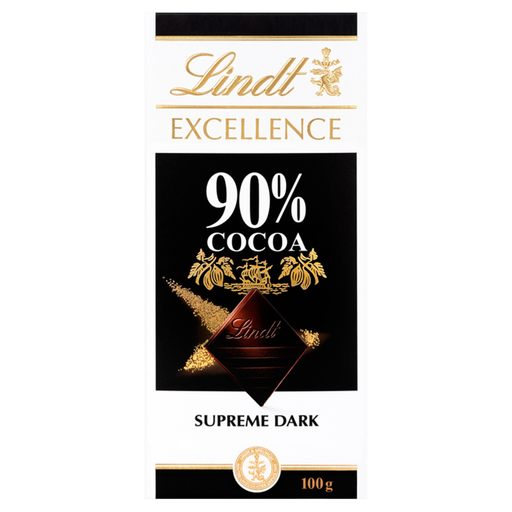 No image available
A separate choice for guests seeking a very high-cocoa bar. The 100 g product title states 90% cocoa; confirm the cocoa-solids declaration on the current packet if that figure drives your choice. The listing says it may contain hazelnuts, almonds, other nuts, milk and soya.
Start with a clearly labelled bar around 70% cocoa as the main dark option, then add a higher-cocoa bar if you know some guests enjoy a more intense flavour. M&S Food’s 100% cocoa example is made from cocoa mass and lists 0.4 g sugars per 100 g, making it a distinct tasting choice rather than a like-for-like substitute for a 70% bar.
Not necessarily. Lindt’s EXCELLENCE 70% product information describes a vegan recipe but says the bar is not suitable for people with a milk allergy. Check the current packet of the exact bar you plan to serve.
Read each packet’s ingredients, allergen declaration and any precautionary “may contain” statement, then keep the packaging available for guests. The product information for the Lindt and M&S high-cocoa examples includes allergy restrictions, so the cocoa percentage alone cannot answer whether a bar is suitable.