What should you check before buying?
Decide how guests will take a piece, then compare the chocolate style, pack label and any sourcing information that matters to you.
| Priority | What to check | Your needs |
|---|
| Serving format |
Look for loose buttons, coated pieces or a box of separate chocolates if guests will help themselves. Bars need breaking or plating; check the portion count if it matters for your table. |
I want guests to take a small piece without passing around a large bar. |
| Cocoa and flavour |
Read the stated cocoa percentage and product description. Montezuma’s lists 60% and 74% dark buttons; M&S describes its 85% dark bar as having an intense cocoa flavour. Fruit, wafer and flavoured fillings make for a different choice from plain chocolate. |
For a mixed group, I’d choose a style guests are likely to enjoy rather than assume that a higher cocoa percentage is preferable. |
| Allergens |
Read the exact pack’s ingredients and precautionary statements, including those for milk, cereals containing gluten, nuts and peanuts where relevant. Check each variety separately in a mixed selection. |
If a guest has an allergy, I need to know what is in each chocolate and whether its label warns of possible allergen presence. |
| Sourcing |
Check the specific maker’s sourcing statements rather than inferring them from the chocolate format. Divine says it is farmer co-owned and uses Fairtrade ingredients where possible. |
I’d like to understand a maker’s stated sourcing approach before deciding which chocolate to serve. |
Brand and product-line references
These examples show how sharing formats differ; a brand name alone does not establish the ingredients or suitability of an individual pack.
Montezuma’s
Montezuma’s lists Giant 60% Dark Chocolate Buttons and Organic 74% Dark Chocolate Buttons, both in 120g bags.
- Loose buttons suit a table where guests take their own pieces.
- Check the chosen button pack’s ingredients and allergen statements before serving.
M&S
The M&S sharing-bag range includes 70% Dark Chocolate Coated Sour Cherries in a 130g bag; its dark-chocolate bars also include 70% and 85% options.
- The coated cherries offer a fruit-filled bag format, while the bars offer stated cocoa-percentage choices.
- M&S advises reading the current label. Its referenced 70% and 85% bars are marked unsuitable for people with milk, nut or peanut allergies.
Lindt
Lindt lists a 130g Choco Wafer Dark Chocolate Sharing Box for those considering a contained box rather than loose buttons.
- The box is a serving alternative to an open bag.
- This is a wafer-and-filling confection, not plain dark chocolate. Its listed ingredients include wheat, milk, lactose and soya, with precautionary statements for other allergens.
Divine
Divine’s Dark Chocolate Lover’s Bundle contains three 70% bars: plain, raspberry, and ginger and orange.
- Three flavours give a host options for a plated tasting selection. Divine says it is farmer co-owned and uses Fairtrade ingredients where possible.
- Bars need portioning for casual sharing. The bundle’s products carry ‘may contain’ statements for gluten, milk and nuts.
Hotel Chocolat
The Simple Dark Chocolate Truffles Selector is an alternative to a loose sharing bag for a plated presentation.
- A selector offers a different serving format from buttons or a bar.
- Check the selector’s pack for its ingredients, allergens and portion details before choosing it for guests.
Joybuy options for a cream tea table
These boxed dark-chocolate options suit a table where you would rather put out chocolates than break a bar. Check the pieces and pack details against the way you plan to serve them.
 No image available
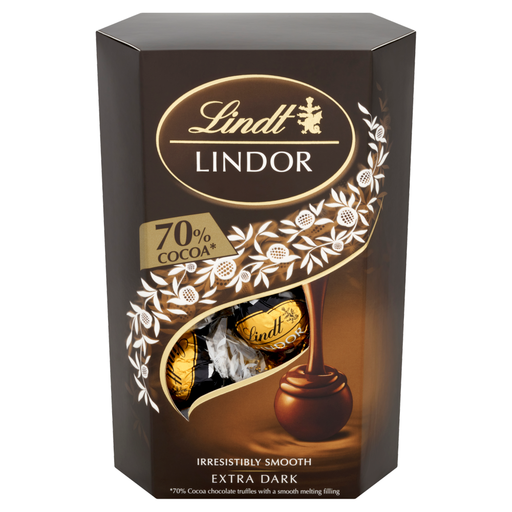
Lindt Lindor Dark 70% Cocoa 200g
Consider this boxed option if you want to set out chocolates rather than portion a bar. The product title states 70% cocoa and 200g; check the pack’s piece count and allergen statements before serving.
View on Joybuy
 No image available
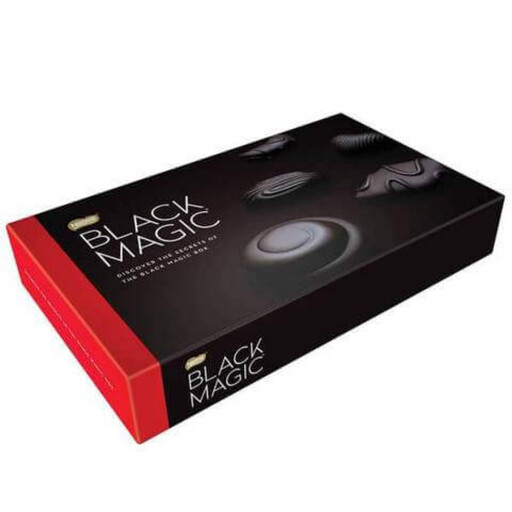
Nestle Black Magic Dark Chocolate Box 348g
Choose a boxed assortment if guests would prefer a selection to a plain bar, and check the flavours and piece count when planning portions. The product title states 348g; read the exact pack’s ingredients and allergen statements before sharing.
View on Joybuy
Frequently asked questions
Which cocoa percentage should I choose for a mixed group?
Choose with your guests’ flavour preferences in mind rather than treating a higher percentage as automatically preferable. Montezuma’s lists dark buttons at 60% and 74% cocoa, while M&S describes its 85% dark bar as having an intense cocoa flavour.
Are dark-chocolate sharing products always vegan or dairy-free?
No; check the exact product. Lindt’s Choco Wafer Dark Chocolate Sharing Box lists milk and lactose, while Divine describes its dark-chocolate bundle as vegan but gives a ‘may contain’ warning for milk, gluten and nuts.
What does ‘may contain’ mean on a chocolate pack?
The Food Standards Agency explains that precautionary allergen labelling indicates an allergen could be unintentionally present. Read these statements for the specific allergens relevant to your guests, as well as the ingredients list.
Can I rely on an online ingredient list for guests with allergies?
Read the physical pack as well. M&S advises shoppers not to rely solely on its online product information because ingredients, dietary and allergen details can change.
Can bars replace a dark-chocolate sharing bag?
Yes, if you can break or plate them before guests arrive. Divine’s three-bar dark-chocolate bundle offers plain, raspberry, and ginger-and-orange varieties; loose buttons or coated pieces need less preparation for self-service.


