A portioned dark-chocolate multipack makes sense when you want a measured treat for a commute, lunchbox or easy ride, provided you check the bar size, nutrition and allergens. It is a different choice from planning carbohydrate for a long or demanding ride: the Union Cycliste Internationale’s road-cycling nutrition review emphasises strategies tailored to the rider and ride, while a high-cocoa bar may provide relatively little carbohydrate per portion. A chocolate-coated date snack can offer a different carbohydrate amount, but check its pack format and allergy information rather than assuming it is an equivalent multipack.
Who is each format for?
Cyclists carrying an occasional treat
A measured piece of dark chocolate can go in a commuter bag or lunchbox when it is not being relied on as the main source of carbohydrate for a demanding ride. Check whether the pack contains separate portions if you want to take one at a time.
Cyclists comparing carbohydrate per snack
A chocolate-coated date bar and a high-cocoa chocolate bar can have quite different nutrition declarations. Compare the carbohydrate in the portion you would actually carry, then consider it alongside the rest of your ride food.
Buyers who prefer intense cocoa flavour
Very-high-cocoa chocolate can suit an occasional treat. If the snack is intended for a long or hard ride, check its carbohydrate per portion rather than treating cocoa percentage as a guide to fuelling.
What should you compare?
Start with the snack’s job: a portioned treat, food to carry between activities, or carbohydrate for a demanding ride. Then compare the actual portion and supplied pack, not just the words “dark chocolate” or “bundle”.
| Priority |
What to check |
Your needs |
| Carbohydrate per portion |
Read the carbohydrate figure and serving weight together. Divine Chocolate lists 31.7 g carbohydrate per 100 g for its 70% bar, or about 11.1 g for a 35 g bar; Marks & Spencer lists 60 g per 100 g for its 50 g dark-chocolate date bar, or 30 g per bar. |
For a demanding ride, I need to know what one portion contributes to my wider fuelling plan. For an occasional treat, carbohydrate delivery may not be the reason I choose it. |
| Pack and portion format |
Check the number of pieces, weight per piece and whether they are individually wrapped. Divine Chocolate lists 30 separate 35 g bars; Montezuma’s lists four 90 g bars in its Absolute Black Taster Bundle. |
I want to take one portion on a commute or put it in a lunchbox without having to divide a larger bar. A bundle of large bars would need a different portioning plan. |
| Ingredients and allergens |
Read the supplied pack’s ingredients, allergen information and any “may contain” statement. Check the exact variety: the Food Standards Agency explains that precautionary allergen labelling communicates possible unintended allergen presence. |
If food is going into a shared lunchbox or cycling-group bag, I need to check it against the people eating it and any relevant group rules—not assume dark chocolate is suitable for everyone. |
| Cocoa and fat |
Compare cocoa percentage with carbohydrate and fat per portion. Montezuma’s lists 18 g carbohydrate and 53 g fat per 100 g for its plain Absolute Black bar; Divine Chocolate lists 44.3 g fat per 100 g for its 70% bar. Those figures describe different products, not interchangeable serving sizes. |
I may choose intense cocoa flavour for a treat. When the purpose is ride carbohydrate, I need the nutrition for the portion I will eat rather than relying on a high cocoa percentage. |
Common buying mistakes
-
Treating high-cocoa chocolate like a carbohydrate sports product
Montezuma’s lists 18 g carbohydrate and 53 g fat per 100 g for its plain Absolute Black bar. The Union Cycliste Internationale’s road-cycling nutrition review describes fuelling as dependent on the rider and the demands of the ride; a cocoa percentage cannot tell you whether one bar meets those needs.
Decide whether you are buying a treat or food for a planned ride, then calculate carbohydrate from the portion you intend to carry.
-
Assuming dark chocolate suits every shared lunchbox
Ingredients and allergen statements differ by product. Marks & Spencer’s dark-chocolate date bar, for example, lists several allergy-related suitability exclusions, while precautionary “may contain” wording can indicate possible unintended allergen presence.
Check the exact supplied pack and any school, club or household allergy requirements before sharing it.
-
Confusing a bundle with individually portioned bars
Divine Chocolate’s 30-pack contains separate 35 g bars. Montezuma’s Absolute Black Taster Bundle contains four 90 g bars, which are a different format to divide and carry.
Compare the piece count and weight of each piece before choosing a pack for repeat outings.
-
Relying on an online label when pack details matter
Marks & Spencer warns that ingredients, nutrition and allergen information can change. That matters when a dietary restriction or a precise portion calculation affects your choice.
Recheck the label on the pack you receive before packing or sharing the food.
Brand and range references
These examples illustrate different chocolate and snack formats; the brand alone does not establish the portion size, ingredients or suitability of a particular product.
Divine
A reference point for separately portioned conventional dark chocolate: Divine Chocolate lists a pack of 30 bars, each weighing 35 g and labelled 70% cocoa.
- The stated piece count makes it straightforward to allocate one bar to a lunchbox or outing.
- Its 70% bar lists 31.7 g carbohydrate and 44.3 g fat per 100 g; the pack also states that it may contain milk, gluten and nuts.
Montezuma’s
An option to examine if cocoa intensity is the aim rather than using chocolate primarily for ride carbohydrate. Its Absolute Black Taster Bundle contains four 90 g bars, including plain and flavoured varieties.
- Montezuma’s lists the plain Absolute Black bar as 100% cocoa, with 0.6 g sugars per 100 g.
- The plain bar lists 53 g fat and 18 g carbohydrate per 100 g. Check ingredients and allergens for the particular bar in the bundle.
M&S
Marks & Spencer offers both a dark-chocolate-coated date bar and conventional high-cocoa chocolate, giving shoppers two distinct ingredient bases to compare.
- Its 50 g date bar lists 60 g carbohydrate per 100 g, equivalent to 30 g per bar.
- Its 85% dark-chocolate bar instead lists 24.6 g carbohydrate and 49.9 g fat per 100 g. The date-bar listing has multiple allergy-related exclusions; read the supplied label for the product you choose.
Hotel Chocolat
A range to consider for flavour variety or sharing rather than assuming every format is a cycling multipack. Hotel Chocolat lists 70% and 85% dark batons alongside other dark-chocolate selections.
- The range includes different cocoa percentages and formats to compare by piece and pack.
- Ingredients vary: its Fruit & Nut 80% Selector contains almonds, hazelnuts and cherries.
Lindt
Lindt’s UK listings include an Excellence 70% cocoa bar and a dark Choco Wafer sharing box. They should be compared as different foods, not simply as two pack sizes of the same chocolate.
- The listings give a conventional high-cocoa bar and a wafer-based sharing format to consider.
- Lindt describes the Choco Wafer product as wafer with a chocolate-based filling, covered in dark chocolate. Check its ingredients and nutrition separately from the Excellence bar.
Joybuy snack-bar options
These Joybuy options are portion-sized multipacks of snack bars containing dark chocolate, rather than multipacks of plain dark-chocolate bars. Compare their piece counts for lunchboxes or outings, and check each supplied pack before using a bar as part of a ride-fuelling plan.
 No image available
Special K Dark Chocolate Snack, 6 × 21.5 g
Six specified snack-bar portions offer a way to set aside food for separate lunchboxes or outings. This is a dark-chocolate snack bar rather than a plain chocolate bar; check the supplied pack’s ingredients, allergens and wrapping if those details affect how you will carry or share it.
View on Joybuy
 No image available
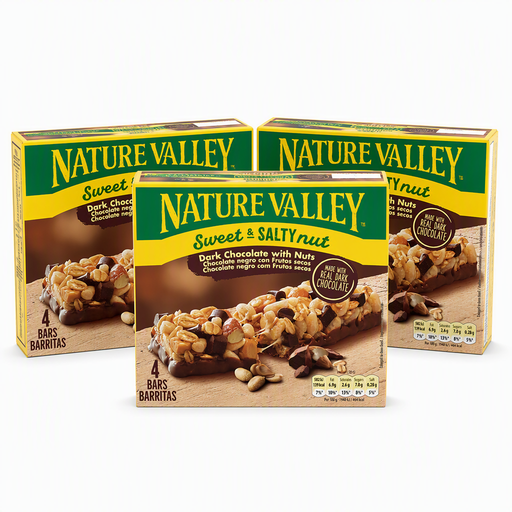
Nature Valley Sweet & Salty Nut Dark Chocolate with Nuts, 12 × 30 g
The twelve-bar format offers multiple specified 30 g snack portions. This is a nut-and-chocolate snack bar, not a plain dark-chocolate bar; check the supplied pack’s allergen information and whether its wrapping suits the way you intend to divide it between outings.
View on Joybuy
 No image available
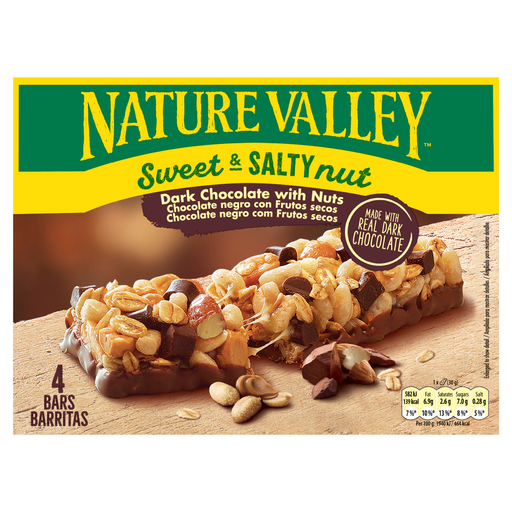
Nature Valley Sweet & Salty Nut Dark Chocolate with Nuts, 4 × 30 g
This four-bar variant gives a smaller number of specified 30 g portions than the twelve-bar variant. It remains a nut-and-chocolate snack bar rather than plain dark chocolate; read the supplied pack for allergens, nutrition and wrapping details before assigning bars to lunchboxes or rides.
View on Joybuy
 No image available
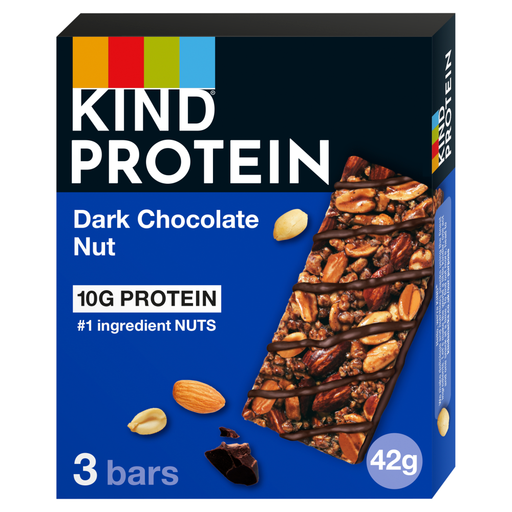
KIND Protein Dark Chocolate Nut Bars, 3 × 42 g
The pack specifies three 42 g nut-bar portions with dark chocolate. If you are choosing food for a ride, compare the supplied pack’s carbohydrate per bar with your wider plan; also check its ingredients, allergens and wrapping before carrying or sharing it.
View on Joybuy
Questions about cycling snacks
Can dark chocolate be my main food for a long or hard ride?
Do not assume a dark-chocolate bar will cover a demanding ride’s carbohydrate needs by itself. The Union Cycliste Internationale’s road-cycling nutrition review describes fuelling strategies as dependent on the rider and ride; check the carbohydrate in the portion you would eat and plan the rest of your ride food accordingly.
Is a vegan dark-chocolate bar automatically suitable for someone with a milk or nut allergy?
No. Divine Chocolate’s 70% bars state that they may contain milk and nuts. The Food Standards Agency explains that precautionary allergen labelling communicates possible unintended allergen presence, so check the label on the supplied pack rather than relying on a vegan description.
What matters most when choosing a multipack for cycling lunchboxes?
Compare the number and weight of individual pieces, carbohydrate per piece, ingredients and allergen information. Confirm that it is the format you need: Divine Chocolate lists 30 separate 35 g bars, whereas Marks & Spencer’s 50 g dark-chocolate date-bar listing describes a single bar.
Should I check the label after reading the online listing?
Yes, particularly if allergens or precise nutrition figures affect your choice. Marks & Spencer warns that product information can change, so use the label on the pack you receive for the final check.


