For a biscuit base where a stated cocoa-solids level matters, compare the chocolate ingredient on the label: Tesco Groceries lists a 48% minimum for Tesco Dark Chocolate Digestives, while Sainsbury’s lists 35% for its version. If you are choosing by how much of the biscuit is chocolate instead, compare the declared chocolate proportion, but do not treat that figure as a cocoa-solids percentage. Check the exact pack’s allergens and ingredients before adding the biscuits to a shared dessert.
Who is choosing these biscuits?
Cheesecake and traybake makers
If the biscuit base needs a noticeable chocolate note alongside the filling, a declared cocoa-solids minimum gives you a specific label detail to compare. It describes the chocolate ingredient, not the whole biscuit or how the finished dessert will taste.
Bakers comparing own-label packs
Pack size, chocolate proportion and cocoa-solids declarations differ between the Tesco, Sainsbury’s and Asda products described by their retailers. Compare the detail that matters to your recipe rather than assuming that every biscuit labelled “dark chocolate” has the same composition.
People baking for guests with allergies
Check the exact pack before crushing biscuits into a shared dessert. The reviewed product labels identify wheat, milk or soya, with additional warnings on some packs; a chocolate coating or vegetarian description does not establish suitability for a particular allergy.
What matters for a biscuit base?
Decide whether your recipe calls for a stated cocoa-solids level or simply a chocolate-coated digestive, then check the ingredients and preparation method.
| Priority |
What to check |
Your needs |
| Cocoa declaration |
Look for a cocoa-solids minimum in the chocolate ingredient. Tesco Groceries states 48% minimum for Tesco Dark Chocolate Digestives; Sainsbury’s states 35% minimum for its product. Neither figure describes the whole biscuit. |
I want a stated basis for comparing the chocolate used in biscuits for a cocoa-forward base. |
| Chocolate proportion |
Check what percentage of the biscuit is chocolate, separately from cocoa solids. Marks & Spencer lists 32% chocolate for its digestives; ASDA Groceries lists 30% dark chocolate for Asda’s and McVitie’s reviewed packs. |
If the coating is important to my recipe, I want to compare its declared share without assuming that a larger share means a higher cocoa-solids level. |
| Crumb preparation |
Check the biscuit quantity in your recipe and whether it calls for a fine crumb. Dr. Oetker UK’s digestive-base method uses 250 g of finely crushed digestives combined with 125 g of unsalted butter and pressed into a tin; it is a recipe method, not a tested ratio for every chocolate-coated biscuit. |
I need enough biscuits for the tin and a crumb mixture that holds together when pressed. |
| Allergens |
Read the current pack’s ingredients and allergen warnings, including any manufacturing or possible-presence statements. ASDA Groceries lists milk, soya and wheat for Asda Dark Chocolate Digestives, with possible rye, barley and oats. |
When serving other people, I need the particular pack to be suitable for their stated requirements, not just for my preferred recipe. |
| Recipe composition |
Compare sugars and saturates per 100 g on the packs if those figures affect how you assemble the dessert. Account for other ingredients in the recipe rather than treating the biscuit label as nutrition information for the finished portion. |
I may want to adjust the filling or portion size after looking at the biscuit’s ingredients and nutrition label. |
What is easy to overlook?
-
Assuming “dark” specifies cocoa intensity
Retailer labels do not all give the same kind of figure. Tesco Groceries and Sainsbury’s state cocoa-solids minimums for the chocolate ingredient, while the reviewed M&S, McVitie’s and Asda information gives chocolate proportions without a comparable cocoa-solids minimum.
When a declared cocoa threshold matters to the recipe, choose a pack that states one. Do not rank the others as stronger or weaker on cocoa solids from the word “dark” or their chocolate proportion alone.
-
Forgetting the allergens once the biscuits are crushed
Crushing biscuits into a base does not remove their ingredients. The reviewed products identify allergens such as wheat, milk and soya, and some carry further warnings.
Read the physical pack before baking and keep its details available when serving. If a guest needs a product made without a particular allergen, check that requirement on the exact alternative pack.
-
Applying a plain-digestive recipe without checking the mixture
Dr. Oetker UK’s base method specifies digestives and butter, but a chocolate-coated biscuit brings chocolate into the mixture as well. That recipe ratio does not establish how every coated crumb will handle.
Follow the recipe’s preparation steps, add the specified ingredients carefully and check whether the crumbs hold together when pressed before changing the amount of butter.
-
Using a retailer page in place of the pack
The biscuits you bake with need to match the ingredients, allergen information and storage instructions you have checked.
Use listings to compare candidates, then read the purchased pack’s label, best-before date and storage directions before baking or serving.
Which brand labels can you compare?
These are product-specific label references for dark chocolate digestives, not judgements about each brand’s wider range.
McVitie’s
ASDA Groceries describes the reviewed 266 g Dark Chocolate Digestives as wheatmeal biscuits with 30% dark chocolate.
- The reviewed pack states its chocolate proportion.
- ASDA Groceries lists soya, wheat and milk as allergens. Check the pack for any cocoa-solids declaration if that figure is central to your choice.
Tesco
Tesco Groceries lists a 300 g Dark Chocolate Digestives pack with 30% dark chocolate; the chocolate ingredient states cocoa solids of 48% minimum.
- The cocoa-solids minimum provides a stated comparison point for the chocolate ingredient.
- The listed ingredients include wheat and soya, with possible milk; check the current pack for suitability.
Sainsbury’s
Sainsbury’s lists a 300 g Dark Chocolate Digestives pack containing 27% dark chocolate, with cocoa solids of 35% minimum in that ingredient.
- Both the chocolate proportion and its cocoa-solids minimum are declared.
- Sainsbury’s states that this product is not suitable for customers with an oat allergy because of its manufacturing methods.
Asda
ASDA Groceries lists a 300 g Dark Chocolate Digestives pack containing 30% dark chocolate.
- The chocolate proportion is stated for comparison with other coated digestives.
- The listing identifies milk, soya and wheat, with possible rye, barley and oats. Check the pack if you also need a cocoa-solids figure.
M&S
Marks & Spencer lists 32% chocolate in its Dark Chocolate Digestives and describes demerara sugar as adding crunch.
- The chocolate proportion and the presence of demerara sugar are stated.
- A chocolate proportion alone cannot be used to compare cocoa-solids levels. Check the current pack’s full ingredients and allergens before baking for others.
Dark chocolate digestives on Joybuy
These McVitie’s dark chocolate digestive packs are options to consider for a chocolate-coated biscuit base. Check the pack size against your recipe and the physical label for cocoa-solids and allergen details.
 Image unavailable
McVitie’s Digestives Dark Chocolate Twin Pack, 2 x 266g
Two 266 g packs offer a way to measure biscuits for a crumb-base recipe while keeping the second pack separate. If a stated cocoa-solids minimum is important, confirm it on the physical pack; also check its ingredients and allergens before serving.
View on Joybuy
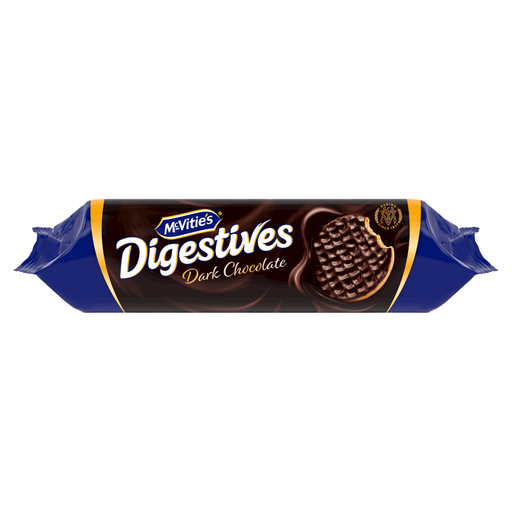 Image unavailable
McVitie’s Digestives Dark Chocolate 400g
This 400 g pack is another dark chocolate digestive format for a biscuit base. Measure the amount your recipe requires, and check the physical pack’s cocoa-solids information, ingredients and allergens rather than assuming they match another pack size.
View on Joybuy
Questions about baking with digestives
Can I use dark chocolate digestives for a cheesecake base?
Yes, if chocolate-coated biscuits suit the filling you plan to use. Dr. Oetker UK’s digestive-base method calls for 250 g of finely crushed digestives combined with 125 g of unsalted butter and pressed into a tin. Follow your chosen recipe and check how its crumb mixture holds together when using coated biscuits.
Which compared biscuit states the higher cocoa-solids minimum?
Tesco Dark Chocolate Digestives state a 48% minimum for the dark chocolate ingredient, according to Tesco Groceries; Sainsbury’s states 35% minimum for its dark chocolate ingredient. Those figures do not give the cocoa-solids percentage of the whole biscuit, and a product without a stated minimum cannot be ranked against them on that measure.
Does dark chocolate mean these digestives are dairy-free or gluten-free?
No. The reviewed labels identify wheat and other allergens, including milk or soya on particular products. Check the exact physical pack and any possible-presence warnings against the needs of the person who will eat the dessert; the words “dark chocolate” do not establish allergen suitability.
Do I need a stated cocoa percentage for every biscuit-base recipe?
No. A cocoa-solids declaration helps when you specifically want to compare the chocolate ingredient on that basis. If that is not a recipe requirement, the biscuit quantity, chocolate proportion, ingredients and allergen suitability may be more useful checks; none of those details alone predicts the finished base’s flavour.


