Dark-chocolate biscuit fans
If the coating matters more than the biscuit brand, look for a stated cocoa-solids percentage. The word “dark” alone does not give you a figure to compare.


Choose Tesco Dark Chocolate Digestives if a stated cocoa-solids level is your deciding factor: Tesco lists a minimum of 48% in its dark chocolate, while the reviewed McVitie's and M&S pages give chocolate proportions without a comparable cocoa-solids figure. McVitie's offers the familiar branded format and M&S describes a demerara-sugar crunch; for any of them, compare the per-biscuit sugar and saturated fat figures and check the current pack for allergens before filling a TV-night bowl.
If the coating matters more than the biscuit brand, look for a stated cocoa-solids percentage. The word “dark” alone does not give you a figure to compare.
A bowl can contain several biscuits, so the serving figures are more useful than a per-100g figure alone when deciding how many to put out.
The reviewed Tesco, McVitie's and M&S products list different ingredients and allergen statements. Check the pack you will serve, particularly where wheat, barley, milk or soya matter.
Start with the coating information if cocoa content drives your choice, then compare biscuit-sized servings and the current ingredient list. The Food Standards Agency and Ipsos Northern Ireland interviewed 611 people for their 2024 tracker between 16 September and 23 November; its food-label finding describes those respondents, not dark-digestive buyers across the UK.
| Priority | What to check | Your needs |
|---|---|---|
| Cocoa content | Look for cocoa solids in the chocolate, not just the percentage of the biscuit made up of chocolate. Tesco Groceries lists a 48% minimum for its dark chocolate; the reviewed McVitie's and M&S pages do not give a comparable cocoa-solids figure. | I want a stated cocoa measure before choosing biscuits for the bowl, rather than judging the coating by the word “dark”. |
| Serving figures | Compare the weight of one biscuit alongside its sugar and saturated fat. The reviewed listings give Tesco 4.2g sugars and 2.1g saturates per 17g biscuit; McVitie's 4.4g and 2.1g per 16.7g biscuit; and M&S 5.2g and 2.2g per 17.8g biscuit. | If I put several biscuits out for a film, I want to know what the figures mean per biscuit before deciding on a serving. In the Food Standards Agency and Ipsos Northern Ireland's 2024 tracker, 49% of the 611 Northern Ireland respondents said they actively used traffic-light labelling when shopping for food; that is a general shopping measure, not a digestive-biscuit preference. |
| Allergens | Read the current ingredients and highlighted allergens. The reviewed Tesco product contains wheat and soya and may contain milk; McVitie's contains wheat, milk and soya; M&S contains barley, milk, soya and wheat. | Before I serve a shared bowl, I need to check whether the particular pack suits everyone who may eat from it. |
| Texture and format | M&S describes demerara sugar as part of its crunch; McVitie's describes a crunchy wheat biscuit. Check the pack size and whether a multi-pack format suits how you plan to serve and store the biscuits. | I might favour a particular crunch, or want separate packets rather than one opened pack for the evening. |
The chocolate share of a finished biscuit is not the cocoa-solids percentage of its coating. Tesco Groceries states a 48% cocoa-solids minimum for its dark chocolate, but the reviewed McVitie's and M&S pages do not state equivalent figures.
If a stated cocoa level is essential, check the current pack for that measure rather than ranking these biscuits by their chocolate ingredient percentages.
Across the three reviewed listings, one biscuit contains 4.2–5.2g sugars and 2.1–2.2g saturated fat; a bowl containing several biscuits changes the amount eaten.
Compare the per-biscuit figures and choose how many to serve before opening the pack.
A personal TV-night snack and food provided in a school are different settings. Department for Education school-food guidance applies to state-funded schools in England, and its practical guide addresses chocolate-coated products.
For school food, check the current standards for the relevant UK nation and setting before selecting a product. The Department for Education says updated standards for England are due from September 2027 subject to Parliamentary approval.
Tesco's reviewed 300g dark chocolate digestives give buyers an explicit cocoa-solids measure for the coating.
The reviewed dark chocolate digestive is McVitie's wheat-biscuit option for shoppers who prefer that familiar format.
M&S describes demerara sugar in its reviewed dark chocolate digestives for buyers interested in that stated texture.
These McVitie's dark chocolate digestive packs suit a TV-night biscuit bowl if you want the branded format. They are different pack variants from the single 266g product discussed above, so check each current pack's coating, nutrition and allergens on its own terms.
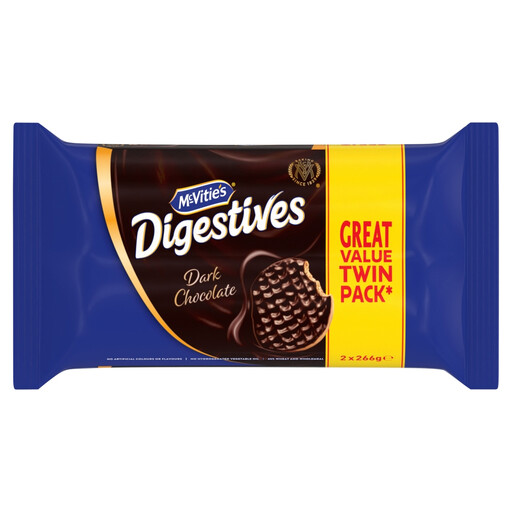 Image unavailable
The two 266g packs provide separate packets for a shared TV-night snack. Check the current packaging for its cocoa-solids statement and allergen information rather than applying figures from a different pack listing.
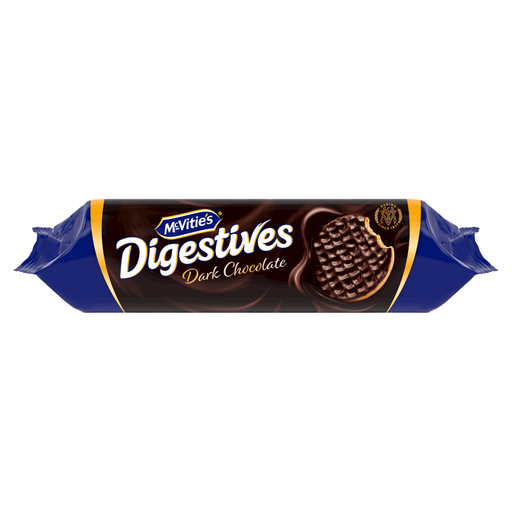 Image unavailable
This 400g pack is another McVitie's format for a TV-night bowl. If a stated cocoa-solids level matters, check this pack's wording; check its nutrition and allergens before serving it to others.
Tesco Dark Chocolate Digestives states that its dark chocolate contains at least 48% cocoa solids, according to Tesco Groceries. The reviewed McVitie's and M&S pages give chocolate ingredient percentages but not a comparable cocoa-solids figure. Check the current pack if that measure decides your choice.
Read the ingredients and allergen statement on the pack you will serve. The reviewed Tesco product contains wheat and soya and may contain milk; McVitie's lists wheat, milk and soya; and M&S lists barley, milk, soya and wheat. The Food Standards Agency says allergens present in prepacked food must be emphasised in its ingredients list.
Do not assume that a choice for eating at home meets school-food requirements. Department for Education guidance covers food provided in state-funded schools in England, and its practical guide addresses chocolate-coated products; check the current standards for the relevant nation and school setting before procurement. The department says updated England standards are due from September 2027, subject to Parliamentary approval.