Coeliac shoppers seeking dark chocolate
You want a dark-chocolate digestive, but the biscuit must also be gluten-free. The examined conventional dark varieties list wheat, so the coating cannot settle the choice.


Choose a digestive by its gluten-free suitability before its chocolate coating. The conventional dark-chocolate packs examined here contain wheat, while the identified gluten-free chocolate digestives have milk-chocolate coatings. If dark chocolate is essential, check the exact pack’s gluten-free claim and ingredients rather than treating either type as a substitute; if considering an oat-based biscuit, account for individual oat sensitivity.
You want a dark-chocolate digestive, but the biscuit must also be gluten-free. The examined conventional dark varieties list wheat, so the coating cannot settle the choice.
If milk chocolate is acceptable, the identified Tesco, Sainsbury’s and Asda Free From digestives provide gluten-free, oat-based recipes to assess. Coeliac UK notes that a small number of people with coeliac disease remain sensitive to gluten-free oats.
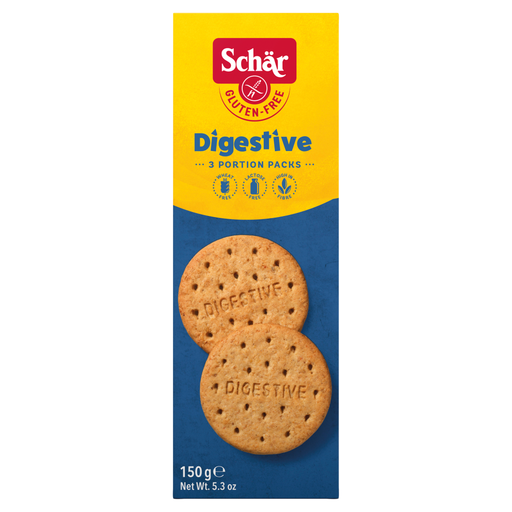
Schär’s Digestive Choc lists maize, soya and buckwheat ingredients rather than oats. Its published ingredients are worth checking if oats are a concern, but its coating is milk chocolate and the ingredient list is not an oat-free certification.
Start with the exact biscuit’s gluten-free claim, then check the coating, flour blend and current pack details. The survey figures below concern gluten-free shopping generally, not digestive-biscuit preferences.
| Priority | What to check | Your needs |
|---|---|---|
| Gluten-free suitability | Check the claim on the exact variant and read the biscuit ingredients. Coeliac UK says the UK gluten-free claim is subject to a limit of 20 mg/kg gluten; the examined conventional dark digestives list wheat. | I need the whole biscuit, not just its coating, to meet a gluten-free requirement. Among 3,785 respondents to Coeliac UK’s 2025 Shopping Habits survey, 74.7% trusted its Crossed Grain Trademark more than a gluten-free statement; that measures trust, not biscuit purchases. |
| Chocolate type | Read whether the coating is labelled dark or milk chocolate, then check the biscuit separately. Sainsbury’s lists at least 35% cocoa solids for its conventional dark coating, but that biscuit contains wheat. | If I want a darker coating, a gluten-free milk-chocolate digestive does not meet that flavour preference simply because its chocolate contains cocoa. |
| Oats and allergens | Check the flour blend and full allergen information. The identified Tesco, Sainsbury’s and Asda Free From recipes use gluten-free oats; Schär Digestive Choc lists a different blend. Coeliac UK says some people remain sensitive to gluten-free oats. | Gluten-free oats may matter to my choice, and I need to check any separate allergies independently of the gluten-free claim. |
| Exact pack and choice | Match the variant name to the current listing and read the pack when it arrives. Do not confuse a conventional dark digestive with a similarly named Free From product. | I want a suitable variant I can identify when ordering. In Coeliac UK’s 2025 survey of 3,785 respondents, 38.4% were happy with the overall range of gluten-free products in supermarkets; that figure does not measure digestive-biscuit availability. |
The examined McVitie’s, Asda, Sainsbury’s and M&S dark digestives list wheat in the biscuit; the M&S variant also lists barley malt extract.
Check the exact variant’s gluten-free claim and biscuit ingredients before considering its cocoa description.
The identified gluten-free coated digestives from Tesco, Sainsbury’s, Asda and Schär specify milk chocolate.
Check chocolate type and gluten-free suitability separately if both matter to your choice.
The examined Tesco, Sainsbury’s and Asda Free From recipes use gluten-free oats. A gluten-free claim does not resolve individual oat sensitivity or separate allergies.
Read the complete flour blend, ingredients and precautionary statements on the pack.
These are distinctions between specific listed biscuits, not claims about every product each brand makes.
Its examined 266g Dark Chocolate Digestives are a conventional dark-coated comparison.
The examined 400g plain digestive is a conventional biscuit comparison, not an identified dark-coated option.
Its examined Free From Chocolate Digestives 166g offer a gluten-free, oat-based coated biscuit.
The examined conventional dark and Free From chocolate digestives are distinct variants.
Its examined conventional dark and Free From chocolate digestives require separate label checks.
Its examined Dark Chocolate Digestives 300g are a conventional dark-coated variant.
Digestive Choc is a gluten-free coated digestive with a different published biscuit-base recipe.
The Joybuy option here is a gluten-free digestive for shoppers who do not require a chocolate coating. It is not Schär Digestive Choc or a dark-chocolate digestive.
 No image available
A gluten-free digestive to consider when a chocolate coating is not essential. Check the current ingredients if oats or other allergens affect your choice.
No. The whole biscuit needs checking. Sainsbury’s lists at least 35% cocoa solids in its examined dark digestive’s chocolate, but also lists wheat flour in the biscuit; check the exact product’s gluten-free claim and ingredients.
According to Coeliac UK and Food Standards Scotland, a UK gluten-free claim is subject to a limit of no more than 20 mg/kg (20 ppm) gluten. Read the ingredient and allergen information as well when choosing a particular pack.
Coeliac UK says most people with coeliac disease can eat oats labelled gluten-free, but a small number remain sensitive to them. Check that the oats are specified as gluten-free and, if they cause continuing problems, discuss their use with a health professional.
No. The UK gluten-free claim has a regulated gluten limit; Coeliac UK’s Crossed Grain Trademark is a separate scheme. Greater trust in the trademark among respondents to Coeliac UK’s 2025 shopping survey does not change the threshold for a gluten-free claim.
Read the delivered pack’s current gluten-free claim, ingredients and allergen statements before eating it. If they differ from the listing in a way that affects your choice, ask the retailer or manufacturer to clarify the discrepancy.