Cream-tea hosts adding a biscuit plate
If you are serving scones, clotted cream, jam and tea, a dark chocolate digestive can be a separate extra rather than a substitute for the scones.


Serve dark chocolate digestives as an optional biscuit alongside the scones, clotted cream, jam and tea, rather than replacing the scones. If a stated cocoa level matters, Tesco declares at least 48% cocoa solids in its chocolate and Sainsbury’s declares at least 35%; for any guest with an allergy, check the current pack before serving.
If you are serving scones, clotted cream, jam and tea, a dark chocolate digestive can be a separate extra rather than a substitute for the scones.
Tesco declares a minimum of 48% cocoa solids in the dark chocolate on its digestives, while Sainsbury’s declares a minimum of 35%. Those figures describe the chocolate, not the biscuit as a whole.
The dark digestives discussed here list wheat and may also contain milk or soya ingredients or carry precautionary allergen information. Check the current pack against each guest’s requirements.
Start with the biscuit’s place on the table, then compare the chocolate declaration, pack information and ingredients that matter to your guests.
| Priority | What to check | Your needs |
|---|---|---|
| Cocoa declaration | Tesco states at least 48% cocoa solids in its dark chocolate; Sainsbury’s states at least 35%. Compare the chocolate declarations on the current packs, rather than treating “dark” as a percentage. | I’d like a stated cocoa level to help me choose between dark-coated biscuits. |
| Cream-tea format | Visit Dartmoor describes tea, scones, clotted cream and jam as the elements of a Devon cream tea. Put any digestives on a separate biscuit plate. | I want to offer a chocolate biscuit without replacing the scones, cream and jam. |
| Nutrition basis | Sainsbury’s lists 3.5g sugars per biscuit; Tesco lists 4.2g per 17g biscuit. Check biscuit weights and compare per-100g figures if you need the same measurement basis. | With jam and clotted cream already on the table, I’d like to read the portion information before deciding how many biscuits to serve. |
| Allergens | Read the current ingredients and allergen information for the exact pack. The products discussed list wheat; milk and soya information differs by product, and Tesco carries a may-contain-milk statement. | Someone joining us has an ingredient or allergen restriction, so the particular pack matters more than a general “dark” or vegetarian description. |
| Pack size | Check the stated weight and number of packs against the size of your gathering. A twin pack and a single larger pack offer different ways to put out biscuits or keep a pack unopened. | I’m choosing how much to put on the biscuit plate, rather than assuming every guest will want one. |
Tesco and Sainsbury’s disclose different minimum cocoa-solids levels for their chocolate. A dark-chocolate name alone does not establish a comparable figure.
If cocoa content is decisive, compare the declaration on each current pack; do not infer a percentage from the name.
Visit Dartmoor describes a Devon cream tea as tea with scones, clotted cream and jam. Replacing the scones changes what guests are being served.
Keep the scones, cream and jam available, and offer dark digestives separately.
Vegetarian suitability does not establish whether a biscuit is suitable for someone avoiding wheat, milk or soya. Sainsbury’s also warns that its product is not suitable for customers with an oat allergy because of manufacturing methods.
Read the ingredients and precautionary statements on the exact pack before serving it to a guest with an allergy.
These product-line details can help narrow a choice; a brand name alone does not identify the ingredients or cocoa declaration on a particular pack.
Tesco’s 300g dark chocolate digestives are half-coated, with at least 48% cocoa solids declared for the chocolate.
Sainsbury’s 300g dark chocolate digestives declare at least 35% cocoa solids in the chocolate.
McVitie’s dark chocolate digestives pair a wheatmeal biscuit with a dark-chocolate component; the product line includes different pack sizes.
M&S describes its dark chocolate digestives as having demerara sugar for added crunch.
The Crawford’s 400g digestives described by Iceland Foods are plain digestives, not a dark chocolate variant.
These McVitie’s dark chocolate digestive packs are options for a separate biscuit plate alongside a cream tea. Check the current pack if you need a stated cocoa level or are serving guests with allergies.
 Image unavailable
The twin-pack format lets you put out dark chocolate digestives alongside the cream tea while keeping the second 266g pack unopened. Check the current pack’s cocoa declaration and allergen information before serving.
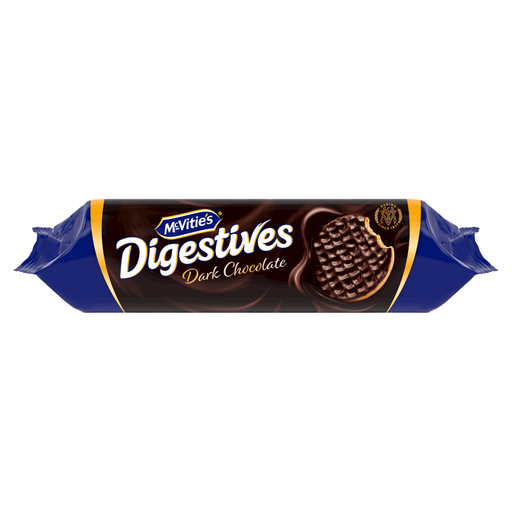 Image unavailable
This single 400g pack offers dark chocolate digestives for a separate biscuit plate. If cocoa content or allergens affect your choice, check the declarations on the current pack.
They are an optional extra, not one of the core elements in Visit Dartmoor’s description of a Devon cream tea: freshly brewed tea, scones, clotted cream and jam. Serve digestives separately if you want to retain that format.
Tesco declares at least 48% cocoa solids in the dark chocolate on its digestives, compared with Sainsbury’s stated minimum of 35%. Those figures refer to the chocolate, not the whole biscuit; do not use a chocolate-component percentage as though it measured cocoa solids.
Check the exact current pack against that person’s allergens before serving. The products discussed list wheat, while milk and soya ingredients or precautionary statements vary; Sainsbury’s also warns that its dark digestives are unsuitable for customers with an oat allergy because of manufacturing methods.