Runners looking for a biscuit snack
A dark chocolate digestive contributes carbohydrate between meals or after a session. If you plan to eat one before running, its fat content and your choice of portion matter as well.


Dark chocolate digestives can be a carbohydrate-containing snack between meals or after training, but choose a lower-fat, carbohydrate-rich option as your usual snack two to three hours before a run. The British Dietetic Association recommends that pre-exercise approach; the McVitie’s, Tesco and Asda dark digestives listed by UK grocers each contain 3.8–4.1 g fat per biscuit. If you want to eat biscuits around training, try your portion and timing on an ordinary training day and check the current pack for allergens.
A dark chocolate digestive contributes carbohydrate between meals or after a session. If you plan to eat one before running, its fat content and your choice of portion matter as well.
If pre-run food sometimes causes discomfort, use the British Dietetic Association’s low-fat, high-carbohydrate guidance as a starting point. Try any biscuit portion and timing during ordinary training rather than for the first time before a key run.
Check the ingredients on the exact pack you receive. The McVitie’s and Asda products listed by ASDA Groceries declare milk, soya and wheat; declarations differ between products.
Decide when you intend to eat the biscuit, then compare nutrition per biscuit or per 100 g on the same basis and read the current ingredients list.
| Priority | What to check | Your needs |
|---|---|---|
| Carbohydrate portion | Check carbohydrate per biscuit and the biscuit’s stated weight. Tesco Groceries lists 10.8 g available carbohydrate per 17 g biscuit; ASDA Groceries lists 10.2 g carbohydrate per 16.7 g McVitie’s biscuit. | I want to know what a biscuit portion contributes when choosing a snack between meals or after training. |
| Pre-run timing | The British Dietetic Association recommends a low-fat, high-carbohydrate snack or light meal two to three hours before exercise. ASDA Groceries lists 3.8 g fat per Asda biscuit and 4.1 g per McVitie’s biscuit; Tesco Groceries lists 4.0 g per Tesco biscuit. | Before a planned run, I would rather choose food that fits my timing and try any unfamiliar biscuit portion during training. |
| Ingredients and allergens | Read the current pack’s ingredients and allergen declarations. ASDA Groceries declares milk, soya and wheat for its own-label and McVitie’s products. | I need to check the particular pack I will eat, especially if an ingredient or allergen affects my choice. |
| Chocolate description | Distinguish the proportion of chocolate in a biscuit from the cocoa-solids content of that chocolate. Tesco Groceries states at least 48% cocoa solids for the dark chocolate in its digestives. | If cocoa content matters to me, I want a stated cocoa-solids figure rather than relying on the word “dark”. |
The British Dietetic Association recommends a low-fat, high-carbohydrate snack or light meal two to three hours before exercise. The McVitie’s, Tesco and Asda dark digestives listed by UK grocers contain 3.8–4.1 g fat per biscuit.
Choose a lower-fat carbohydrate option for that pre-run window, or try your intended biscuit portion and timing during an ordinary training run.
Chocolate proportion and cocoa-solids content describe different things. Tesco Groceries states that the dark chocolate in its digestives contains at least 48% cocoa solids; that figure does not describe every dark digestive.
Check the individual ingredient declaration if a stated cocoa-solids percentage is important to your choice.
Ingredients and allergen declarations can differ by product and change with a reformulation or substitution. ASDA Groceries declares milk, soya and wheat for its own-label and McVitie’s dark digestives.
Read the label on the pack you receive before eating it.
ASDA Groceries lists a 266 g McVitie’s dark chocolate digestive pack.
Tesco Groceries lists its own-label dark chocolate digestives in a 300 g pack.
ASDA Groceries lists its own-label dark chocolate digestives in a 300 g pack.
Marks & Spencer lists a 300 g dark chocolate digestive with a stated 32% chocolate component.
These options include two McVitie’s dark chocolate digestive pack formats and a ginger-flavoured dark chocolate oatie. The oatie is an alternative biscuit snack, not a digestive; compare the current packs if you are choosing food around training.
 No image available
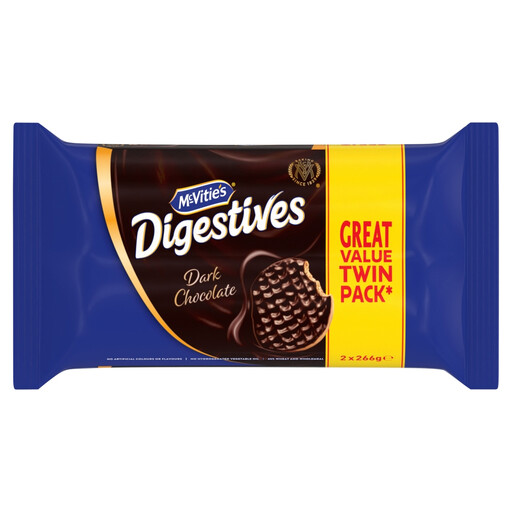
This twin pack offers dark chocolate digestives for a biscuit snack between meals or after training.
For a pre-run choice, compare the current pack’s fat per serving with the British Dietetic Association’s low-fat guidance for the two-to-three-hour window. Check its ingredients and allergens before eating.
 No image available
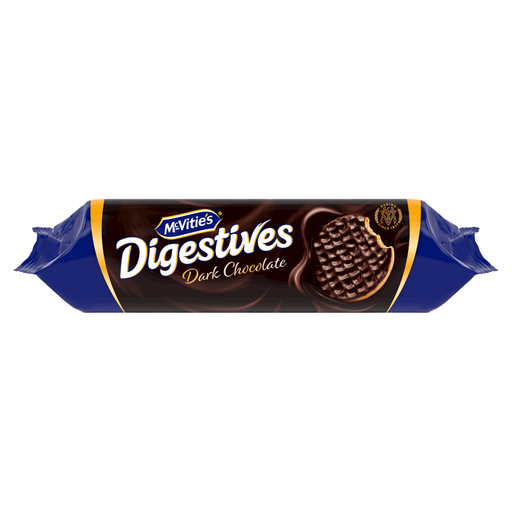
This 400 g pack is another dark chocolate digestive option for a biscuit snack between meals or after training.
Check the current nutrition panel for your chosen portion, particularly if you intend to eat it before running, and read the pack’s allergen declaration.
 No image available
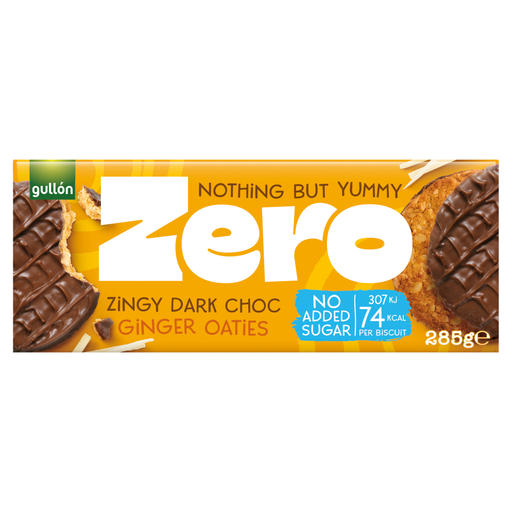
This 285 g ginger oatie is a dark chocolate biscuit alternative for a snack, rather than a digestive.
If you are considering it around a run, check the current pack’s carbohydrate, fat, ingredients and allergens for the portion you plan to eat.
You can try them during training, but they do not match the British Dietetic Association’s low-fat guidance for a snack two to three hours before exercise. The McVitie’s, Tesco and Asda versions listed by UK grocers contain 3.8–4.1 g fat per biscuit. Try your intended portion and timing on an ordinary training day rather than for the first time before a key run.
Yes. ASDA Groceries lists 10.2 g carbohydrate per McVitie’s biscuit, while Tesco Groceries lists 10.8 g available carbohydrate per Tesco biscuit. Treat a biscuit as one snack component; the British Dietetic Association also advises carbohydrate-rich foods and fluids when quick refuelling after exercise is needed.
Do not assume that a biscuit you enjoy as a snack will suit eating while running. The British Dietetic Association discusses carbohydrate during hard exercise lasting longer than an hour, but your choice of food format and portion needs to be practised during training.
Read the exact current pack’s ingredients and allergen declaration. ASDA Groceries declares milk, soya and wheat for its own-label and McVitie’s dark digestives; other products can differ.
No fixed cocoa-solids percentage follows from that description alone. Tesco Groceries specifically states that the dark chocolate in its digestives contains at least 48% cocoa solids. Check the individual product’s declaration if that figure matters to you, and do not confuse cocoa-solids content with the proportion of chocolate in the whole biscuit.