Students looking closely at the chocolate
If you want a stated cocoa-solids minimum, read the figure for the coating. The percentage of the biscuit made up of chocolate answers a different question.


If cocoa content matters to you, compare the stated cocoa-solids percentage of the chocolate coating rather than relying on the word ‘dark’: Tesco lists a minimum of 48% and Sainsbury’s a minimum of 35%, neither of which describes the whole biscuit. For a first student cupboard, also check sugars per 100g, allergens, pack size and how the biscuits should be stored after opening.
If you want a stated cocoa-solids minimum, read the figure for the coating. The percentage of the biscuit made up of chocolate answers a different question.
Consider how many biscuits you expect to get through after opening. Compare nutrition per 100g across packs, then follow the storage directions on the one you buy.
Check the actual pack’s ingredients and precautionary warnings before sharing. A dark chocolate coating does not establish that a biscuit is free from milk.
Start with what the chocolate percentages describe, then compare the biscuit labels and the amount you are likely to use.
| Priority | What to check | Your needs |
|---|---|---|
| Cocoa declaration | Tesco Groceries lists at least 48% cocoa solids in chocolate that makes up 30% of its biscuit. Sainsbury’s lists at least 35% cocoa solids in chocolate that makes up 27% of its biscuit. | I want a stated minimum for the coating, rather than assuming every biscuit labelled ‘dark’ meets a particular cocoa percentage. |
| Sugars | Compare sugars per 100g rather than per-biscuit figures based on different biscuit sizes. The respective product listings give 22.1g for Sainsbury’s, 24.7g for Tesco, 25g for Asda, 26.6g for McVitie’s and 29.2g for M&S. | A like-for-like label comparison matters to me more than the word ‘digestive’ on the packet. |
| Pack and storage | Check the pack weight and after-opening directions. Asda Groceries advises storing its biscuits in an airtight container and consuming them within seven days of opening. | If the pack is just for me, I want an amount I expect to finish while following its storage directions. |
| Ingredients and allergens | Read the actual pack’s ingredients and warnings. Asda lists milk, soya and wheat; Tesco warns that its biscuits may contain milk. | Someone sharing my cupboard may need to avoid an ingredient, so I cannot judge suitability from ‘dark chocolate’ alone. |
Tesco’s 30% dark chocolate figure describes a share of the biscuit; its minimum 48% cocoa-solids figure describes that chocolate.
Check what each percentage refers to before comparing two packs.
The listed products have different sugars-per-100g figures, and dark-coated biscuits can contain milk ingredients or carry a milk warning.
Use the nutrition panel and the actual pack’s allergen information instead of judging by the product name.
Storage directions affect how practical a pack is for one person. Asda advises consuming its dark chocolate digestives within seven days of opening.
Choose a quantity you expect to use and follow that pack’s instructions once opened.
These details apply to the named dark chocolate digestives, not to every biscuit made by each brand.
Tesco Groceries lists a 300g own-label pack with a stated cocoa-solids minimum for its chocolate.
Sainsbury’s lists a 300g own-label pack with separate figures for chocolate quantity and cocoa solids.
Asda Groceries lists a 300g own-label pack containing 30% dark chocolate.
McVitie’s lists dark chocolate digestives in several pack sizes, including 266g.
M&S describes demerara sugar as part of the texture of its 300g dark chocolate digestives.
These McVitie’s dark chocolate digestive packs offer different quantities for a student cupboard. Check the actual pack if a particular cocoa-solids minimum or allergen declaration is essential to your choice.
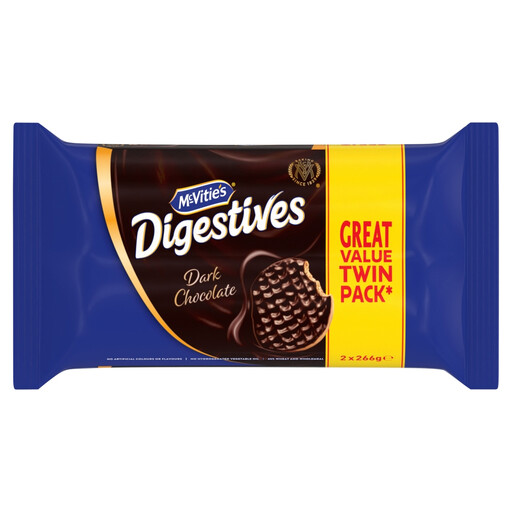 No image available
Two 266g packs give a shared cupboard more biscuits than a single pack. Check the physical packs for cocoa-solids and allergen information, and follow their storage directions after opening.
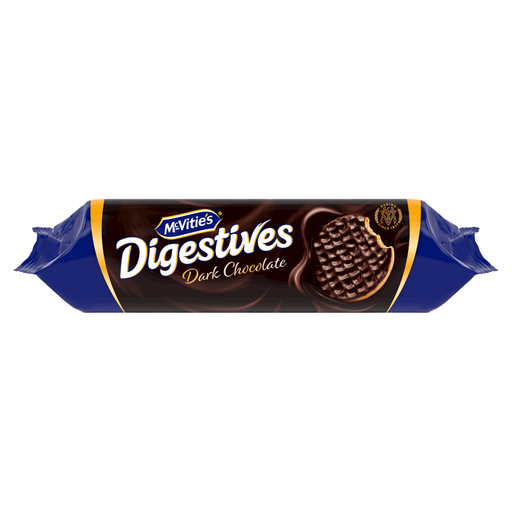 No image available
This 400g single pack is another quantity to consider for your cupboard. McVitie’s lists 30% dark chocolate and 26.6g sugars per 100g for its dark chocolate digestives; check this pack for its cocoa-solids declaration, allergens and storage instructions.
No. Check for a cocoa-solids declaration for the chocolate, then read the separate sugars-per-100g figure for the biscuit. Tesco Groceries lists at least 48% cocoa solids in its chocolate and 24.7g sugars per 100g of biscuit; Sainsbury’s lists at least 35% and 22.1g respectively.
Follow the directions on the pack you buy. The cited product listings call for cool, dry storage and an airtight container after opening; Asda Groceries additionally advises consuming its biscuits within seven days of opening.
No. The cited McVitie’s, Sainsbury’s and Asda recipes include milk-derived ingredients, while Tesco’s listing warns that its biscuits may contain milk. Check the actual pack’s ingredients and warnings whenever an allergy matters.
Look for the ingredients and allergens, net quantity and date marking as you choose and store a pack. UK government guidance on prepacked food requires those details and a quantitative ingredient declaration where applicable; check the physical pack rather than treating an online description as its replacement.