Party hosts buying for a group
Decide whether to offer milk chocolate, dark chocolate or both, then use the stated biscuit count or servings to plan how many packs to put out.


For a private Christmas party, choose milk or dark chocolate digestives according to guests’ preferences, then check how many biscuits or servings each pack provides and read the ingredients on the packs you serve. A six-biscuit foiled pack offers a different serving format from a larger sharing pack. If food is being provided to pupils under England’s school-food standards, Department for Education guidance says chocolate-coated products must not be served across the school day.
Decide whether to offer milk chocolate, dark chocolate or both, then use the stated biscuit count or servings to plan how many packs to put out.
Check the ingredients and precautionary allergen information on each pack you serve. A dark-chocolate coating alone does not establish whether a biscuit is suitable for someone avoiding milk.
If food is provided to pupils under England’s school-food standards, follow the Department for Education’s school-day restriction on chocolate-coated products rather than private-party serving advice.
Settle on the flavours and serving format first, then check quantities and the labels of the packs you will serve.
| Priority | What to check | Your needs |
|---|---|---|
| Flavour and texture | Ask whether guests prefer milk or dark chocolate. The Good Housekeeping Institute’s June 2026 blind test compared milk chocolate digestives, not dark varieties or party guests’ preferences. | I’d like a choice of flavours if guests’ preferences differ; a milk-chocolate taste-test result cannot decide that for everyone. |
| Quantity | Compare the stated biscuit count or servings as well as pack weight. Tesco lists about 16 biscuits for McVitie’s 266g pack; Sainsbury’s lists approximately 18 servings for its 300g milk-chocolate pack. | For a group, I need enough portions without assuming that packs of similar weight contain the same number of biscuits. |
| Ingredients | Read the supplied pack’s ingredients and precautionary allergen statement. Tesco’s dark digestives say they may contain milk; Sainsbury’s dark digestives list butteroil from cows’ milk. | If a guest needs to avoid an ingredient, I want the exact pack available so they can check it before taking a biscuit. |
| Serving format | Compare a sharing pack with M&S’s six-biscuit foiled pack. Check the pack’s storage instructions if biscuits will be kept after opening. | Separate portions might suit my serving plan, or I may prefer to set out biscuits from a larger pack. |
Dark-chocolate digestive listings can still include a milk ingredient or a precautionary milk statement, as the Sainsbury’s and Tesco examples show.
For a guest with a milk allergy, check the ingredients and precautionary information on the exact pack you intend to serve.
Department for Education guidance for England says chocolate-coated products must not be served across the school day where its school-food standards apply.
If you are providing food to pupils under those standards, choose an option that meets the applicable school rules instead.
The cited listings include a 266g pack described as containing about 16 biscuits, a 300g pack described as approximately 18 servings and a distinct six-biscuit foiled pack.
Plan the number of portions you need, then check the count or serving information for each pack.
Choosing a six-biscuit format for a larger group may mean opening more packs.
These examples describe particular listed or tested biscuits, not every chocolate digestive made by each brand.
Tesco lists McVitie’s milk chocolate digestives in a 266g pack.
M&S lists a 300g milk chocolate digestive pack and a separate six-biscuit foiled format.
Tesco lists 300g milk and dark chocolate digestive packs.
Sainsbury’s lists 300g milk and dark chocolate digestive packs.
Asda lists a 300g milk chocolate digestive pack for sharing.
These McVitie’s options include milk and dark chocolate digestives in different pack sizes for a private party. Check each pack’s ingredients and portion information before deciding what to serve.
 No image available
A dark-chocolate option if guests prefer that flavour. The twin pack contains 2 x 266g; check the individual packs for biscuit counts and ingredient information, particularly if a guest needs to avoid milk.
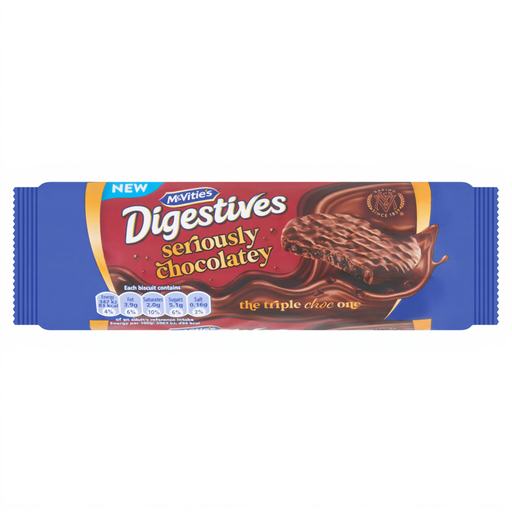 No image available
A 250g chocolate digestive pack to consider for a shared biscuit plate. Check its stated servings and the supplied pack’s ingredients when planning for guests.
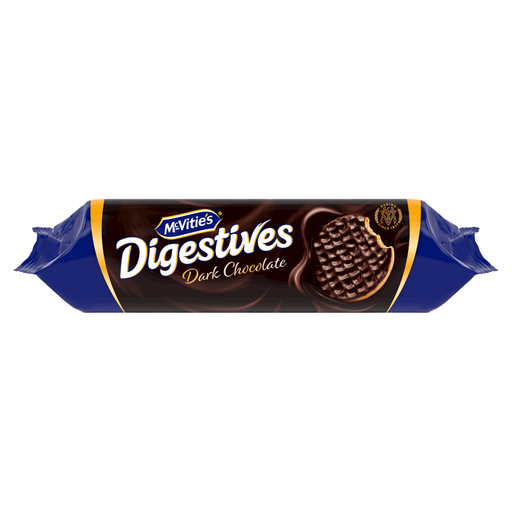 No image available
A 400g dark-chocolate option for a shared plate. Check the pack’s biscuit count and ingredients; dark chocolate by itself is not evidence that a biscuit is suitable for someone avoiding milk.
 No image available
A 400g milk-chocolate option for a shared plate. This is not the 266g pack described in Tesco’s listing alongside the June 2026 Good Housekeeping Institute taste test; use this pack’s own count and label when planning portions and checking ingredients.
No. Tesco’s listed dark chocolate digestives say they may contain milk, while Sainsbury’s listed dark version includes butteroil from cows’ milk. For a guest with a milk allergy, use the ingredient and precautionary information on the actual pack.
Follow the instructions on the pack you buy. Sainsbury’s milk chocolate digestive listing specifies a cool, dry place and an airtight container after opening.
Not where the food is covered by England’s school-food standards: Department for Education guidance says chocolate-coated products must not be served across the school day. This does not make the same rule a restriction on a private Christmas party. The Department for Education described updated standards planned for September 2027 as subject to parliamentary approval.
Check the supplied pack as well. Tesco and Waitrose warn in their product listings that recipes or allergen information can change; keep the packaging available for guests who need to read it.