If a declared cocoa-solids figure is your deciding factor, Tesco lists a minimum of 48% in its dark chocolate, while Sainsbury’s lists 35% in its dark chocolate. Neither figure describes the whole biscuit or establishes which will taste darker. For a picnic, weigh that distinction against pack size, storage directions and the allergens of everyone sharing.
Who is this choice for?
Shoppers comparing cocoa declarations
If the word “dark” is not enough to make your choice, Tesco and Sainsbury’s each state a minimum cocoa-solids percentage for the chocolate on their digestives. Compare that figure separately from the amount of chocolate in the biscuit.
Picnic hosts sharing a packet
Pack size, outdoor storage and guests’ allergies all affect what to bring. Check the exact packet before serving, particularly when an ingredient or precautionary allergen statement matters to someone sharing it.
What should you check?
Start with the chocolate’s cocoa declaration if that matters to you, then choose a pack you can share and store as directed.
| Priority | What to check | Your needs |
|---|
| Cocoa declaration |
Look for the minimum cocoa solids in the chocolate, not just the chocolate’s share of the biscuit. Tesco lists 48% minimum cocoa solids in chocolate that makes up 30% of its biscuit; Sainsbury’s lists 35% minimum in chocolate that makes up 27% of its biscuit. |
I want a stated cocoa figure for the coating, rather than choosing by the word “dark” alone. These declarations do not tell me which whole biscuit will taste darker. |
| Pack and storage |
Check the weight of the exact pack and its storage instructions. Tesco calls for an airtight container after opening; M&S specifies a cool, dry place away from sunlight. |
I need enough biscuits to share without leaving an opened chocolate-coated packet in the sun or damp. |
| Allergens |
Read the delivered pack’s ingredients and precautionary allergen statements before serving. Tesco’s listing says “may contain milk”; Sainsbury’s warns that its digestives are unsuitable for customers with an oat allergy because of manufacturing methods. |
Someone sharing may have an allergy, so I need to check the particular packet rather than assume “dark” means dairy-free. |
What is easy to overlook?
-
Confusing chocolate content with cocoa content
“30% dark chocolate” describes how much of the biscuit is chocolate, not how much cocoa the biscuit contains. Tesco and Sainsbury’s give separate minimum cocoa-solids figures for their chocolate.
Read the chocolate percentage in the ingredients and the cocoa-solids declaration as two different measures.
-
Assuming dark chocolate means dairy-free
The McVitie’s, Sainsbury’s and ASDA products described in the research list milk ingredients; Tesco’s listing says its product may contain milk.
Check the actual packet’s ingredients and allergen warnings against each guest’s needs before serving.
-
Leaving an opened pack in direct sun
M&S and ASDA specify storage away from sunlight. ASDA also instructs shoppers to use an airtight container after opening.
Protect the packet from sun and moisture, and follow its after-opening directions.
Relevant brand options
These brand references concern the particular dark-chocolate digestive products described, not every biscuit each brand makes.
Tesco
Tesco lists a 300g own-label pack with a declared cocoa minimum for its dark-chocolate coating.
- Its listing states 30% dark chocolate in the biscuit and at least 48% cocoa solids in that chocolate.
- The cocoa figure does not describe the whole biscuit; the listing also says “may contain milk”.
Sainsbury’s
Sainsbury’s lists a 300g own-label alternative with a declared cocoa minimum.
- Its listing states 27% dark chocolate in the biscuit and at least 35% cocoa solids in that chocolate.
- It lists milk and soya ingredients and warns that it is unsuitable for customers with an oat allergy because of manufacturing methods.
McVitie’s
McVitie’s lists dark-chocolate digestives in several pack sizes, including 266g and 400g.
- The manufacturer lists dark chocolate as 30% of the biscuit.
- That percentage describes chocolate quantity, not its minimum cocoa-solids content.
ASDA
ASDA lists a 300g own-label dark-chocolate digestive pack.
- Its listing states 30% dark chocolate and gives directions for storage after opening.
- It lists milk, soya and wheat; its directions say to consume the biscuits within seven days of opening.
M&S
M&S lists a 300g dark-chocolate digestive made with demerara sugar.
- Its listing states 32% chocolate and describes added crunch from the demerara sugar.
- The chocolate percentage is not a cocoa-solids figure; M&S directs storage in a cool, dry place away from sunlight.
Dark-chocolate digestives on Joybuy
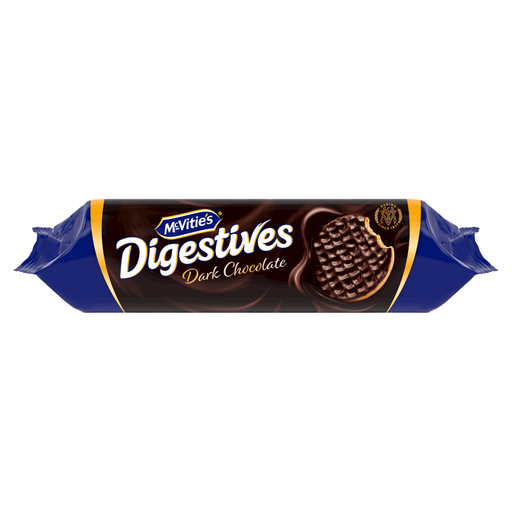
These McVitie’s packs offer two sizes to consider when planning how many dark-chocolate digestives to bring to a picnic. Check the particular pack if a cocoa-solids declaration or an allergen affects your choice.
 No image available
McVitie’s Digestives Dark Chocolate twin pack, 2 x 266g
The 2 x 266g twin-pack format gives you two packets to plan around when sharing at a picnic. Check the packaging’s ingredients and allergen information before serving.
Joybuy
 No image available
McVitie’s Digestives Dark Chocolate 400g
The 400g pack is another size to consider when planning how many biscuits to share. Check its cocoa declaration, allergens and storage directions on the packet where those details matter to your picnic.
Joybuy
Common questions
Does “30% dark chocolate” mean the biscuit is 30% cocoa?
No. It describes the proportion of the biscuit that is dark chocolate. A cocoa-solids declaration describes the chocolate itself; Tesco’s listing gives these as separate figures.
Do dark-chocolate digestives need a picnic cool bag?
Follow the purchased pack’s storage directions rather than assuming these biscuits require refrigeration. M&S and ASDA specify keeping their listed products away from sunlight. Food Standards Scotland’s advice to use a cool bag with ice packs applies to picnic foods you would ordinarily refrigerate at home; it does not itself impose that requirement on these biscuits.
How should I store an opened packet?
Check the directions on your packet and keep the biscuits protected from sun and moisture. The reviewed listings call for airtight storage after opening; ASDA additionally says to consume its listed product within seven days of opening, which is not an instruction for every brand.
What if the delivered ingredients differ from the online listing?
Check the delivered packet before serving, especially if a guest has an allergy. Ingredient and precautionary allergen information on a retailer page should not replace the information on the pack you receive.


