Festival-table hosts
If guests will help themselves, biscuit count, size and storage instructions matter alongside the chocolate specification.


Choose ready-coated ginger biscuits for a finished sharing plate, but compare the minimum cocoa solids stated for the chocolate: products labelled dark do not all have the same specification. Plain ginger nuts suit a table that does not need chocolate; dipping biscuits yourself lets you select the chocolate, but takes preparation and setting time. Check storage instructions and allergens before serving any option to guests.
If guests will help themselves, biscuit count, size and storage instructions matter alongside the chocolate specification.
If the word dark is not specific enough, compare the stated minimum cocoa solids in each product’s chocolate, or choose the chocolate for homemade dipped biscuits.
Read the ingredients and precautionary warnings on the actual pack before sharing. Asda’s gluten-free dark chocolate ginger cookies, for example, list milk and soya and may contain nuts.
Decide whether you need a finished chocolate-coated biscuit, an uncoated ginger nut or time to dip biscuits yourself; then compare the details that affect serving.
Choose when: You want to put finished ginger-and-chocolate biscuits straight onto a sharing plate.
Allow for: Pack formats vary, and coated biscuits need the storage conditions stated on their packs.
Choose when: A ginger biscuit without chocolate fits what you plan to serve.
Bear in mind: McVitie’s published Ginger Nuts ingredients list ground ginger but no chocolate, so they do not meet a dark-chocolate request.
Choose when: You want to select the chocolate yourself; Tesco Real Food’s ginger-nut recipe specifies 75% dark chocolate.
Allow for: The biscuits must be prepared, cooled and left for the coating to set.
| Priority | What to check | Your needs |
|---|---|---|
| Chocolate specification | Compare minimum cocoa solids in the chocolate, not just the percentage of chocolate in the biscuit. Waitrose & Partners lists 78% dark chocolate as an ingredient in its eight-biscuit pack, but 49% minimum cocoa solids in that chocolate. | I want to know what the dark-chocolate description means before choosing a biscuit for guests. |
| Serving format | Check biscuit count and pack weight separately: Waitrose & Partners lists 10 No.1 thins in 100g, while Tesco Groceries lists eight Finest cookies in 200g. For bars, confirm the packaging arrangement before planning to hand them out individually. | Guests will help themselves, so the size and number of pieces matter more to me than pack weight alone. |
| Allergens | Read the actual pack’s ingredients and precautionary warnings. Asda’s gluten-free dark chocolate ginger cookies list milk and soya and say they may contain nuts. | If a guest needs to avoid an allergen, I cannot rely on a dark-chocolate or gluten-free label by itself. |
| Storage | Follow the chosen pack’s directions during transport and serving. Tesco Groceries’ Border 150g listing specifies a cool, dry place away from direct sunlight; Tesco Real Food gives separate airtight-storage instructions for its homemade recipe. | I need to keep the biscuits as directed while taking them to the venue and setting out the table. |
A large chocolate ingredient percentage does not tell you the minimum cocoa solids in that chocolate.
Read both declarations separately when comparing coated biscuits.
McVitie’s published Ginger Nuts ingredients list no chocolate.
If chocolate is part of the plan, choose a coated biscuit or dip ginger biscuits in a chocolate you have selected.
Asda’s gluten-free dark chocolate ginger cookies list milk and soya and carry a precautionary nut warning.
Ask which allergens matter to your guests, then check the pack you will serve.
These product-line examples show why format and chocolate declarations need checking separately; they do not imply that every item listed here is a Joybuy product.
Tesco Groceries lists a 150g pack of coated ginger biscuits, while Sainsbury’s lists a separate six-bar ginger-chocolate pack.
Waitrose & Partners lists both an eight-biscuit coated pack and No.1 ginger thins.
Tesco Groceries lists ready-coated Finest ginger cookies; Tesco Real Food also provides a separate homemade dipping recipe.
Sainsbury’s lists Taste the Difference dark-chocolate-coated stem-ginger cookies in a 200g, eight-serving pack.
Asda lists Extra Special Free From gluten-free dark chocolate ginger cookies.
McVitie’s Ginger Nuts are a reference point for an uncoated ginger biscuit.
These two Joybuy options are dark-chocolate ginger biscuits for a ready-made sharing plate. Compare their packs and check the actual labels if cocoa specification or allergens will determine your choice.
 No image available
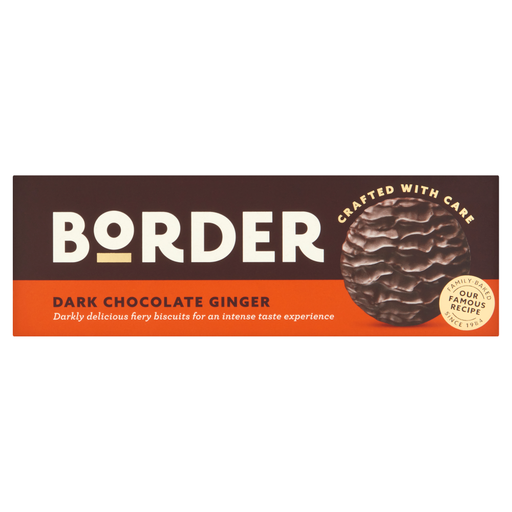
A 150g pack of ready-coated ginger biscuits for a sharing plate. If you are selecting by cocoa content, check the minimum cocoa solids on this pack rather than using the chocolate ingredient percentage as a substitute. Check its allergen and storage directions before serving.
 No image available
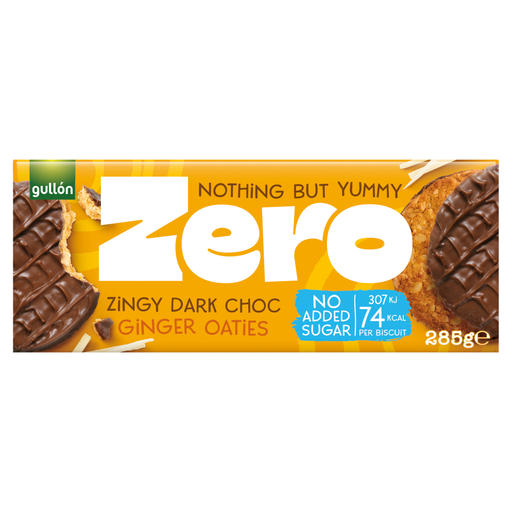
A 285g pack of dark-chocolate ginger oat biscuits for sharing. If a particular cocoa specification or sweetener matters to you, check the pack’s chocolate and ingredient declarations. Check its milk, oats, soya, wheat and precautionary nut labelling before offering it to guests.
No. Waitrose & Partners lists dark chocolate as 78% of its eight-biscuit product, but states a separate minimum of 49% cocoa solids for that chocolate. The figures describe different things.
Tesco Real Food’s chocolate-dipped ginger-nut recipe specifies 75% dark chocolate. It says to let the coating set and store the finished biscuits airtight at room temperature for up to one week; follow that timing for the recipe, not for other homemade biscuits.
Not necessarily. Asda’s listed gluten-free dark chocolate ginger cookies contain milk and soya and may contain nuts. Check the actual pack against each guest’s relevant allergens.
How the food is packed and offered determines which allergen-information rules apply. For food classified as prepacked for direct sale, GOV.UK guidance for England, Wales and Northern Ireland and Food Standards Scotland guidance say the label must give the food name and a full ingredients list with the required allergens emphasised. Loose food follows different rules; check the applicable classification before offering it.