What should you check?
Start with the reason for carrying the snack, then compare the cocoa declaration, pack format and ingredients of the particular bar.
| Priority |
What to check |
Your needs |
| Cocoa content |
Look for a stated cocoa-solids percentage on the exact bar. Lindt Shop UK and Divine Chocolate identify 70% cocoa in their named dark tablets; KitKat 2 Finger Dark is a coated wafer, a different format. |
I’m looking for a clearly labelled high-cocoa chocolate bar, rather than choosing on the word “dark” alone. |
| Portion format |
Compare the bar’s net weight with the amount you intend to take. Divine Chocolate identifies individual 35g bars in one multipack, while its standard 70% tablet is 90g. |
A single bar would be convenient in my bag. If I buy a larger tablet, I can portion it before packing it. |
| Purpose of the snack |
For a protein-focused choice, compare the declared protein per bar using the same serving basis. The British Dietetic Association advises matching carbohydrate intake to training demands; a cocoa percentage does not establish a recovery role. |
Am I taking chocolate as a treat, or choosing a bar because I want a stated amount of protein? |
| Ingredients and allergens |
Read both the ingredients and precautionary allergen statement on the current pack. KitKat UK lists wheat flour and milk-derived butterfat in KitKat 2 Finger Dark; nut bars require their own ingredient check. |
I need to know whether this particular bar contains, or carries a warning about, ingredients I avoid. |
Relevant brand references
These examples show why a brand name alone cannot tell you whether a particular bar meets a high-cocoa, portion-format or protein requirement.
Lindt
Lindt Shop UK identifies Excellence Dark 70% as a 100g tablet with at least 70% cocoa solids.
- The stated cocoa percentage makes this specific tablet straightforward to assess for a high-cocoa preference.
- Its 100g format calls for portion planning if you want to carry less than a whole tablet; check the pack for allergens.
Divine
Divine Chocolate identifies 70% dark chocolate in a 90g tablet and in individual 35g bars sold as a multipack.
- The 35g format gives you a defined individual bar to compare with a portioned tablet.
- Check which format and flavour you are buying, along with the current pack’s ingredient and allergen information.
KitKat
KitKat 2 Finger Dark is a dark-chocolate wafer option rather than a cocoa-percentage-labelled tablet in the cited KitKat UK information.
- KitKat UK gives nutrition information for an individual 2 Finger Dark bar, including 104 kcal per bar.
- Its listed ingredients include wheat flour and milk-derived butterfat; do not use the word “dark” as an allergen or high-cocoa assurance.
Mars
Mars Protein Chocolate Bar belongs in a comparison of protein-focused bars, not high-cocoa dark tablets.
- Mars declares 20.2g protein per 100g for this specific product.
- Check the amount for the bar you would eat and its ingredients rather than treating its protein positioning as evidence of high cocoa content.
Snickers
Snickers Protein is a protein-positioned chocolate bar, not a labelled high-cocoa dark tablet.
- The Protein variant offers a distinct product to assess if protein content is your buying criterion.
- Compare its own nutrition and ingredients with your requirements; do not assume it is interchangeable with a dark chocolate tablet.
Joybuy product options
These options include cocoa-percentage-labelled dark tablets for a portioned chocolate snack and one protein-focused nut-bar multipack for a different priority.
 No image available
Morrisons The Best 72% Cocoa Dominican Republic Dark Chocolate 100g
For a labelled cocoa-percentage chocolate treat that you can portion before putting it in your gym bag. This is a 100g bar labelled 72% cocoa. It contains soya and carries may-contain warnings for gluten, milk, nuts and peanuts; check the current pack if these matter to you.
View on Joybuy
 No image available
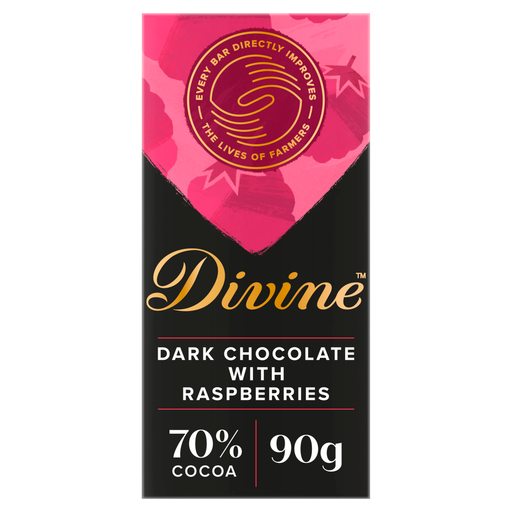
Divine Chocolate 70% Dark Chocolate with Raspberries 90g
For a cocoa-percentage-labelled dark chocolate treat with raspberries, if you are happy to portion a tablet for your bag. This variant is 90g and labelled 70% cocoa; it is distinct from Divine’s plain 35g bars. Check its current pack for milk and precautionary gluten and nut information.
View on Joybuy
 No image available
Green & Black's Dark Chocolate 70% 90g
Another labelled 70% cocoa tablet to consider when you can portion a 90g bar before travelling. Check the current pack for its may-contain warnings concerning almonds, hazelnuts, other nuts and milk.
View on Joybuy
 No image available
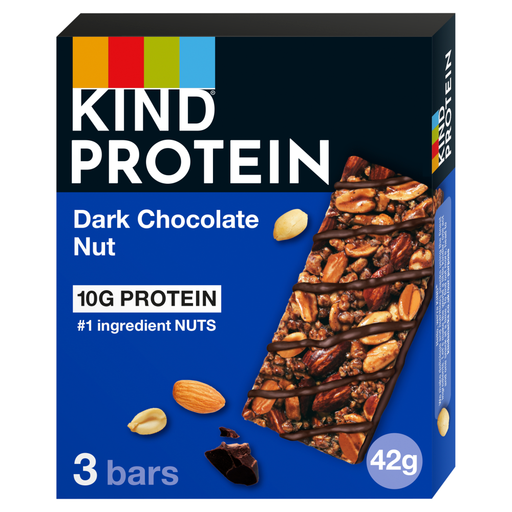
KIND Protein Dark Chocolate Nut Bars 3 x 42g
Consider this protein-positioned nut bar if that is your priority rather than a high-cocoa chocolate tablet. The pack contains three 42g bars; check the label for the declared protein amount and cocoa content relevant to your choice. It contains peanuts, almonds and soya and may contain other tree nuts.
View on Joybuy
Questions about gym-bag chocolate
Is a dark chocolate bar a post-workout recovery snack?
Not simply because it is dark chocolate. The British Dietetic Association advises matching carbohydrate intake to training demands; if a stated protein amount is your priority, compare protein-focused products by the nutrition declared for each bar rather than by cocoa colour.
Does “dark chocolate” guarantee a high cocoa percentage?
No. Check the cocoa-solids declaration on the exact product. Lindt Shop UK and Divine Chocolate state 70% cocoa for their named tablets, whereas KitKat 2 Finger Dark is a dark-chocolate wafer with wheat flour among its ingredients.
Can I use a “dark” label to judge allergens or dietary suitability?
No. Read the current pack’s ingredients and allergen statements: KitKat UK lists wheat flour and milk-derived butterfat in KitKat 2 Finger Dark, and Lindt says it cannot guarantee its products are free from nut allergens. Check the precise variety rather than applying one bar’s information to a whole brand.
Do England’s HFSS promotion rules prevent me carrying chocolate to the gym?
No. The Department of Health and Social Care’s guidance addresses promotion and placement by businesses operating in and selling to England; it is not a rule about carrying a personal gym-bag snack. It does not, by itself, classify every dark chocolate bar.
Are the rules different if chocolate is provided as school food?
Yes, that is a separate context in England. The Department for Education’s school-food guidance identifies chocolate and chocolate-coated products as restricted across the school day, and the Requirements for School Food Regulations 2014 include chocolate in the definition of confectionery. Those England school-food provisions are not a general rule about a personal gym bag or a conclusion about schools elsewhere in the UK.


