Families serving a home half-term snack
Buttons, coated fruit and individual chocolates can be passed around without repeatedly breaking a bar. Choose the format alongside the ingredients, particularly when several people will share it.


For a home half-term snack that people can pass around, dark-chocolate buttons offer plain individual pieces, while a wafer box or chocolate-coated fruit makes more sense when the group wants those flavours and textures. Check the current pack’s ingredients and allergen statements before choosing for several people; a sharing label alone does not establish that everyone can eat it.
Buttons, coated fruit and individual chocolates can be passed around without repeatedly breaking a bar. Choose the format alongside the ingredients, particularly when several people will share it.
Plain buttons, crisp wafers and sour cherries offer different eating experiences. A cocoa percentage describes the chocolate, but it does not tell you whether the group will want a filling or fruit inclusion.
Read the exact pack’s ingredients and allergen statements before serving it. Dark-chocolate products can differ in their declared milk, soya, cereal, nut and peanut information.
Start with how the chocolate will be served, then narrow the choice by flavour and the current pack label.
| Priority | What to check | Your needs |
|---|---|---|
| Serving format | Look for individual pieces or a labelled sharing pack. Check the pack size and whether you would need to divide a bar. | I want people to take a piece without cutting or breaking chocolate. Montezuma’s describes its buttons as made for sharing; Lindt labels its dark Choco Wafer product a sharing box. |
| Flavour and texture | Compare the stated cocoa percentage and whether the product includes wafer, fruit or ginger. Check the full product name rather than relying on “dark chocolate” alone. | For a plain chocolate snack, I would choose a different format from sour cherries coated in chocolate or a crisp wafer box. |
| Ingredients and allergens | Read the current ingredients, allergen declaration and any precautionary statements on each pack. | If several people will share it, I need to check the label against their requirements. Montezuma’s says its Giant 60% Dark Chocolate Buttons contain soya and may contain milk, tree nuts and peanuts. |
| Where it will be served | Distinguish a snack bought for home from food supplied to pupils. For a school-provided snack in England, check the requirements for the particular setting. | I’m planning a home half-term snack, not assuming that the same choice can be supplied by a school. England’s School Food Regulations classify chocolate as confectionery, and Department for Education guidance addresses food provided in state-funded schools in England. |
Plain buttons, filled chocolates and wafer products can have different ingredients and precautionary statements. Cocoa percentage is not an allergen check.
Read the current label of every product you plan to serve, including its may-contain statements.
Sour cherries, ginger and wafer centres change the flavour or texture. They are not interchangeable with plain dark-chocolate pieces when preferences are unknown.
Choose fruit, ginger or wafer when the people sharing have expressed a preference for it; otherwise compare the plain-piece options first.
A family’s home snack is a different context from food provided to pupils. England’s School Food Regulations classify chocolate as confectionery, while Department for Education guidance covers requirements for food in state-funded schools in England.
If a school or caterer will provide the snack, check the current requirements for that setting before ordering.
These examples show how much the format can vary; the brand name alone does not identify a sharing bag.
Its Giant 60% Dark Chocolate Buttons come in a 120g pack. Montezuma’s describes its buttons range as made for sharing.
Lindt labels its 130g dark Choco Wafer product a Sharing Box.
M&S includes dark-chocolate-coated sour cherries in its chocolate sharing-bag range and describes the coating as 70% dark chocolate.
Dark Chocolate Puddles with Ginger are described by Hotel Chocolat as 70% dark chocolate with ginger.
Divine lists 70% and 85% dark-chocolate bars in 90g sizes and describes itself as farmer co-owned.
Green & Black’s lists 70% and 85% dark bars and a 360g Organic Chocolate Tasting Collection.
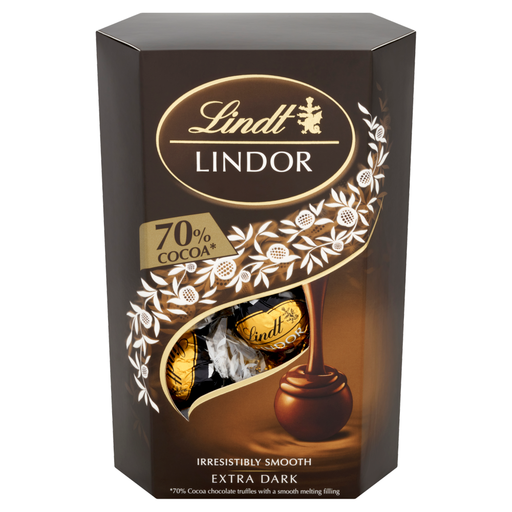
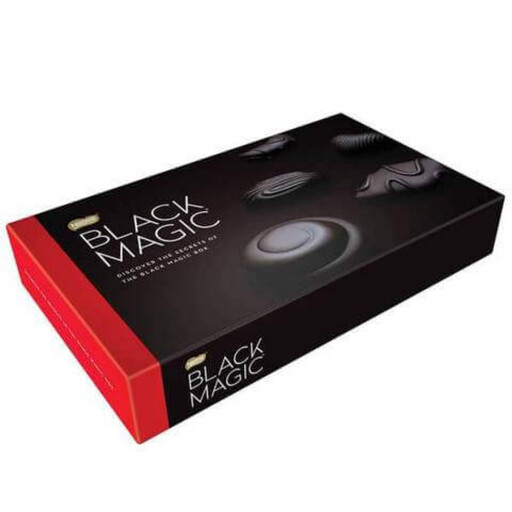
These boxed dark chocolates contain individual pieces that could be served at a home half-term gathering. Neither product title identifies the box as a sharing bag, so compare the pack and label with your group’s needs.
 No image available
The individual truffles can be served without breaking a bar. The product is a 200g box labelled 70% cocoa, not explicitly a sharing box. Its listed allergens include barley, milk and soya, with several nuts listed as possible allergens; check the current pack.
 No image available
This 348g box contains an assortment of individual dark-chocolate pieces with different centres, so it can be served without dividing a bar. It is not explicitly labelled a sharing box. The listing names almonds, hazelnuts, eggs and milk, warns of possible peanuts and other tree nuts, and says the product is not suitable for children under 4; check the current pack.
Individual pieces such as buttons avoid breaking a bar. Montezuma’s describes its buttons as made for sharing; Lindt’s dark Choco Wafer Sharing Box and the sour cherries in M&S’s sharing-bag range offer different textures, so choose according to the group’s preferences and the pack label.
Read the ingredients, allergen declaration and precautionary statements on the exact current pack. For example, Montezuma’s states that its Giant 60% Dark Chocolate Buttons contain soya and may contain milk, tree nuts and peanuts; do not apply that label information to other products.
Check the requirements for the school and the way the food will be provided before choosing it. England’s School Food Regulations classify chocolate as confectionery, and Department for Education guidance concerns food provided in state-funded schools in England; buying a snack for home is a separate context.
No. Department of Health and Social Care guidance describes restrictions on the promotion and placement of certain foods high in fat, salt or sugar by businesses subject to those rules in England, not a prohibition on household purchases.