Day hikers packing for themselves
If you want a dark chocolate treat without carrying a presentation box, compare compact bars that state a cocoa percentage for the whole bar. Check the portion you plan to take alongside the rest of your food.


For an individual hike, a compact bar with a cocoa percentage stated for the whole chocolate is the simpler choice when that percentage matters to you. Choose a box for sharing or variety, but check the exact pack’s ingredients, storage directions and cocoa wording: 70% cocoa in a truffle’s shell does not mean the whole truffle is 70% cocoa. Treat chocolate as one snack within your wider hiking food plan.
If you want a dark chocolate treat without carrying a presentation box, compare compact bars that state a cocoa percentage for the whole bar. Check the portion you plan to take alongside the rest of your food.
A truffle or selection box offers several pieces to pass around. Check its size, fillings and allergen information before packing it; a dark shell does not describe every ingredient inside.
Read the current pack’s ingredients and precautionary allergen statements, even when the front says ‘dark’ or ‘vegan recipe’. The reviewed Lindt products illustrate why: LINDOR Dark 70% truffles contain milk-derived ingredients, while Lindt says its EXCELLENCE Dark 70% bar is not suitable for people with a milk allergy.
Choose when: You want an individual portion in a compact format and a cocoa claim that applies to the whole bar; Lindt EXCELLENCE Dark 70% is one such labelled example.
Trade-off: A single bar does not offer the range of pieces in a sharing box, and a dark or vegan-recipe label is not an allergy assessment.
Choose when: You want pieces to share and have room to protect a box in your pack; Lindt LINDOR Dark 70% comes in a 200g box.
Trade-off: Lindt states that its 70% cocoa claim applies to the dark shell, not the entire filled truffle.
Choose when: A group wants a selection of dark chocolates; Simon Dunn Chocolatier states 70% cocoa for the dark chocolates in its 24-piece box.
Trade-off: A larger selection takes more pack space than a bar. Check the particular box’s fillings, allergens and packaging before taking it outdoors.
| Priority | What to check | Your needs |
|---|---|---|
| Cocoa wording | Find the stated percentage and whether it covers the whole chocolate or only a shell or outer layer. Lindt specifies 70% minimum cocoa for its EXCELLENCE Dark 70% bar but describes 70% cocoa in the shell of its LINDOR Dark 70% truffles. | I want to compare the chocolate itself, not mistake a percentage for the coating for a percentage for the filled piece. |
| Pack format | Compare bar weight with box weight or piece count. Check whether the pieces can be protected from crushing and follow the pack’s storage directions. | For a walk on my own, I would rather carry the portion I plan to eat; for a group stop, separate pieces may be more useful. |
| Ingredients | Read the exact pack’s ingredient list, named allergens and any ‘may contain’ statement. Check fillings separately rather than relying on the word ‘dark’. | If I am sharing food or avoiding an ingredient, I need to know what is in this particular chocolate before leaving. |
| Food for the walk | Plan the rest of your food and drinks as well as the chocolate. Mountain Training’s camping guidance emphasises food that provides energy and is light to carry; it does not make a chocolate box a complete hiking-food plan. | I want chocolate as a treat, without relying on a selection box for everything I will need to eat on the hike. |
| School trips | If a state-funded school in England is providing the food, check its policy and the applicable school-food requirements. The Department for Education’s September 2026 guidance addresses that setting; retail HFSS promotion rules are a separate matter. | If I am organising school-provided food, I need the school’s decision on the particular trip rather than assuming the rules for a personal snack apply. |
A percentage printed on a filled chocolate may describe only its shell. Lindt uses that wording for LINDOR Dark 70% truffles, and Ferrero Rocher specifies the outer layer of its Dark 70% hazelnut bar.
If a whole-product cocoa claim matters to you, compare the exact wording with that of a plain bar before choosing.
‘Dark’ does not settle what a filling contains or whether a precautionary allergen statement applies. That matters when you cannot readily swap snacks during a walk.
Read the current pack’s ingredients and allergen statements for every product you plan to take or share; do not use its wrapper colour or a vegan-recipe description as a substitute.
A box intended for sharing may take up pack space you would otherwise use for food and drinks. Mountain Training’s camping guidance highlights the value of keeping food light to carry.
Decide how much chocolate you intend to take, then check the pack’s storage directions and protect it from crushing.
Its EXCELLENCE Dark 70% bar and LINDOR Dark 70% truffles offer two different ways to shop for a stated cocoa percentage.
Its dark-chocolate range includes boxed selections such as Serious Dark Fix and The Dark Cabinet.
Cocoa Black presents a 70% cocoa range of boxed dark-chocolate collections in several sizes.
Its Dark 70% hazelnut product is a filled bar, not an all-dark selection box.
Cadbury Heroes is a mixed sharing box rather than a stated high-cocoa dark selection.
These options include compact dark chocolate bars for individual walks and a boxed dark truffle product for sharing. Compare the cocoa wording and pack format before deciding which belongs in your hiking food plan.
 No image available
A 100g bar to consider when you want a compact dark chocolate treat for an individual walk. Its name states 85% cocoa; check the current pack’s allergen information and storage directions before packing it.
 No image available
This 90g bar is an individual-format option with 70% stated in its name. Check the current pack if you need to avoid milk or nuts, and protect the chocolate from warmth according to its storage directions.
 No image available
The 90g bar offers an 85% cocoa option in a compact format. Decide whether that stated percentage is what you want, then read the current pack’s allergen and storage information before taking it on a walk.
 No image available
This 100g dark chocolate bar is another compact option labelled 85% cocoa. Check the current pack’s allergen statement, particularly if cereals containing gluten, milk, nuts or peanuts matter to you.
 No image available
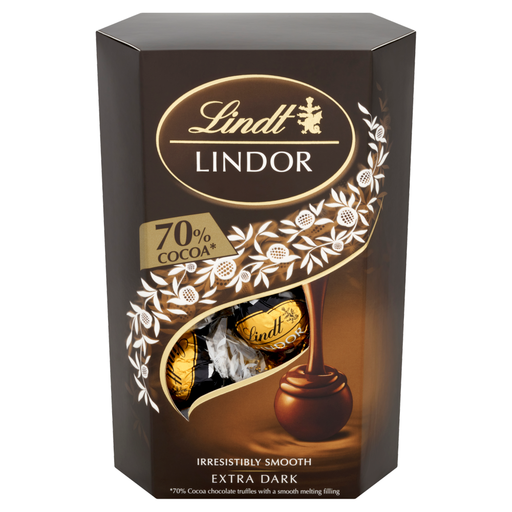
This 200g box of filled truffles is a sharing option when you have room for a box. Lindt states that the 70% cocoa claim applies to the dark shell, not the entire truffle. The ingredients include milk, soya and barley, and the product may contain nuts; check the current pack before sharing.
No. Read the percentage and what it describes on the exact product. Lindt states 70% minimum cocoa for its EXCELLENCE Dark 70% bar, but 70% cocoa in the shell of its filled LINDOR Dark 70% truffles; Ferrero Rocher likewise specifies the outer layer of its Dark 70% hazelnut bar.
Plan other food and drinks rather than relying on a chocolate box alone. Mountain Training’s camping guidance calls for food that provides energy and is light to carry, while distinguishing simple from complex carbohydrates. Choose the chocolate portion and format as part of that wider plan.
Check the current pack’s cocoa wording, ingredients, allergens, storage directions and best-before date, then consider how to protect the pieces from warmth and crushing. Fillings matter: Lindt LINDOR Dark 70% truffles contain milk, soya and barley and may contain nuts.
Confirm the decision with the school or caterer against the requirements applicable to that trip before including it. The Department for Education’s September 2026 guidance addresses food provided in state-funded schools in England, and the Requirements for School Food Regulations 2014 classify chocolate as confectionery. Those points alone do not decide a particular trip’s menu.
The retail rules described in the Department of Health and Social Care’s 2023 guidance concern promotion and placement of specified foods by relevant businesses selling to England, not what an individual carries on a walk. Food supplied by a school is a separate question governed by its applicable requirements.