Hosts planning a sharing spread
Compare the number of cakes and the size of each piece. A pack’s weight alone will not tell you how many pieces you can put out.


Choose the format around how you will serve the cakes: mini pieces, separate snack packs or a larger box to share. Check the exact pack’s allergens before serving guests, and look for a stated cocoa-solids percentage if chocolate strength matters to you; a dark-chocolate description or the percentage of chocolate in the cake answers a different question. For a party at a school in England, check the school’s policy as well as the rules applicable to the event.
Compare the number of cakes and the size of each piece. A pack’s weight alone will not tell you how many pieces you can put out.
Look for the cocoa-solids percentage of the chocolate itself. Sainsbury’s x24 listing states 48% minimum cocoa solids in its dark chocolate, but was marked out of stock on 1 October 2026; check the pack and its availability before planning around it.
Use the current label on the pack being served to check guest allergies. For a school party, also establish where the event takes place and what the school permits.
Start with the number and size of pieces you need, then check the chocolate declaration, allergen label and venue requirements on the specific option you plan to serve.
| Priority | What to check | Your needs |
|---|---|---|
| Serving format | Compare cake count with pack weight. Waitrose’s 125g mini pack gives a 25g nutrition serving, not a count of individual cakes; Morrisons lists the McVitie’s 330g triple pack as 3 × 10 cakes. | Smaller pieces would suit my spread, or I need a clear count so I can plan how many cakes to put out. |
| Chocolate declaration | Distinguish dark chocolate’s share of the whole cake from cocoa solids within that chocolate. Sainsbury’s x24 listing states both 22% dark chocolate in the cakes and 48% minimum cocoa solids in the chocolate. | If a particular cocoa-solids figure matters to me, I want it stated for the chocolate on the exact pack I buy. |
| Guest allergies | Read the current ingredients and precautionary allergen statements. M&S says its 250g pack is unsuitable for people with nut or peanut allergy; Waitrose says its mini cakes may contain milk. | I need to check the cakes against my guests’ allergies rather than assuming dark chocolate means they can eat them. |
| Party venue | For a school in England, establish whether the food is for an occasional celebration or routine school provision, and check the school’s food and allergy policy. Department for Education guidance distinguishes these settings. | Before bringing cakes to school, I want to know what applies to this event and what the school allows. |
| Availability | Check the chosen pack can be obtained for the event. Sainsbury’s x24 listing was marked out of stock on 1 October 2026. | If I am choosing a pack for its stated cocoa-solids figure, I need to confirm I can get that exact pack. |
A figure such as 19% dark chocolate describes how much of the cake is chocolate, not the cocoa-solids content of that chocolate. Sainsbury’s lists these as separate figures for its x24 cakes.
If cocoa solids affect your choice, check for a declaration about the chocolate on the exact pack.
Allergen statements vary by product. The cited M&S pack is labelled unsuitable for people with nut or peanut allergy, while Waitrose Mini Jaffa Cakes may contain milk.
Ask about guests’ allergies and check the current packaging of the cakes you will serve.
Department for Education guidance for England says school-food standards do not apply to food provided for celebrations or food occasionally brought in by parents or pupils. That distinction does not determine a school’s own food or allergy policy.
Confirm the event arrangements with the school. Do not assume guidance for England applies elsewhere in the UK.
These pack descriptions show different ways to serve Jaffa cakes; a brand’s inclusion here does not indicate that every pack is available for your event.
Morrisons lists an Original triple pack of 3 × 10 cakes, weighing 330g.
Tesco lists its own Orange Jaffa Cake Spongy & Fruity twin pack as 2 × 150g.
Its x24 Jaffa Cakes listing states 48% minimum cocoa solids in the dark chocolate.
Asda lists a 150g box of standard Jaffa cakes and suggests 12 servings.
M&S lists dark-chocolate orange Jaffa cakes in 125g and 250g formats.
Waitrose lists a 125g pack of mini Jaffa cakes made with dark chocolate.
Waitrose lists Bahlsen Messino as a 125g pack of Jaffa-style sponge cakes with orange filling.
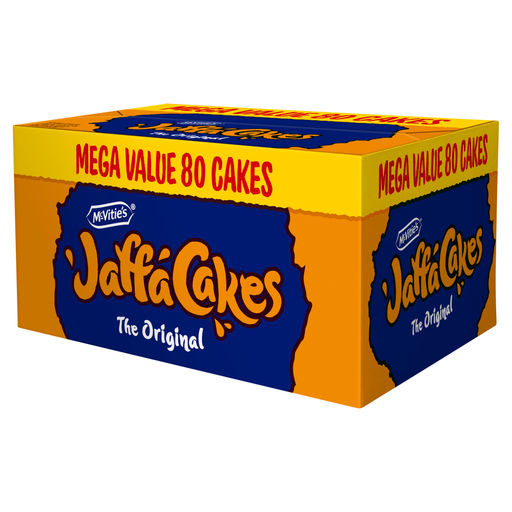
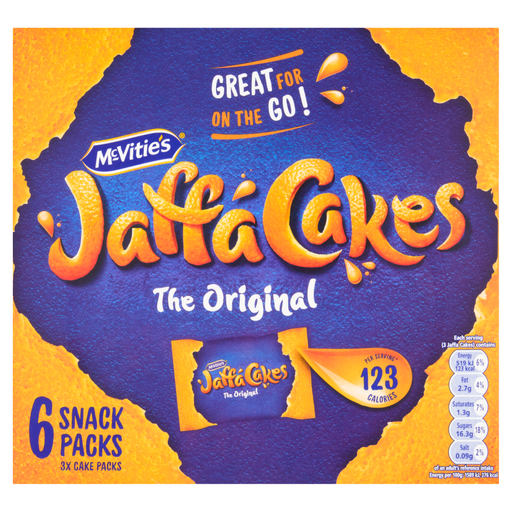
These McVitie’s options cover three ways to put out standard-sized Jaffa cakes: a large box, separate three-cake snack packs and a triple pack. Choose a pack count that fits the gathering, then check its current allergen label.
 No image available
The stated count of 80 cakes helps with planning a larger party spread. Check the supplied pack’s allergen label before serving guests; the pack title does not give a cocoa-solids percentage.
 No image available
Six separate three-cake packs give you portions to hand out rather than one open sharing box. Check the current pack’s allergen label for guests, particularly where milk, soya, egg or nuts are a concern.
No image available
Morrisons describes the corresponding 330g triple pack as 3 × 10 cakes, a count you can use to plan a sharing plate. Its listed 19% dark chocolate describes the cake’s composition, not cocoa solids in the chocolate. Check the supplied pack’s allergen label before serving.
No. The cited McVitie’s and M&S packs list milk-derived ingredients, and Waitrose Mini Jaffa Cakes say they may contain milk. Check the current label of the exact pack for that guest.
No. Waitrose gives a 25g nutrition serving and five servings per 125g pack, not the number of individual mini cakes. If pieces per guest matter, count the cakes in the pack you buy.
The cited Asda and Bahlsen cakes are presented as ready to eat. Follow the chosen pack’s storage directions; their listings advise keeping them cool and dry, and Asda advises an airtight container after opening.
Not as a blanket rule. Department for Education guidance for England says school-food standards do not apply to food provided for celebrations or food occasionally brought in by parents or pupils. Routine school provision is a different setting, and the school’s own food and allergy policy still needs checking; this is not a UK-wide conclusion.
No. Department for Education guidance dated 14 September 2026 describes the changes as due to take effect in September 2027 subject to Parliamentary approval. For a school event in England, check the rules applicable on the event date and the school’s policy.