Newcomers to dark chocolate
If you want a small chocolate finish after supper without starting with the most intense cocoa taste, compare plain bars around 70%. Divine describes its 70% bar as having deep cocoa flavour and subtle sweetness.


Choose a plain 70% bar for a less intense dark-chocolate finish, or consider 85% and above if you already prefer a stronger, less sweet cocoa taste; flavoured and textured varieties make ingredients as important as cocoa percentage. If supper is close to bedtime, remember that Oxford Health CAMHS identifies chocolate as a potential caffeine source and says caffeine can affect sleep. Check the exact pack for allergens, including on vegan-labelled chocolate.
If you want a small chocolate finish after supper without starting with the most intense cocoa taste, compare plain bars around 70%. Divine describes its 70% bar as having deep cocoa flavour and subtle sweetness.
If you already enjoy less sweet, more intense chocolate, compare higher-cocoa bars by percentage and the nutrition information on each pack. Montezuma's describes higher cocoa percentages as generally less sweet; the percentage alone does not tell you whether a bar suits bedtime.
If you eat close to bedtime, consider whether caffeine affects your sleep. If you avoid an allergen, check the exact pack: Lindt says its EXCELLENCE 70% bar is made to a vegan recipe but is not suitable for people with a milk allergy.
Start with the cocoa flavour and format you want, then check the pack for ingredients, allergens and nutrition information. Treat timing as a separate decision if chocolate will follow a late supper.
| Priority | What to check | Your needs |
|---|---|---|
| Cocoa taste | Compare the stated cocoa percentage and flavour description. A higher percentage is a starting point for judging cocoa intensity, not a substitute for the pack's nutrition information. | I would rather start with a less intense plain bar, or I already know I enjoy the stronger taste of 85% cocoa and above. |
| Bedtime timing | Consider when you will eat it and whether caffeine affects you. Oxford Health CAMHS identifies chocolate as a potential caffeine source and says caffeine can affect sleep. | If supper is close to bed, I may prefer to have chocolate earlier or choose a different dessert rather than assume a cocoa percentage settles the question. |
| Ingredients and allergens | Read the exact pack's ingredients and any ‘may contain’ statement, especially for vegan-labelled, nut-containing or filled varieties. A vegan recipe does not establish milk-allergy suitability. | I need to know whether this particular bar meets my ingredient requirements, not just whether its front label says ‘dark’ or ‘vegan’. |
| Texture and format | Compare a plain bar with cocoa-nib, fruit, nut or filled recipes; check added ingredients for each variant. Montezuma's Lordy Lord, for example, contains 7% cocoa nibs according to the brand. | Some evenings I want a straightforward cocoa taste; on others, crunch or a flavoured dessert finish matters more. |
A higher cocoa percentage can signal a less sweet, more intense flavour, but it does not establish how much caffeine a serving contains. Oxford Health CAMHS says caffeine can affect sleep and identifies chocolate as a potential source.
Choose cocoa percentage for flavour. If caffeine affects you and supper is close to bedtime, consider having chocolate earlier instead of simply switching to a higher percentage.
Lindt states that its EXCELLENCE 70% bar is made to a vegan recipe but is not suitable for people with a milk allergy. The two descriptions answer different questions.
Check the ingredients and precautionary allergen statement on the exact pack before choosing it for someone with an allergy.
A nibbed, nut-containing or filled variety has a different ingredient profile from a plain bar. Montezuma's Lordy Lord, for example, includes cocoa nibs; Hotel Chocolat lists fruit-and-nut options in its dark range.
Choose by the particular recipe and read its ingredient and allergen information, rather than relying on the words ‘dark chocolate’.
Online product information may not reflect the pack you receive. Marks & Spencer advises shoppers to read the product label rather than rely solely on its website.
Confirm the cocoa percentage, ingredients, allergens and storage instructions on the current pack.
Divine describes its 70% dark bar as having deep cocoa flavour with subtle sweetness, making it a reference point for a plain after-supper bar.
Lindt's EXCELLENCE 70% bar offers another plain dark-chocolate reference for comparing cocoa taste.
Montezuma's Lordy Lord is a 70% dark-chocolate option with cocoa nibs for a different texture from a plain bar.
The cited M&S Collection dark bar states a minimum of 85% cocoa solids, providing a higher-cocoa option to compare with 70% bars.
Hotel Chocolat lists dark-chocolate formats including 70% batons, 85% batons and an 80% fruit-and-nut selector.
These bars cover 70%, 72%, 85% and 90% cocoa choices for comparing a dark-chocolate finish to supper. The list is not a guide to which bar, if any, to eat immediately before bed.
 No image available
Consider this 85% cocoa bar if you prefer a higher-cocoa option after supper. Check the current pack for ingredients and allergens; its cocoa percentage does not establish bedtime suitability.
 No image available
Another 85% cocoa bar for comparing higher-cocoa choices. Read the pack's ingredient and allergen information if either affects your choice.
 No image available
This 70% cocoa bar is a plain option to compare with the higher-percentage bars if you do not want to start at 85% or 90%. Check the current pack for ingredients and allergens.
 No image available
At 72% cocoa, this bar offers another percentage to compare with the 70% and 85% options. Use the current pack to check its ingredients, allergens and nutrition information.
 No image available
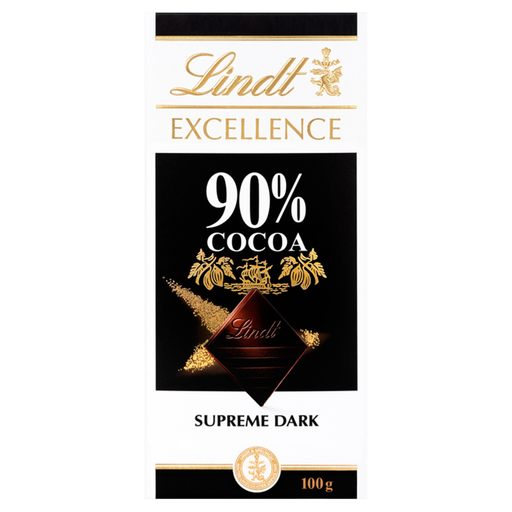
Consider this 90% cocoa bar if you already prefer very high cocoa percentages. Check its own pack for ingredients and allergens; do not apply the allergen information for Lindt's different 70% bar to this variant.
Not necessarily. Oxford Health CAMHS identifies chocolate as a potential caffeine source and says caffeine can affect falling asleep, sleep duration and sleep quality. If caffeine affects you, consider having chocolate earlier or choosing a non-chocolate dessert when supper is close to bedtime.
No: cocoa percentage helps you compare flavour, not bedtime suitability. Montezuma's describes higher-cocoa chocolate as generally less sweet, but the percentage does not establish a particular bar's caffeine content, allergens or nutrition values. Check the exact pack for the information relevant to your choice.
No. Lindt says its EXCELLENCE 70% bar is made to a vegan recipe but is not suitable for people with a milk allergy. Check both the ingredients and any precautionary allergen statement on the exact product you intend to eat.
It is precautionary allergen labelling, used to communicate that an allergen could be unintentionally present. Food Standards Agency-commissioned research describes this purpose for allergens regulated in the UK. Do not dismiss a relevant warning because a bar is labelled dark or vegan.
Choose a plain bar if you want to focus on cocoa taste and compare stated percentages. If you want added texture or flavour, look at the exact recipe: Montezuma's Lordy Lord contains cocoa nibs, while Hotel Chocolat lists fruit-and-nut dark chocolate. Check ingredients and allergens for the individual variant.