Runners looking beyond gels
If you want a different flavour or texture on long training runs, you still need to account for carbohydrate, fluid and how the food feels when eaten while running.


Dark chocolate marshmallows are better treated as a snack or a tested addition to a marathon fuelling plan than as its foundation. World Athletics describes endurance intake in grams of carbohydrate per hour, so check the carbohydrate in the portion you would actually eat, plan for fluid and try the food during training; a high cocoa percentage cannot answer those questions.
If you want a different flavour or texture on long training runs, you still need to account for carbohydrate, fluid and how the food feels when eaten while running.
If the high-cocoa coating is the attraction, decide whether the product is an off-run snack or something you intend to carry on a run. Those choices call for different label checks.
Check the exact pack’s ingredients and allergen information before choosing a chocolate-coated marshmallow; products in this category are not interchangeable for dietary purposes.
Decide first whether you need measurable food for a run or a dark-chocolate snack. Then compare the portion you would eat, the current label and how you plan to carry it.
Consider when: You need to plan carbohydrate intake across a long run or marathon.
Keep in mind: A portioned energy gel is an alternative to confectionery, but its label and your training experience still matter.
Consider when: Cocoa content and flavour matter more to you than measuring fuel during a run.
Keep in mind: A stated cocoa percentage does not tell you the carbohydrate in a portion.
Consider when: You want to try a chocolate-coated marshmallow alongside a measurable fuelling plan.
Keep in mind: Check the portion and ingredients, then try eating it during training rather than introducing it on race day.
| Priority | What to check | Your needs |
|---|---|---|
| Measurable carbohydrate | Read carbohydrate per serving and calculate it for the amount you will carry. World Athletics lists 30–60 g per hour for endurance exercise lasting 1–2.5 hours and up to 90 g per hour for longer events. | I want to know how each portion fits into my plan, rather than choosing by cocoa percentage or calories. |
| Eating while running | Consider portion size, packaging and when you would eat it. Check the fat figure if you plan to eat chocolate-coated confectionery repeatedly. | I need something I can carry and eat at planned intervals, and I want to try it during training first. |
| Cocoa content | Compare the stated figure on the exact variant: Sainsbury’s describes the Mallow & Marsh raspberry product as coated in 70% dark chocolate, while its E. Wedel listing states 47% cocoa solids minimum for the dark chocolate. | For an off-run snack, I care about the stated dark-chocolate content; I would not use it as a measure of running fuel. |
| Ingredients | Read the current ingredients, allergen declaration and any may-contain statement on the pack. Check the exact variant rather than assuming all dark marshmallows use the same recipe. | If I avoid particular ingredients, the pack details need to suit me before flavour or fuelling enters the decision. |
Cocoa percentage describes the chocolate, not the carbohydrate supplied by the portion. World Athletics expresses its endurance guidance in carbohydrate per hour.
Choose a fuelling plan first, then use the current nutrition label to work out whether a marshmallow portion has a place in it.
A calorie figure does not give the grams of carbohydrate needed to calculate a portion’s contribution to an hourly plan.
Check carbohydrate on the current pack and calculate it for the amount you would actually carry and eat.
Chocolate coating, portion size and ingredients all matter when deciding whether a food is practical to eat while running. Sainsbury’s lists 22 g fat per 100 g for its E. Wedel dark-chocolate marshmallows.
Check the label for ingredients you must avoid, and try any suitable new snack during ordinary training first.
Its raspberry marshmallows are listed with a 70% dark chocolate coating in a 100 g pack at Sainsbury’s; Waitrose also lists a 35 g raspberry bar.
Sainsbury’s lists dark-chocolate-covered vanilla marshmallows in a 360 g pack, with dark chocolate stated at 47% cocoa solids minimum.
Its grocery listings describe both the Mallow & Marsh raspberry variant and the E. Wedel vanilla variant.
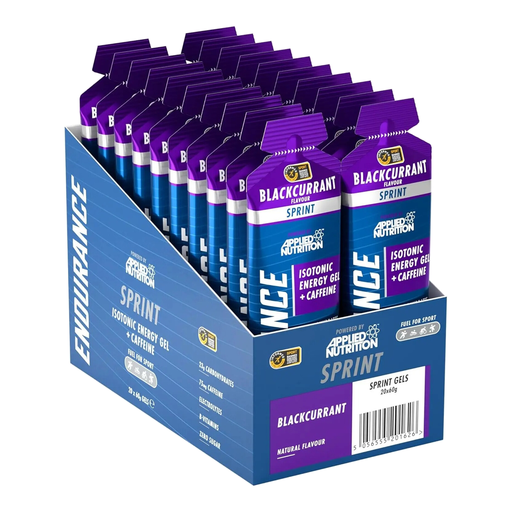
This energy gel represents the measured running-fuel route, not the dark-chocolate marshmallow snack route. Check its current carbohydrate label against your plan and try it during training.
 No image available
A sachet option to consider if you want portioned running fuel rather than a chocolate-coated snack. The pack contains 20 x 60g blackcurrant-flavour gels; check the current nutrition label for carbohydrate per sachet and try one during training before relying on it for an event.
Do not assume they are interchangeable. World Athletics lists 30–60 g carbohydrate per hour for endurance exercise lasting 1–2.5 hours and up to 90 g per hour for longer events; calculate what your marshmallow portion supplies from its current label, and try it with your fluid plan in training.
The Mallow & Marsh raspberry product is described by Sainsbury’s as coated in 70% dark chocolate. Its E. Wedel vanilla listing states 47% cocoa solids minimum for the dark chocolate. These figures describe the chocolate, not the carbohydrate in the whole product.
Check carbohydrate for the portion you plan to eat, the pack size and the current ingredients and allergen information. Then try carrying and eating a suitable portion during training before including it in an event plan.
No. Joybuy’s product information lists egg as an allergen for its Mallow & Marsh raspberry variant. Read the ingredients on the exact current pack rather than treating “dark chocolate” as a statement about the whole marshmallow.