Home bakers melting chocolate
For brownies, cakes, ganache or dipped treats, start with the quantity your recipe calls for. Cooking chocolate, buttons or a bar sold for baking avoids unwrapping individual minis before melting.


For a recipe that needs a substantial quantity of melted chocolate, choose cooking chocolate or plain buttons: M&S positions its cooking range for bakes and describes buttons as suitable for melting or decoration. Individually wrapped dark minis make more sense when you want separate portions; check their cocoa percentage, added flavours and allergen statements before using them in a bake.
For brownies, cakes, ganache or dipped treats, start with the quantity your recipe calls for. Cooking chocolate, buttons or a bar sold for baking avoids unwrapping individual minis before melting.
Buttons and plain mini bars offer small pieces for cookies, cupcakes or dessert boards. Check whether the pieces are the size you want and whether their flavour fits the finished bake.
Read the label on every chocolate used, including decorations. A vegan recipe description does not override a precautionary milk-allergen statement on the pack.
Decide whether the chocolate will be melted, used as small pieces or served in individual portions; then check the flavour and label against the recipe and guests.
| Priority | What to check | Your needs |
|---|---|---|
| Format | Check the recipe weight and whether you need chocolate to melt, pieces to scatter or separate portions. A bar may need chopping; individually wrapped minis need unwrapping. | I need enough chocolate to melt for a batch, or small pieces that can go straight onto individual bakes. |
| Cocoa and flavour | Check the stated cocoa percentage and any added flavours or fillings. M&S recommends 70% dark chocolate when an intense flavour is wanted for baking. | If other flavours are central to my recipe, I want to choose deliberately between plain dark chocolate and a flavoured piece. |
| Allergens | Read the exact pack’s ingredients and precautionary statements, including those on toppings. Do not treat a vegan description as confirmation that a product is suitable for someone with a milk allergy. | When serving guests with dietary requirements, I need to check every chocolate going into the finished bake. |
| Portions | Compare the piece weight and pack quantity with the number of servings. Divine lists 100 individually wrapped 4.2 g bars; Montezuma’s lists a 25 g FitzRoy mini bar. | For one piece per dessert, I want to count portions before choosing between small minis, larger bars and buttons. |
A filled or flavoured piece can change the taste and texture of a bake and may introduce ingredients that matter to guests.
For a recipe calling for plain dark chocolate, check the product name and ingredient list. Save flavoured pieces for a decoration where their flavour is intentional.
Some dark chocolate described as vegan also carries a precautionary milk statement. Lindt says its EXCELLENCE 70% bar is not suitable for people with a milk allergy because it is made in a facility using milk.
Check the exact pack used for the recipe and any decorations; do not rely on a general claim about dark chocolate or a brand.
Individual bars can provide convenient portions, but every wrapper has to be removed before the chocolate can be melted.
Work out the recipe weight first. Consider buttons, cooking chocolate or a baking-suitable bar when the chocolate is primarily an ingredient.
Unwrapping many small bars adds preparation time.
Temperature control matters when you want a set finish on dipped or moulded chocolate.
Follow the chocolate’s tempering instructions rather than guessing. Guittard Chocolate UK gives a working target of 31–32°C for dark chocolate.
These brand examples cover different baking and presentation formats; the product label still determines whether a particular chocolate fits your recipe.
Its cooking-chocolate range is a starting point when dark chocolate is a recipe ingredient.
Its range includes Organic 74% Dark Chocolate Buttons 120 g and a FitzRoy Organic Dark Chocolate Mini Bar 25 g.
Its 70% Dark Chocolate Mini Bars come in a pack of 100 individually wrapped 4.2 g bars.
Lindt presents its EXCELLENCE Dark 70% Bar 100 g as suitable for baking and cooking.
Its dark range includes 70% and 85% batons alongside filled and flavoured chocolates.
A Green & Black’s Christmas range page has described miniature dark, milk and white chocolate treats.
These options cover chocolate chips for small pieces and a cooking-chocolate bar for recipe-led baking. Choose between them according to how the chocolate will be used, rather than treating both as individually portioned minis.
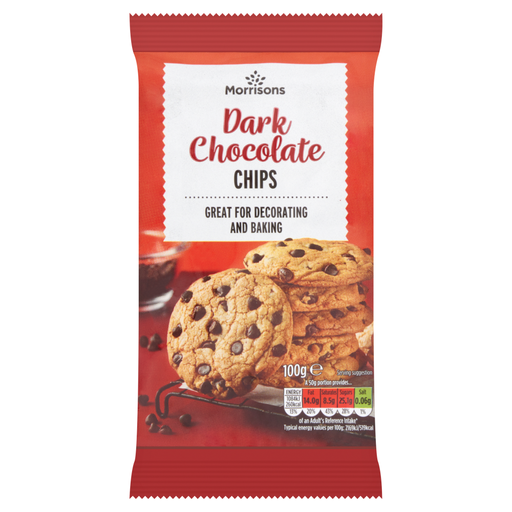 No image available
Chips are an option when you want separate chocolate pieces in a festive bake or topping. This is a 100 g pack; check the piece size if the appearance of individual decorations matters. Contains soya and may contain milk, so check the current pack when serving guests with dietary requirements.
 No image available
This 100 g cooking-chocolate bar fits a recipe that calls for dark chocolate to be measured and melted, rather than ready-portioned minis. It states 70% cocoa. Contains milk and may contain eggs, gluten and tree nuts; check the current pack before using it for guests with dietary requirements.
They can be used if their ingredients and flavour suit the recipe, but individually wrapped bars take more preparation for a large melted quantity. Choose minis for separate portions or toppings; consider cooking chocolate or buttons when melting is the main task.
Follow a percentage specified by the recipe where possible. M&S recommends 70% dark chocolate for an intense baking flavour, and Lindt presents its EXCELLENCE 70% bar as suitable for baking; also check whether the chocolate has added flavours that would change the result.
No. Lindt says its EXCELLENCE 70% bar is made to a vegan recipe but is not suitable for people with a milk allergy because it is made in a facility using milk. Read the ingredients and precautionary statements on the exact pack used.
Follow the chocolate’s tempering guidance when the set finish matters. Guittard Chocolate UK gives a dark-chocolate working target of 31–32°C; use the instructions for the product you choose rather than assuming every chocolate needs identical handling.