Hosts serving a mixed group
Separate pieces are convenient on a self-service tea table. Ask about dietary requirements and check each current pack rather than assuming that dark chocolate suits every guest.


For an afternoon tea where guests will help themselves, individually wrapped fondant squares make serving straightforward; thins offer separate pieces, while truffles and bars suit a table where you want to offer a different chocolate format. If guests specifically want high-cocoa dark chocolate, look for a declared cocoa percentage rather than relying on the word “dark”. Check the current pack’s ingredients and allergen statements against guests’ needs before serving.
Separate pieces are convenient on a self-service tea table. Ask about dietary requirements and check each current pack rather than assuming that dark chocolate suits every guest.
A declared cocoa percentage gives you a clearer starting point than “dark” on its own. The centre and format matter too: a mint fondant square, a thin and a bar are different things to serve alongside tea.
Choose against the guest’s specific requirement and read the full label, including precautionary statements. Sainsbury’s describes its Taste the Difference Free From Dark Chocolate Mints as milk and gluten free; that description is not a substitute for checking the pack in hand.
Start with how guests will take the mints, then compare the exact product’s cocoa declaration, pack quantity and allergen information.
| Priority | What to check | Your needs |
|---|---|---|
| Serving format | Look for individual wrappers or separate pieces if guests will help themselves. A bar needs breaking or portioning. | I want guests to take a mint without asking someone to cut up chocolate or repeatedly handle the remaining pieces. |
| Cocoa and centre | Read the cocoa-solids declaration on the exact product and check whether it has fondant, a truffle filling or no centre. Sainsbury’s lists 43% minimum for After Eight squares; Marks & Spencer lists 85% for its Collection mint bar. | Some guests want a clearly high-cocoa option; others may prefer a peppermint fondant. I would offer a choice rather than assume “dark” describes one style. |
| Allergens | Check the current ingredients, emphasised allergens and “may contain” wording against each guest’s requirements. Marks & Spencer says its vegan Collection mint bar is not suitable for people with milk, nut or peanut allergies. | If a guest has an allergy, I need to confirm the particular pack with them before putting it on the shared table. |
| Party quantity | Compare pack weight with the stated serving count, where given. Sainsbury’s lists approximately 11 servings for After Eight 300g; Waitrose lists 27 for Mint Thins; Sainsbury’s lists approximately 16 truffles for Lindt Lindor Dark Mint 200g. | I want enough pieces for the guest list without treating a pack’s serving estimate as a rule for how many each person will take. |
Products sold as dark chocolate mints can have different declared cocoa levels. For example, Sainsbury’s lists 43% minimum for After Eight squares, while Marks & Spencer lists 85% for its Collection mint bar.
Read the percentage on the exact pack and consider the centre as well as the chocolate when choosing what to serve.
Marks & Spencer labels its Collection mint bar vegan but says it is not suitable for people with milk, nut or peanut allergies. Sainsbury’s lists milk and soya in Lindt Lindor Dark Mint and says it may contain nuts.
Ask guests about their requirements, check the current pack’s ingredients and precautionary statements, and keep the packaging available.
A bar needs portioning, unlike separate thins or individually enveloped squares. That distinction matters if guests are expected to take a mint as they leave the table.
Set out ready-made pieces for straightforward self-service, or portion a bar before guests arrive if you want to offer one.
The pack in hand is the one guests will eat, so its ingredients and precautionary allergen wording are the relevant details at serving time.
Use product pages to make a shortlist, then check the physical label before offering mints to guests with dietary requirements.
These examples show how particular dark-mint products differ in format and labelling; a brand name alone does not establish what is in another product.
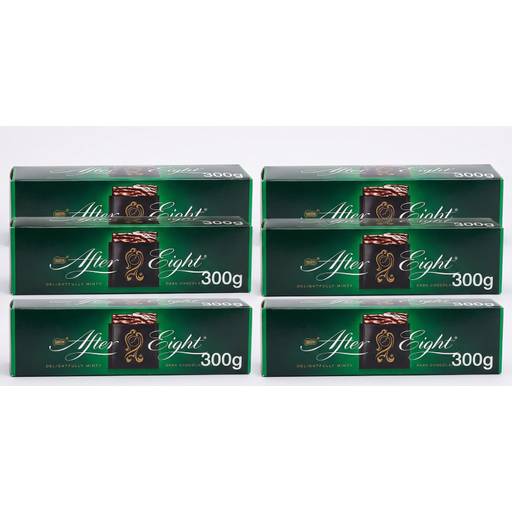
Sainsbury’s describes the 300g Dark Mint Chocolate Box as thin peppermint-fondant squares in individual envelopes.
The Lindt Lindor Dark Mint 200g box listed by Sainsbury’s contains truffles with a 70% cocoa dark-chocolate shell and mint filling.
Marks & Spencer describes its Dark Chocolate with Mint as a 100g Peruvian bar with 85% cocoa.
Waitrose Mint Thins are separate pieces of peppermint-flavoured dark chocolate with sugar crystals.
Tesco lists its Finest Mint Dark Chocolate as a 100g bar with 47% minimum cocoa solids.
These dark chocolate mint options include cream-style pieces and a bar. Compare their pack sizes and formats with how you plan to serve afternoon tea, then check the current pack for cocoa and allergen details that matter to your guests.
 No image available
The multi-pack format may suit a table serving more guests; compare the 300g x 6 pcs listing with the quantity you expect to use. Check the individual packs for their cocoa declaration, serving information and allergens before setting them out.
 No image available
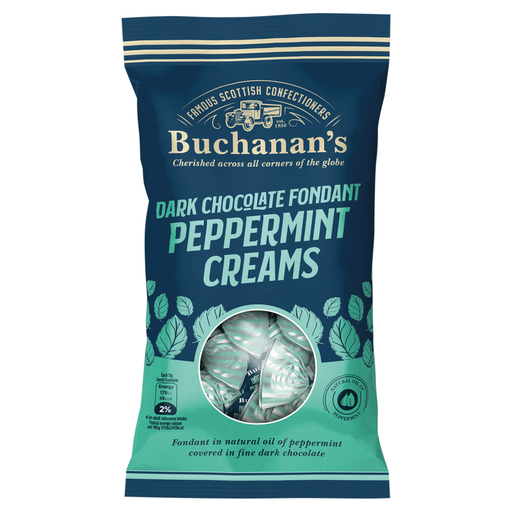
Consider these 200g peppermint creams if you want a fondant-style mint on the tea table. Check the pack for piece count, wrapping and precautionary allergen statements when planning self-service or serving guests with dietary requirements.
 No image available
The 120g pack is another cream-style choice to weigh against the number of guests. Confirm the cocoa declaration, piece count and full allergen wording on the current pack before deciding how to serve it.
 No image available
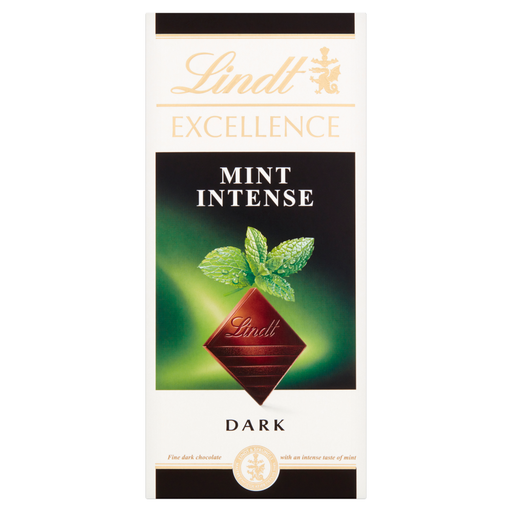
This 100g mint chocolate option suits a host willing to portion a bar rather than put out separate sweets. Check its cocoa declaration and allergen information on the pack before offering it to guests.
No: “dark” does not tell you the exact cocoa percentage. Sainsbury’s lists 43% minimum cocoa solids for After Eight squares and 70% for the shell of Lindt Lindor Dark Mint truffles; Marks & Spencer lists 85% for its Collection mint bar. Compare the declaration on the product you intend to serve, along with its centre and format.
Individually enveloped pieces, such as the After Eight squares described by Sainsbury’s, need no advance portioning. Separate thins are another one-at-a-time option; a chocolate bar needs breaking or portioning if guests will serve themselves.
Not necessarily. Marks & Spencer labels its Collection Dark Chocolate with Mint bar vegan but explicitly says it is not suitable for people with a milk allergy. Check the current pack’s ingredients and precautionary statements against the guest’s requirements rather than using vegan labelling as an allergy check.
Read the warning for the exact product and discuss it with the guest concerned before serving. Sainsbury’s says Lindt Lindor Dark Mint contains milk and soya and may contain nuts; Waitrose says its Mint Thins may contain milk and nuts. Do not assume that a dark-chocolate label overrides either statement.