What should you check?
Decide when the mints will be eaten, then compare the product label and format against that occasion.
| Priority | What to check | Your needs |
|---|
| Snack occasion |
Check whether the treat is for home or a packed lunch, and read the school's current policy. For regular between-meal snacks, consider the fruit, vegetable and savoury options suggested by Hertfordshire Community NHS Trust. |
I want to distinguish an occasional chocolate mint from a regular after-school snack. In the British Nutrition Foundation's 2025 survey of over 2,500 UK children aged 10–13, 76% said they normally snacked after school during the week; 32% named chocolate among foods they ate most often as a snack. Neither figure measures a preference for dark mints. |
| Cocoa and sugar |
Compare cocoa percentage and sugars per 100g on the exact product. Marks & Spencer lists 85% cocoa and 15.6g sugars per 100g for its Collection mint bar; Tesco lists 47% and 49g per 100g for Lindt Excellence Mint Intense. |
If I prefer a higher-cocoa bar or want to compare sugar figures, I need both numbers from the product I'm considering. A “dark” label alone does not give me either figure. |
| Dietary labels |
Read the named allergens and any free-from or vegan statement on the current pack. Do not treat “dark” or “vegan” as a milk-allergy assurance: Marks & Spencer labels its 85% mint bar vegan but not suitable for people with a milk, nut or peanut allergy. |
For milk or gluten avoidance, I want an explicit statement for that product. Sainsbury's labels its Taste the Difference Free From Dark Chocolate Mints milk and gluten free. |
| Portion format |
Check whether nutrition is given per piece or serving as well as per 100g. Waitrose lists 3.0g sugars per Mint Thin; Sainsbury's lists 17.2g sugars per three After Eight mints. |
I would rather decide on a portion than judge a sharing box by its size. Individual wrapping or thin pieces help identify pieces, but do not change the sugar in the amount eaten. |
Dark-mint options on Joybuy
These products cover peppermint creams, a multi-pack of mint chocolates and a dark-mint bar. Compare their formats and current pack labels against your intended treat occasion, particularly if sugar or allergens affect your choice.
 No image available
Summerdown Dark Chocolate Peppermint Creams 200g
Consider these if you want peppermint creams rather than a dark-mint bar. Check the current nutrition and allergen label before choosing a portion or serving them to someone with dietary restrictions.
View on Joybuy
 No image available
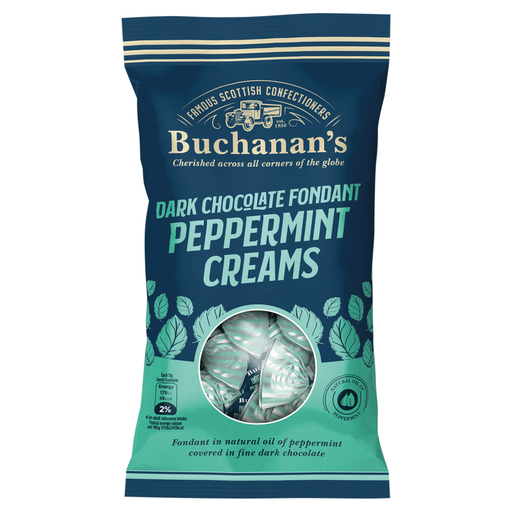
Buchanans Dark Chocolate Peppermint Creams 120g
This 120g pack is another peppermint-cream format to consider for an occasional treat. If allergens or sugar are deciding factors, compare the current pack label rather than assuming it matches another peppermint cream.
View on Joybuy
 No image available
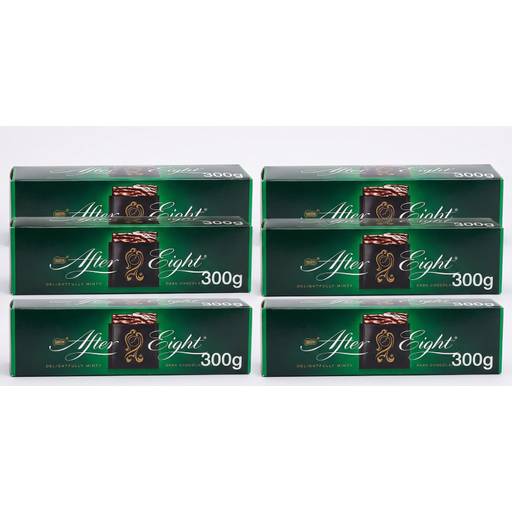
After Eight Mints 300g × 6
Choose this format only if six 300g packs suit the intended occasion; it is not a single 300g box. Check the nutrition and allergen information on the packs, and confirm the cocoa percentage if that is central to your choice.
View on Joybuy
 No image available
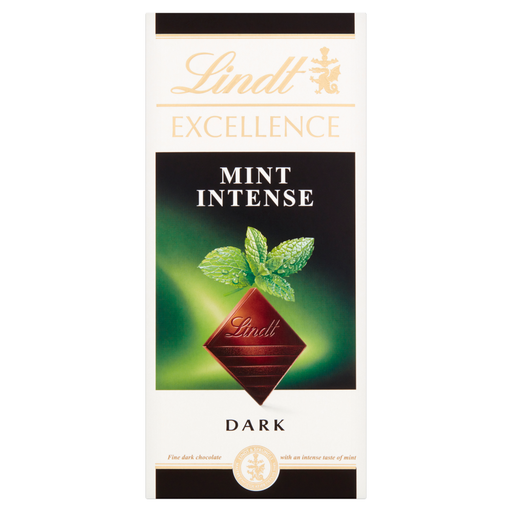
Lindt Excellence Mint Intense 100g
For a mint-flavoured bar rather than peppermint creams, Tesco lists this product at 47% minimum cocoa and 49g sugars per 100g. Its listed ingredients include milk fat and soya lecithin, so check the current pack if either allergen matters.
View on Joybuy
Questions about dark chocolate mints
Are dark chocolate mints suitable as an everyday school snack?
Do not assume so from the word “dark”: chocolate mints are confectionery, and sugar figures differ by product. For routine between-meal snacks, Hertfordshire Community NHS Trust suggests options such as fruit, vegetable sticks and savoury foods. If you plan to put mints in a packed lunch, check the school's current policy.
Does more cocoa always mean less sugar?
No general rule follows from these examples; compare the exact labels. Marks & Spencer lists 85% cocoa and 15.6g sugars per 100g for its Collection mint bar, while Tesco lists 47% cocoa and 49g sugars per 100g for Lindt Excellence Mint Intense. Those figures describe the named products, not every dark chocolate mint.
What should I choose if milk and gluten avoidance matters?
Sainsbury's labels its Taste the Difference Free From Dark Chocolate Mints milk and gluten free. Read the current package and its full allergen statement before choosing; “dark chocolate” alone is not a free-from claim.
Do school-food rules decide what can go in a packed lunch?
Department for Education guidance concerns food and drink provided in state-funded schools in England; it does not establish what your particular school permits in food brought from home. Check that school's current packed-lunch and allergy policies.
Does individual wrapping make a mint lower in sugar?
No. Wrapping helps identify individual pieces, but the amount eaten determines the serving to compare. Sainsbury's lists 17.2g sugars per three mints for its 300g After Eight box, so check both the number of pieces and the label's serving size.


