Gym-goers who want a small chocolate treat
A separate bar or a few pieces can be easier to take along than part of a large bar. Plan any other pre-exercise food around your timing and preferences rather than relying on the chocolate alone.


A dark-chocolate multipack makes more sense as a way to carry a small treat than as your only pre-workout snack. University College London Hospitals NHS Foundation Trust advises that a snack 60–90 minutes before exercise should contain carbohydrate and protein with minimal fat; Divine lists 44.3g fat and 31.7g carbohydrate per 100g for its 70% dark chocolate. If you want chocolate before training, consider it alongside food that meets your other snack needs, and choose the pack by its portion size rather than its cocoa percentage alone.
A multi-piece format is useful when the aim is to pack a particular amount of chocolate, not to make chocolate a complete exercise snack.
A separate bar or a few pieces can be easier to take along than part of a large bar. Plan any other pre-exercise food around your timing and preferences rather than relying on the chocolate alone.
Individually portioned bars, minis and batons offer different amounts to carry. Check the unit weight: a bulk case of full-size bars is a different proposition from a bag of minis.
Cocoa percentage, organic and Fairtrade claims may help narrow a choice. Read the current ingredients, allergen statement and nutrition panel separately; a sourcing or dietary claim does not answer those questions.
Decide what role the chocolate will play in your snack, then compare the amount you would actually eat—not just the number of pieces in the box.
| Priority | What to check | Your needs |
|---|---|---|
| Snack timing | Consider whether chocolate would be your only food before exercise. University College London Hospitals NHS Foundation Trust advises carbohydrate and protein with minimal fat for a snack 60–90 minutes beforehand. | If I need a pre-exercise snack rather than a chocolate treat, I will choose food that fits the time available instead of judging it by cocoa content. |
| Portion size | Compare unit weight and pack count. Divine lists both 30 separate 35g bars and a bag of 100 mini bars weighing 4.2g each; Hotel Chocolat lists 15 fingers for its 70% batons. | A smaller piece is easier for me to pack when I do not want to take a whole bar. I would check how much one piece weighs before deciding on a portion. |
| Nutrition label | Compare carbohydrate and fat on the same basis, preferably per serving as well as per 100g. Divine states 31.7g carbohydrate and 44.3g fat per 100g for its 70% 35g bar product. | I want to know what my chosen portion contains; a higher cocoa percentage alone does not tell me how its carbohydrate and fat compare. |
| Ingredients and allergens | Read the current ingredients and allergen statement alongside any vegan or sourcing claim. Marks & Spencer warns that its 70% dark chocolate is not suitable for people with milk, nut or peanut allergies. | If I am sharing a pack or avoiding an ingredient, the label for that exact product matters more to me than a broad description such as “dark chocolate”. |
Separate portions make chocolate easier to carry, but the format does not change its nutrition. University College London Hospitals NHS Foundation Trust advises minimal fat alongside carbohydrate and protein for a snack 60–90 minutes before exercise.
Choose the case for its chocolate portions if that is what you want, and consider the rest of your pre-exercise food separately.
Cocoa percentage describes the chocolate, not whether a serving matches a pre-exercise snack plan. For example, Ocado lists 6.5g carbohydrate and 8.7g fat per 20g serving for M&S Collection 75% dark chocolate.
Choose cocoa strength for flavour, then compare serving size, carbohydrate and fat on the exact pack.
Claims about ingredients or sourcing answer different questions from an allergen statement. Marks & Spencer’s 70% dark chocolate, for instance, carries milk, nut and peanut allergy warnings.
Check the current label for every product, particularly if the chocolate will be shared.
Department for Education school-food guidance concerns food provided in state-funded schools in England. The Requirements for School Food Regulations 2014 define confectionery to include chocolate, but school-provided food and a privately packed lunch are not the same setting.
For a child’s packed lunch, check the individual school’s policy; for school-provided food, check the applicable England school-food requirements.
These brand examples distinguish portioned chocolate from larger bars and sharing products; a place here does not mean a particular pack is listed in the Joybuy selection below.
Divine lists 70% dark chocolate as 30 separate 35g bars, 100 mini bars weighing 4.2g each, and a case of 15 larger 90g bars.
Hotel Chocolat lists 70% dark-chocolate batons as a 15-finger product and also lists 85% dark batons.
Montezuma's lists 74% dark buttons and 100% cocoa Absolute Black products, including a case of 12 bars.
Lindt lists a dark-chocolate Choco Wafer sharing box and an EXCELLENCE bar selection.
Green & Black's lists organic 70% and 85% dark chocolate in 90g bars.
M&S has 70% dark chocolate and a Collection 75% bar; Ocado lists a 20g serving for the latter.
These Joybuy options are multi-piece dark-chocolate boxes for shoppers who want to choose a portion. One is a truffle box and the other a filled assortment; neither should be treated as a plain-bar multipack or as your only pre-workout snack on the strength of its format.
 No image available
The 200g truffle box offers individual pieces if you want chocolate as a small addition to other food before a workout. Check the weight of a truffle and the current pack’s serving nutrition and allergens before deciding how many pieces suit your plans.
 No image available
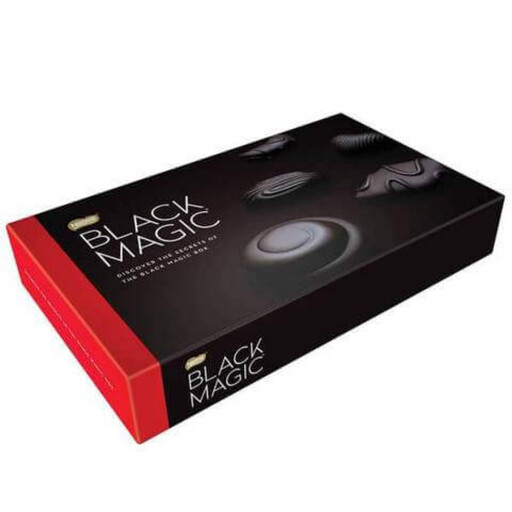
This 348g box contains dark-chocolate pieces with nine types of centre, for someone who wants an assortment rather than plain bars. Check the piece size, serving nutrition and allergens on the current pack; a filled assortment may differ from a plain dark-chocolate portion.
Do not assume it meets your pre-exercise snack needs on its own. University College London Hospitals NHS Foundation Trust advises carbohydrate and protein with minimal fat for a snack 60–90 minutes before exercise; if you want some chocolate, consider what other food you need alongside it.
Start with the weight of one bar or piece, then read the nutrition for that amount. A pack of separate 35g bars, a bag of 4.2g minis and a box of pieces without a stated unit weight give you different ways to judge a portion.
Not by itself: use cocoa percentage to compare chocolate styles, then read carbohydrate and fat for the serving you would eat. Ocado lists 6.5g carbohydrate and 8.7g fat per 20g serving for M&S Collection 75% dark chocolate; that serving information says more about this choice than “75%” alone.
Read the current pack’s ingredient and allergen statements for the exact product, even if it is described as dark or vegan. Marks & Spencer states that its 70% dark chocolate is not suitable for people with milk, nut or peanut allergies.
Do not assume that rules for school-provided food also govern a privately packed lunch. Department for Education school-food guidance concerns state-funded schools in England, while the Requirements for School Food Regulations 2014 define confectionery to include chocolate. Check the individual school’s packed-lunch policy, and consider school-provided food under the applicable school-food requirements.