Office biscuit-tin organisers
If the tin is refilled for regular tea breaks, dark chocolate digestives retain the familiar biscuit format. Bars and boxed chocolates call for a different serving arrangement.


Choose dark chocolate digestives if the tin is mainly for biscuits at tea or coffee breaks. Filled chocolates or truffles suit a planned shared treat instead, while plain 70% or 85% bars make more sense when colleagues specifically want a cocoa-forward option and can portion it. Whatever the format, check the current pack’s ingredients and allergen statement before sharing.
If the tin is refilled for regular tea breaks, dark chocolate digestives retain the familiar biscuit format. Bars and boxed chocolates call for a different serving arrangement.
A stated cocoa percentage helps distinguish a plain dark bar from a filled chocolate or a milk-chocolate-style option. Lindt lists 70% minimum cocoa solids for its EXCELLENCE bar, while M&S lists 85% minimum for its plain dark bar.
A dark colour, high cocoa percentage or vegan-recipe description cannot settle whether a product suits someone with an allergy. Check the exact pack and keep its information available when sharing.
Decide whether this is a biscuit-tin refill or a separate chocolate treat, then check the format, cocoa description and current pack label.
| Priority | What to check | Your needs |
|---|---|---|
| Serving format | Check whether the product is a biscuit, filled selection, truffle or bar. Waitrose lists its McVitie’s dark digestive twin pack as 2 × 316g, with approximately 38 biscuits; an M&S filled selection is 292g. | I’m refilling a tin for routine breaks, so biscuits make more sense than chocolates that need a separate serving plan. |
| Chocolate style | Read the cocoa percentage on the exact product. Lindt lists at least 70% cocoa solids for its EXCELLENCE dark bar; M&S lists at least 85% for its plain dark bar. A percentage alone does not describe a filled centre. | If colleagues specifically ask for a cocoa-forward bar, I want a clearly stated cocoa level rather than relying on the word “dark”. |
| Sharing effort | Consider whether pieces are already separate or whether a bar needs breaking and serving. Check the pack quantity rather than assuming similarly named twin packs are the same size. | For an occasional shared treat, I could set out truffles or a filled selection; for an unattended biscuit tin, I’d rather avoid portioning a bar each time. |
| Allergen information | Read the current ingredients and allergen statement for the exact pack, including any relevant milk, nuts, soya, sesame or cereals containing gluten. Do not infer suitability from cocoa percentage or a vegan-recipe description. | Before I put anything out for colleagues, I need product-specific information they can check for their own requirements. |
A plain bar needs portioning, while truffles and filled chocolates are treats rather than biscuits. Those differences matter when people use the tin throughout the day.
Choose the serving format before comparing flavours: biscuits for a conventional tin, or chocolates when you intend to set out a separate selection.
Lindt’s EXCELLENCE 70% bar is described as made to a vegan recipe, but Lindt says it may contain milk, nuts, soya and sesame. Cocoa content does not replace an allergen statement.
Check the current physical pack for each product before sharing, rather than relying on its name or an older product image.
The M&S Dark Chocolate Selection includes different centres, such as orange crème crunch, espresso and hazelnut praline. A single description of “dark chocolate” does not describe every filling.
Check the assortment’s full ingredient and allergen information when choosing for a group.
Waitrose lists a McVitie’s dark digestive twin pack at 2 × 316g; the Joybuy option below is named as a 2 × 266g twin pack. The pack sizes differ.
Compare the full size and variant on the product page and physical pack before treating one listing as a substitute for another.
Its UK EXCELLENCE bar and LINDOR truffles provide two different dark-chocolate formats with a stated 70% minimum cocoa content.
Bournville Classic is a 100g dark chocolate bar. Cadbury describes its Darkmilk Buttons as milk chocolate with a dark chocolate twist.
The cited range includes a plain bar labelled with at least 85% cocoa solids and a 292g filled dark chocolate selection.
Its listing for McVitie’s Dark Chocolate Digestives provides a biscuit-format reference: a 2 × 316g twin pack with approximately 38 biscuits.
Galaxy describes its Dairy Free range as registered with the Vegan Society and made in a dairy-free and gluten-free environment.
Milka’s German Darkmilk product page states a minimum 40% cocoa content for that specific product.
These options cover dark chocolate digestives for a biscuit tin, plus filled chocolates, truffles and a bar for a planned shared treat. Check each current pack before putting food out for colleagues.
 No image available
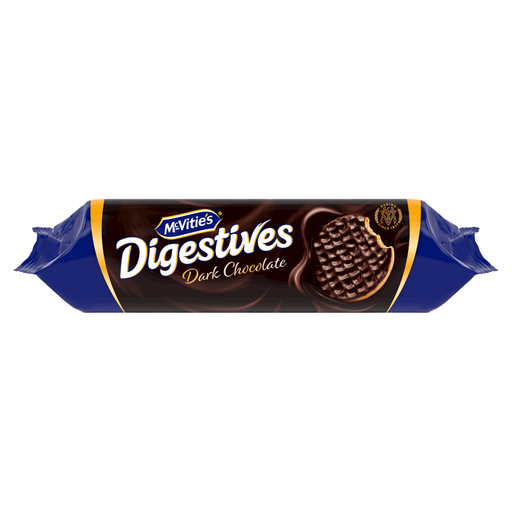
A biscuit-format option for the office tin. This 2 × 266g pack is a different size from the 2 × 316g Waitrose listing; check the current pack’s ingredients and allergen statement before sharing.
 No image available
Another biscuit-format choice for a shared tin, supplied as a 400g pack. Check the current pack for its biscuit count, ingredients and allergen statement.
 No image available
A boxed dark chocolate option when the plan is to share chocolates rather than refill a biscuit tin. Check the current pack for its centres, ingredients and allergen statement.
 No image available
A 200g truffle option for a planned shared chocolate treat, rather than a biscuit refill. Check the current pack’s ingredients, allergen statement and number of truffles when planning portions.
 No image available
A 90g bar for colleagues who specifically want a 70% dark chocolate option. It needs portioning for a shared tin; check the current pack’s ingredients and allergen statement.
Dark chocolate digestives fit when the tin is intended for biscuits at tea or coffee breaks. For a separate occasion centred on sharing chocolates, consider a filled selection or truffles; a plain bar needs portioning.
No. Cocoa percentage describes the chocolate’s composition, not its full ingredient or allergen profile. M&S states that its cited 85% bar is unsuitable for people with milk, nut or peanut allergies, so check the exact current pack.
Do not assume so. Lindt describes its EXCELLENCE 70% bar as made to a vegan recipe but says it may contain milk. Read the current pack’s allergen statement for the particular bar.
Use the listing to compare format and pack size, then check the physical pack’s current ingredients and allergen statement before sharing. This is particularly important when comparing similarly named products in different pack sizes.