Shoppers choosing a cocoa level
If you are weighing a 70%–74% bar against an 85% bar, start with the flavour you want, then compare the ingredients and nutrition information of the exact products.


Choose a cocoa percentage and format for how you plan to use the chocolate: a 70%–74% bar or cooking product is worth considering for eating or baking, while 85% suits shoppers seeking a more intense dark-chocolate flavour. For an online order, compare the exact product’s ingredients and nutrition information, then check the delivered pack and any proposed substitute against requirements such as allergens or cocoa percentage.
If you are weighing a 70%–74% bar against an 85% bar, start with the flavour you want, then compare the ingredients and nutrition information of the exact products.
Check the ingredients and precautionary allergen statement on the bar you receive. A dark or vegan-labelled recipe does not, by itself, establish suitability for a milk allergy.
If the chocolate is mainly for a recipe, look for a cooking chocolate or couverture intended for melting or baking rather than choosing an eating bar by cocoa percentage alone.
Decide whether the chocolate is for eating or baking, then compare exact products before setting your substitution preference.
| Priority | What to check | Your needs |
|---|---|---|
| Cocoa and sugars | Compare the stated cocoa percentage. Read sugars per 100g on each product’s nutrition panel; cocoa percentage alone does not give that figure. | I’m choosing between a 70%–74% product and an 85% bar, and want to compare the exact bars rather than assume they have the same ingredients or sugar content. |
| Ingredients and allergens | Read the ingredient list and precautionary allergen statement for the exact variant. Check the delivered pack again, particularly if the product is replaced. | A milk, nut, peanut, soya, sesame or gluten-related requirement means I need to assess the particular bar—not rely on the words ‘dark’ or ‘vegan’. |
| Substitutions | Check whether your retailer lets you decline substitutions. If an alternative arrives, compare its cocoa level, ingredients, allergens and pack size before accepting it. | I want the bar delivered to meet the requirements that made me choose it, even if the retailer considers another dark chocolate a suitable alternative. |
| Eating or baking | Look for a cooking or couverture designation when melting or baking is the main purpose. Check the cocoa percentage and pack size for your recipe. | For a cake or dessert, I’m looking for chocolate sold for cooking; for eating, a standard bar may be the format I want. |
| Storage and dates | Follow the pack’s storage instructions and check its date marking. GOV.UK distinguishes a best-before date, which concerns quality, from a use-by date, which concerns safety. | I need to know how to store the delivered chocolate and what its date marking means before deciding when to use it. |
Bars with different cocoa percentages can also have different ingredient lists and sugars per 100g. The percentage does not describe the whole product.
Use it to narrow your choice, then compare the nutrition panels and ingredients of the specific bars you are considering.
Lindt says its Excellence 85% bar is made to a vegan recipe but is not suitable for people with a milk allergy. Other listed dark bars also carry precautionary milk or nut statements.
If you must avoid an allergen, check the current statement for the exact product and any delivered substitute.
A replacement can differ in cocoa percentage, flavour, ingredients or allergens. Tesco says it may offer an alternative when substitutions are allowed.
Where the retailer offers a substitution setting, use it for an exact-product requirement. If a replacement arrives, inspect it before accepting it; Tesco’s stated process allows an unwanted substitute to be handed back to the driver or Click+Collect colleague.
Products sold specifically for cooking provide a clearer starting point for recipe use: Montezuma’s positions its 74% couverture for melting and baking, while M&S positions its 70% cooking chocolate for desserts.
Search for cooking chocolate or couverture when that is your main purpose, and confirm the cocoa percentage, pack size and allergens before ordering.
These examples show different cocoa levels and formats; check the current details of the particular product before adding it to an order.
Tesco lists a 90g Green & Black’s organic dark bar with 85% cocoa solids.
Ocado lists Divine’s 90g dark bar with at least 85% cocoa solids and Fairtrade cocoa and sugar.
Lindt lists its Excellence 85% dark chocolate in a 100g bar.
Montezuma’s offers dark-chocolate formats including a 74% organic couverture positioned for cooking.
Hotel Chocolat lists a 70% Dark Chocolate Slab Selector for direct ordering.
M&S lists a 72% Swiss Extra Fine eating bar and a separate 70% dark cooking chocolate.
These options include 85% eating bars, a 72% bar and a 70% cooking chocolate. Choose by intended use and check each product’s current pack information when your order arrives.
 No image available
A 90g bar for shoppers choosing 85% dark chocolate. The product information says it may contain nuts and milk; check the delivered pack if either matters to you.
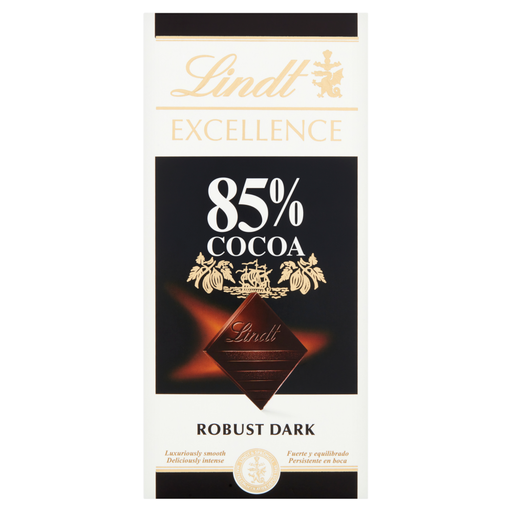 No image available
A 100g option for shoppers seeking an 85% bar. Lindt says this product is not suitable for people with a milk allergy; check its current pack statement for other allergens too.
 No image available
Another 100g bar in the 85% range. Its product information lists soya lecithins and says it may contain cereals containing gluten, milk, nuts and peanuts; compare that statement with the delivered pack.
 No image available
A 100g bar in the 70%–74% cocoa range. Its product information identifies soya and possible milk, nut, peanut and gluten-containing cereal allergens; check the current pack before use.
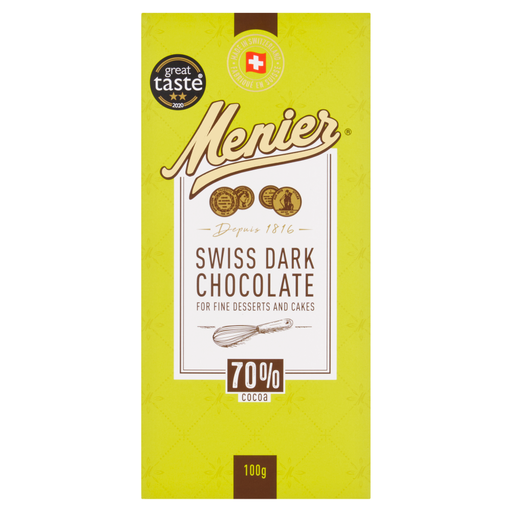 No image available
A 100g cooking chocolate for baking or melting rather than a general eating-bar choice. Its product information says it contains milk and may contain eggs, gluten and tree nuts; check the delivered pack.
Choose according to the cocoa level and intended use you want: the 70%–74% options here include eating bars and cooking products, while the 85% options are bars for shoppers seeking a more intense dark-chocolate flavour. Compare the exact products’ ingredients and sugars per 100g rather than treating cocoa percentage as a complete nutrition comparison.
Not automatically. Lindt explicitly says its vegan-recipe Excellence 85% bar is unsuitable for people with a milk allergy, while the Green & Black’s and Divine 85% listings carry milk-related precautionary statements. Check the statement on the exact pack you receive.
Check the replacement’s cocoa percentage, ingredients and allergens before accepting it if those details drove your choice. Under Tesco’s stated substitution process, an unwanted alternative can be handed back to the driver or Click+Collect colleague for a refund; check your own retailer’s process if ordering elsewhere.
Check the product identity, ingredients, allergen information, date marking and any storage instructions against your requirements. GOV.UK’s food-labelling guidance covers the food name, ingredient list, a date where required and applicable storage conditions; the delivered pack also lets you confirm that the product matches the one you intended to order.
A best-before date concerns quality, whereas a use-by date concerns safety, according to GOV.UK. Follow the chocolate’s stated storage instructions and check its condition when deciding whether to use it after a best-before date.