What should you check?
Start with the eater’s flavour preference, then choose a workable format. Treat allergen information and school rules as separate checks before packing the chocolate.
| Priority |
What to check |
Your needs |
| Cocoa flavour |
Compare the stated cocoa percentages of the exact bars. A 70% label can guide an initial flavour choice; check each recipe rather than assuming bars with the same percentage taste alike. |
I’d like a dark bar the eater will enjoy. If they already prefer a stronger cocoa taste, I can consider a 74% or 78% option. |
| Portion format |
Check whether the product is a full-size bar, a smaller standalone bar or divided pieces. Divine lists 35 g bars in a multipack; Hotel Chocolat identifies its 70% batons as 15 fingers. |
For a packed treat, a smaller bar or divided format may be easier to handle than a 90–100 g bar I would need to portion at home. |
| Allergens |
Read the current pack’s ingredients and any “may contain” statement for the relevant allergens. Lindt says its EXCELLENCE 70% bar has a vegan recipe but is not suitable for people with a milk allergy. |
I need to assess the exact bar for the eater’s allergies; “dark” or “vegan” on its own does not answer that question. |
| School rules |
Check the individual school’s packed-lunch and allergen-sharing rules before sending chocolate in. Check the product label as well as the school’s requirements. |
Before I pack a treat, I want to know whether it fits the school’s rules and the household’s allergy needs. |
| Intended use |
Distinguish a bar intended for carrying from chocolate chosen for a home baking project. Follow the storage directions on the specific pack. |
If the chocolate is for baking after school, I can choose for that recipe instead of looking for a ready-portioned snack. |
Brand and product-range references
These examples show how cocoa percentage, format and allergen wording differ between specific products; a brand name alone does not determine whether a bar is suitable.
Divine
Divine lists a 70% plain dark bar in a 90 g size and 35 g 70% bars in a multipack.
- The 35 g bars offer a smaller standalone format than the 90 g bar.
- Divine’s product pages warn that these bars may contain milk, gluten and nuts; check the exact pack for allergy suitability.
Lindt
Lindt EXCELLENCE includes 70% and 78% dark bars in 100 g formats.
- The two labelled cocoa percentages offer distinct options to compare for flavour preference.
- Lindt says its vegan-recipe EXCELLENCE 70% bar is not suitable for people with a milk allergy. Check the allergen wording on each variant separately.
Montezuma’s
Montezuma’s identifies FitzRoy as an organic 74% dark chocolate bar.
- The 74% label gives someone who already likes cocoa-led flavours a higher-cocoa option to consider.
- The FitzRoy product page says it may contain traces of milk, nuts and peanuts; its vegan description does not remove those warnings.
Hotel Chocolat
Hotel Chocolat lists 70% dark chocolate batons as 15 fingers, alongside other dark chocolate formats.
- The baton format offers divided pieces rather than one undivided bar.
- Check the current product’s ingredients and allergen declaration before choosing it for a school-day treat.
M&S
M&S lists a 70% dark chocolate product and a separate 72% Swiss Extra Fine dark chocolate.
- The 70% product can be considered for a home baking use rather than a ready-portioned packed treat.
- M&S says its 70% product is unsuitable for people with milk, nut or peanut allergies; check the physical pack for current information.
Dark chocolate options on Joybuy
These Joybuy bars offer 70–72% cocoa options for comparing a plain dark bar with a raspberry-flavoured alternative. They are full-size bars, so check the format if you need smaller pieces for a school-day treat.
 No image available
Morrisons The Best 72% Cocoa Dominican Republic Dark Chocolate 100g
A 72% cocoa bar to consider if the eater already prefers a higher-cocoa option. The 100 g bar needs portioning if only part is going in a packed treat; check the current pack’s allergen statement before use.
View on Joybuy
 No image available
Green & Black’s Dark 70% Chocolate 90g
A plain 70% dark chocolate option for someone starting with a lower cocoa percentage than the other bars shown here. The 90 g bar needs portioning for a smaller treat; check its current allergen statement before packing it.
View on Joybuy
 No image available
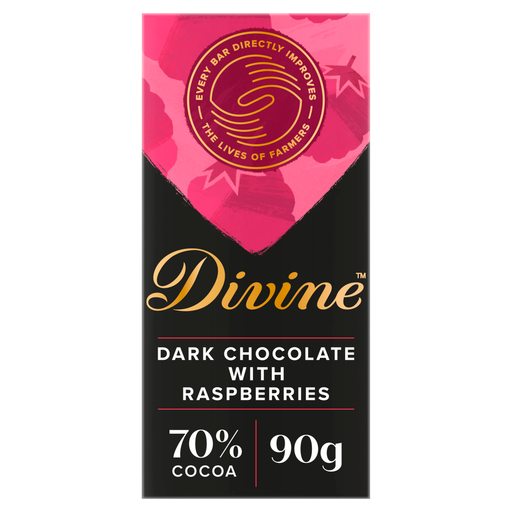
Divine Chocolate 70% Dark Chocolate with Raspberries 90g
This 70% bar is a raspberry-flavoured choice, not a plain dark chocolate bar. Do not assume it is milk-free or suitable for a milk allergy: check the exact current pack before buying or packing it for an allergy-sensitive setting.
View on Joybuy
Questions about school-day use
Should I choose 70%, 74% or 78% dark chocolate?
A plain 70% bar is a starting point if the eater is new to dark chocolate or prefers a less intense flavour. Consider 74% or 78% if they already enjoy a more cocoa-led taste, and compare the exact bars’ ingredients and nutrition panels rather than treating cocoa percentage as a complete description.
Does vegan dark chocolate suit someone with a milk allergy?
Not necessarily. Lindt says its vegan-recipe EXCELLENCE 70% bar is manufactured in a facility using milk and is not suitable for people with a milk allergy; Divine and Montezuma’s products also carry milk-related precautionary warnings. Check the current pack for the exact product and follow the eater’s allergy-management advice.
Can I put dark chocolate in a school packed lunch?
Check the individual school’s packed-lunch and allergen-sharing rules before packing it. Also read the exact chocolate’s current label: a dark or vegan description does not establish its suitability for an allergy-aware setting.
Which allergen details matter on the pack?
Check the ingredient list and any precautionary “may contain” statement for the allergens relevant to the eater. Use the current label for the exact variant rather than assuming another bar from the brand has the same ingredients or cross-contact warnings.
How should I store dark chocolate bought for school-day use?
Follow the directions on the specific pack. For example, M&S says its 70% dark chocolate should be stored in a cool, dry place away from sunlight; check other bars for their own instructions.


