Night-shift treat planners
You want a biscuit to take on a break alongside the food you have planned for your shift, rather than relying on it as a meal or an alertness aid.


For a ready-made shortbread to take on a night shift, choose by the chocolate type, the stated cocoa solids, the portion and the ingredients—not the word “dark” alone. The examined Sainsbury’s and M&S chunk varieties state 39% minimum cocoa solids in their chocolate; if a specified 70% cocoa chocolate matters to you, Lindt publishes a shortbread recipe using its 70% chocolate instead. Plan the biscuit as a break-time treat alongside other food, not as a meal or a way to stay alert.
You want a biscuit to take on a break alongside the food you have planned for your shift, rather than relying on it as a meal or an alertness aid.
You want to know how much chocolate the biscuit contains and whether the chocolate itself has a stated cocoa-solids percentage. Those figures measure different things.
You need to compare all-butter recipes with free-from options and read the exact pack for ingredients such as oats and soya.
Start with the biscuit and chocolate you actually want, then check the portion and ingredient list for the break you are planning.
| Priority | What to check | Your needs |
|---|---|---|
| Biscuit type | Check whether the base is shortbread or another biscuit, such as a digestive. Look for the chocolate type in the ingredient list rather than relying on the front-of-pack description. | If I specifically want shortbread, a dark-chocolate digestive will not make the same choice for me. |
| Chocolate detail | Read the percentage of chips or chunks separately from the cocoa-solids percentage in that chocolate. The examined Sainsbury’s and M&S chunk shortbreads each list 19% dark-chocolate chunks and 39% minimum cocoa solids in the chocolate, according to their product listings. | I want a stated cocoa percentage, rather than assuming that “dark” or a larger chunk percentage means 70% cocoa chocolate. |
| Break-time portion | Compare per-biscuit nutrition as well as pack size. Sainsbury’s lists 100 kcal per round for its chocolate-chip shortbread and 115 kcal per round for its Taste the Difference chunk variety; Waitrose lists 356 kcal per shortbread for its bakery four-pack. | For a work break, I want to know what one biscuit represents before packing a portion. NHS shift-worker guidance suggests planning food and considering smaller snacks or a light meal during breaks. |
| Ingredients and allergens | Read the current pack’s full ingredient and allergen information. M&S lists wheat, milk and soya in its examined all-butter rounds; Morrisons describes its examined vegan shortbread as free from gluten, milk and egg, but lists oats and soya. | Dark chocolate alone does not tell me whether a shortbread meets my ingredient requirements. |
The examined Sainsbury’s and M&S chunk shortbreads each list 19% chocolate chunks, while specifying 39% minimum cocoa solids in the chocolate. Neither figure says the finished biscuit is 70% cocoa.
Check the cocoa-solids statement for the chocolate separately from its share of the biscuit. If a particular cocoa percentage is essential, look for that figure on the chocolate label.
Waitrose’s examined bakery shortbread combines milk- and dark-chocolate chunks, while the examined M&S dark-chocolate rounds contain butter.
Check the whole ingredient and allergen list for the exact bakery item or packaged biscuit.
A bakery shortbread and a smaller packaged round can have different per-biscuit nutrition. The examined Waitrose four-pack lists 356 kcal per shortbread; the examined Sainsbury’s packaged rounds list 100 or 115 kcal each.
Compare the current label’s per-biscuit and per-100 g figures when deciding what to take to work.
These product-line examples show why a chocolate-chip description, a cocoa percentage and an ingredient claim need to be read separately.
Its examined own-label range includes an everyday chocolate-chip shortbread and a Taste the Difference chocolate-chunk shortbread.
Its examined all-butter Scottish shortbread rounds contain dark Belgian chocolate chunks.
The examined 150 g pack is an all-butter shortbread with dark-chocolate chips.
Its examined bakery four-pack combines Belgian milk- and dark-chocolate chunks.
The examined 130 g pack contains chocolate-chip shortbread rounds.
Its examined 150 g vegan chocolate-chip shortbread is a free-from alternative to the examined all-butter recipes.
The Joybuy option here is a dark-chocolate digestive twin pack, not shortbread. Consider it for a planned break only if a different biscuit base suits you.
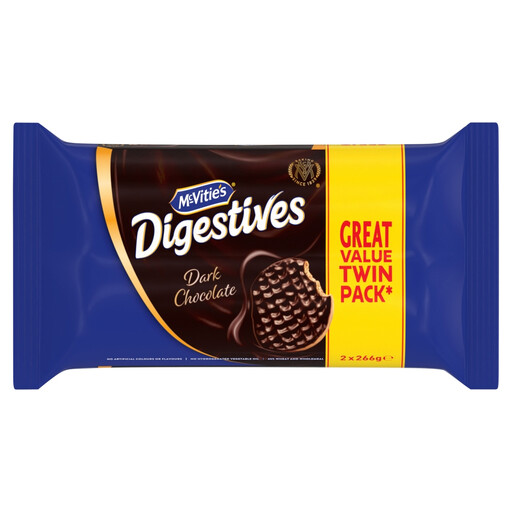 No image available
A packaged dark-chocolate biscuit for a break if you are open to a digestive rather than shortbread. The twin pack contains 2 x 266g; check the supplied pack’s ingredients and allergen information before eating.
No. Sainsbury’s examined chocolate-chunk shortbread lists 19% chocolate chunks, with 39% minimum cocoa solids in the chocolate. The first percentage is the chunks’ share of the biscuit; check the particular pack for the cocoa figure you want.
Do not plan shortbread as a meal replacement or an alertness strategy. NHS shift-worker guidance recommends bringing planned food and considering smaller snacks or a light meal during breaks.
No. Morrisons describes its examined vegan shortbread as free from gluten, milk and egg, but its ingredient information lists oats and soya. Check the supplied package against your particular requirements before eating.
Compare the current labels per biscuit and per 100 g, not pack count alone. Waitrose lists 356 kcal per shortbread for its examined bakery four-pack, while Sainsbury’s lists 100 or 115 kcal per round for its examined packaged varieties; these are different portion formats.
No such restriction follows from the Department for Education’s school-food guidance, which concerns food provided in state-funded schools in England, not an adult’s personal snack. Its guidance updated on 14 September 2026 described proposed changes from September 2027 as subject to parliamentary approval. Separate England retail-promotion rules cover certain products and businesses; they do not, by themselves, classify each shortbread listed here.