Hosts sharing with a mixed adult group
A plain single bar is easier to offer when guests generally like dark chocolate but you do not know whether they want added flavours or 100% cocoa. Ask about allergies before setting it out.


For a mixed group that enjoys dark chocolate, a plain 70% to 74% cocoa bar is a starting point; choose a flavoured or 100% cocoa bar when you know guests want it. Check the exact wrapper before sharing, because a vegan recipe does not establish suitability for someone with an allergy. If a school is supplying the food, ask whether school-food rules apply to the event rather than treating an independent street party as a school meal.
A plain single bar is easier to offer when guests generally like dark chocolate but you do not know whether they want added flavours or 100% cocoa. Ask about allergies before setting it out.
Check claims on the exact bar rather than treating “dark” or “vegan” as an allergen statement. Lindt, for example, says its EXCELLENCE 70% bar is made to a vegan recipe but is not suitable for people with a milk allergy.
Establish whether the school is supplying the food and which rules apply. The Requirements for School Food Regulations 2014 define chocolate as confectionery in the English school-food context; that does not make every community street party a school-food event.
Start with the guests’ flavour preferences, then check the exact bar’s ingredients and whether its size works for sharing.
| Priority | What to check | Your needs |
|---|---|---|
| Cocoa and flavour | Read the stated cocoa percentage and check whether the bar is plain or has added flavours. A 100% cocoa bar is a distinct choice from a 70% to 74% bar. | I know the group likes dark chocolate, but I am not sure they want fruit, nuts or an unsweetened 100% cocoa bar. |
| Allergens | Read the exact wrapper’s ingredients, allergen declarations and any “may contain” statement. Do not use a vegan claim in place of an allergy check. | Before I put a bar out to share, I need to know whether it meets each guest’s stated ingredient and allergy requirements. |
| Bar size | Check the net weight and whether it is one bar or a portioned pack. Divine lists a 90g 70% bar, Lindt a 100g 70% bar and M&S a 125g 72% bar; Hotel Chocolat’s 70% batons are a pack of 15 fingers instead. | One bar needs to suit the number of people likely to take a piece; a pack of fingers would be a different way to serve them. |
| Event setting | If a school in England is supplying the food, establish whether school-food rules apply before choosing chocolate. The Requirements for School Food Regulations 2014 classify chocolate as confectionery in that setting. | For a school-linked party, I need to confirm who is providing the food. An independently organised community party is not automatically a school-food event. |
A recipe can be vegan while the product carries a milk or nut precautionary statement. Lindt explicitly says its EXCELLENCE 70% bar is not suitable for people with a milk allergy.
Read the current wrapper and keep it available for guests. If someone has an allergy, confirm the exact product meets their requirements before offering it.
Montezuma’s describes its 100% Absolute Black bar as a particularly intense cocoa choice. It should not be treated as the same flavour choice as a plain 70% to 74% bar.
Choose 100% cocoa when the intended guests specifically want it; otherwise, ask about preferences before making it the only bar.
The Requirements for School Food Regulations 2014 define chocolate as confectionery for the relevant English school-food setting, not for every independently organised UK community event.
If a school is involved, confirm who supplies the food and which event rules apply. For an independent party, check any organiser or venue requirements separately.
Divine lists a plain 70% dark chocolate bar in a 90g format.
Lindt’s EXCELLENCE Dark 70% is a plain 100g bar with at least 70% cocoa solids.
M&S lists Swiss Extra Fine Dark Chocolate as a 125g bar with at least 72% cocoa solids.
Montezuma’s lists a FitzRoy 74% dark bar and a separate 90g Absolute Black bar made with 100% cocoa.
Hotel Chocolat lists 70% dark chocolate batons as a pack of 15 fingers.
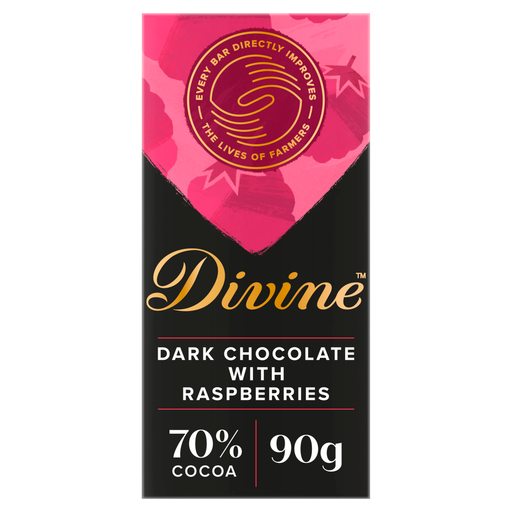
These single bars include two plain options for guests who prefer a conventional dark-chocolate flavour and one raspberry option for guests who want fruit added.
 No image available
This plain 100g bar is an option when guests want a stated 72% cocoa dark chocolate. The listing says it contains soya and may contain gluten, milk, nuts and peanuts; check the current wrapper before sharing with anyone who has an allergy.
 No image available
This plain 90g bar suits a group that wants a single dark chocolate bar rather than an added flavour. The listing states at least 70% cocoa solids and says it may contain milk and nuts, including almonds and hazelnuts; check the current wrapper before sharing with guests who have allergies.
 No image available
Choose this 90g bar when the intended guests specifically want raspberry with their dark chocolate, rather than a plain bar. Its product information conflicts on milk and vegan suitability, so do not rely on the vegan wording; check the exact wrapper before sharing.
Yes, as a starting point when the guests generally enjoy dark chocolate and you want a plain bar. Divine and Lindt list 70% single bars, while M&S lists a 72% bar. Ask about flavour preferences and check the exact wrapper for allergies before sharing.
No. Lindt says its EXCELLENCE 70% bar is made to a vegan recipe but is not suitable for people with a milk allergy. Check the current pack against the guest’s requirements rather than relying on a vegan claim.
Read the exact pack’s ingredient list, allergen declarations and any “may contain” statement, and leave the wrapper available for guests. GOV.UK’s allergen guidance explains that food businesses must provide information about regulated allergens; a dark-chocolate label still needs checking product by product.
Ask the school whether it is supplying the food under school-food rules before planning to serve it. The Requirements for School Food Regulations 2014 define chocolate as confectionery in the relevant English school-food context; they do not make an independently organised community street party a school-food event.