Start with a plain bar around 70% cocoa if you want the chocolate, tea and biscuit to share the spotlight: Montezuma's describes 70% as an approachable starting point, while Lindt suggests green tea with its 70% bar. Choose a higher-cocoa bar if you prefer a more intense, less sweet flavour, or a bar with inclusions if you want the chocolate to add texture or contrast. Check the ingredients and allergen wording on the exact pack, particularly if a vegan description matters to your choice.
Who might prefer each type?
Newer dark-chocolate drinkers
If you are moving from milk chocolate, a plain bar around 70% cocoa gives you a starting point for judging how much cocoa intensity you enjoy alongside tea and a biscuit. Montezuma's describes 70% as an approachable introduction to its dark range.
Fans of a stronger cocoa flavour
If you already prefer a less sweet, more pronounced cocoa flavour, consider a higher percentage deliberately rather than treating the number as a quality rating. Montezuma's and M&S both describe higher-cocoa chocolate as more intense and less sweet.
Allergy-aware shoppers
Read the ingredients and precautionary allergen wording on the chocolate and biscuit separately. The Food Standards Agency says a vegan label should not be used in place of allergen information.
What should you check before choosing?
Decide how prominent you want the chocolate to be, then check its texture and the exact pack information before settling on a pairing.
| Priority | What to check | Your needs |
|---|
| Cocoa intensity |
Compare the stated cocoa percentage and ingredient list. Montezuma's describes 70% as a starting point and 100% as strongly bitter; bars at the same percentage can still differ in flavour. |
I want to taste the tea and biscuit as well as the chocolate, or I already enjoy a stronger cocoa flavour and want the chocolate to stand out. |
| Texture and flavour |
Check whether the bar is plain or contains nibs, fruit or other additions. Montezuma's says its Lordy Lord bar contains 7% cocoa nibs for crunch. |
With a crisp or strongly flavoured biscuit, I may prefer plain chocolate. With a simpler biscuit, I might want the chocolate to add contrast. |
| Allergen information |
Read both products' ingredients and precautionary allergen statements on the exact packs. The Food Standards Agency says vegan labelling is not a substitute for allergen labelling. |
I need to assess the chocolate and biscuit separately before serving them to someone with an allergy. |
| Sourcing claims |
Look for a claim on the particular bar rather than assuming it applies to all dark chocolate. Divine states that ingredients in its cited 70% bar are Fairtrade where available. |
If sourcing influences my choice, I want to know what the claim actually says about this product. |
What can make a pairing less suitable?
-
Assuming more cocoa is always an upgrade
Montezuma's and M&S describe higher-cocoa chocolate as more intense and less sweet. That change may be welcome, but it can make the chocolate more prominent beside a delicate tea.
If you are unsure of your preference, try a bar around 70% before choosing a higher percentage for its stronger flavour.
-
Using “vegan” as an allergen shortcut
A vegan description does not settle whether a product is suitable for someone with a milk allergy. Lindt, for example, says its cited 70% bar is made to a vegan recipe but is not suitable for people with a milk allergy.
Follow the Food Standards Agency's advice to use the exact product's allergen information, including precautionary statements, rather than its vegan description.
-
Forgetting that the biscuit adds texture and ingredients
Cocoa nibs add crunch to Montezuma's Lordy Lord bar. Whether that works beside a crisp biscuit is a matter of the texture you want; the biscuit also needs its own allergen check.
Consider a plain bar if the biscuit already supplies enough crunch. If you choose a bar with inclusions, read both packs before serving.
-
Relying on an earlier online ingredient list
M&S warns that its online product information can change. An earlier listing may therefore differ from the pack you buy.
Check the pack's cocoa percentage, ingredients and allergen wording before eating or serving the chocolate.
Which brand ranges offer useful reference points?
These brand examples illustrate different cocoa levels, formats and label checks; the details apply to the cited products, not every bar made by each brand.
Lindt
Lindt suggests green tea as a pairing for its EXCELLENCE Dark 70% bar.
- Lindt describes this bar as balanced and lists 70% minimum cocoa solids.
- Although made to a vegan recipe, Lindt says it is not suitable for people with a milk allergy; its listing also carries precautionary warnings for nuts, soya and sesame.
Divine
Divine describes its 70% plain dark bar as bold in cocoa flavour with subtle sweetness.
- For this bar, Divine states that its ingredients are Fairtrade where available.
- The cited vegan-labelled bar has may-contain statements for gluten, milk and nuts.
Montezuma's
Montezuma's describes dark options from 70% through 100% cocoa, as well as a bar with cocoa nibs.
- Its Lordy Lord bar lists 7% cocoa nibs, an option when you want crunch from the chocolate.
- That bar contains soya and carries may-contain warnings for milk, nuts and peanuts.
Hotel Chocolat
Hotel Chocolat lists solid dark-chocolate formats, including 70% and 85% options.
- The different listed cocoa percentages offer a way to choose how pronounced you want the cocoa flavour to be.
- Check the ingredients and allergen panel for the exact product and format you select.
M&S
The cited M&S dark-chocolate bar states 70% minimum cocoa solids.
- Its product listing provides an ingredient list for checking the particular bar.
- M&S says this bar is not suitable for people with milk, nut or peanut allergies and advises reading the physical label because product information can change.
Dark chocolate options on Joybuy
These bars cover choices around 70% cocoa, two 85% options and a raspberry-flavoured option for a tea-and-biscuit break. The percentage and added flavour help narrow the choice; check each pack for the ingredients and allergen wording that matter to you.
 No image available
Morrisons The Best Dominican Republic 72% Dark Chocolate 100g
A 72% cocoa option if you want to try a little above the 70% starting point alongside tea and biscuits. Check the exact pack's ingredients and allergen wording before serving.
View on Joybuy
 No image available
Green & Black's 85% Dark Chocolate 90g
Consider this 85% bar if you deliberately want a more intense, less sweet cocoa flavour beside your biscuit. Read the exact pack's allergen warnings before serving.
View on Joybuy
 No image available
Morrisons The Best Ecuador 85% Dark Chocolate 100g
Another 85% cocoa choice for someone who wants the chocolate's flavour to be prominent, perhaps beside a plain biscuit. Check the pack for ingredients and allergen warnings.
View on Joybuy
 No image available
Green & Black's 70% Dark Chocolate 90g
A 70% cocoa bar to consider if you want to begin near the suggested starting point. Check the exact pack's milk and nut allergen wording before serving; do not rely on a general description of the bar.
View on Joybuy
 No image available
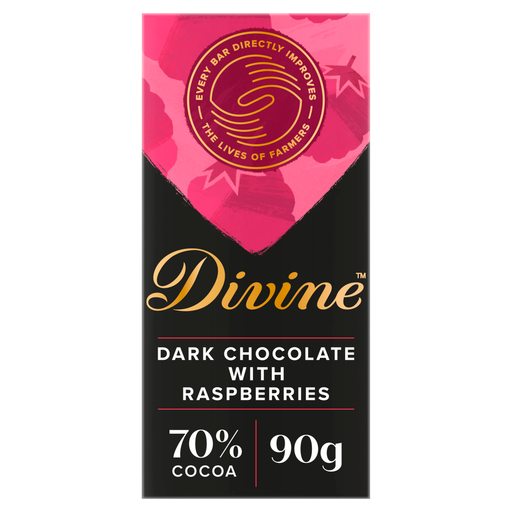
Divine Chocolate 70% Dark Chocolate with Raspberries 90g
Choose this 70% raspberry bar if you want a fruit flavour alongside a simpler biscuit. Check the exact pack for milk ingredients and allergen warnings rather than relying on a vegan description.
View on Joybuy
Questions about dark chocolate with tea and biscuits
Is a higher cocoa percentage always better with tea and biscuits?
No. Montezuma's and M&S describe higher-cocoa chocolate as more intense and less sweet, which suits a preference for a stronger chocolate flavour rather than every tea-and-biscuit pairing. A bar around 70% is a starting point if you are still deciding how much cocoa intensity you enjoy.
Does vegan dark chocolate suit someone with a milk allergy?
Do not assume so. The Food Standards Agency says vegan labelling should not replace allergen labelling. Lindt says its cited 70% bar is made to a vegan recipe but is not suitable for people with a milk allergy; check the exact bar's ingredients and precautionary wording.
What should I check before serving chocolate with biscuits?
Read the ingredient lists, declared allergens and any “may contain” statements on both packs. The Food Standards Agency explains that precautionary allergen wording communicates possible unintended allergen presence, so the chocolate's label cannot answer questions about the biscuit.
Should I choose plain chocolate or a bar with inclusions?
Choose according to the texture and flavour you want beside the biscuit. A plain bar keeps the combination simpler; a bar with inclusions adds another element. Montezuma's says the 7% cocoa nibs in its Lordy Lord bar add crunch, so consider whether you want that alongside a crisp biscuit and check both products' allergens.
Can I use an online listing to check ingredients?
Use a listing to narrow your options, then read the pack before eating or serving the chocolate. M&S warns that product information can change and advises customers to check the physical label.


