What should you check?
Start with the snack occasion and the child’s age, then check the exact pack if you are considering a packaged snack or chocolate.
| Priority |
What to check |
Your needs |
| Everyday snack |
Consider NHS examples such as fruit, plain unsweetened yoghurt, vegetable sticks with hummus, toast or crackers. Prepare food appropriately for the child’s age. |
For a regular between-meal snack, I want a practical option that fits guidance for young children, rather than choosing chocolate because it has a high cocoa percentage. |
| Nutrition label |
For chocolate, compare sugars and saturated fat on the same per-100g basis. Check ingredients as well as claims such as ‘no added sugar’. The Scientific Advisory Committee on Nutrition advises limiting energy-dense snacks high in saturated fat, salt or free sugars for ages 1 to 5. |
If I am considering an occasional chocolate treat, I need to know what the particular bar contains; a cocoa percentage alone cannot answer that. |
| Nuts and allergens |
Check for whole nuts or peanuts, nut inclusions and the exact pack’s allergen statement. The NHS says whole nuts and peanuts should not be given to children under 5 because of choking risk. |
My child needs a snack I can prepare and serve safely, with ingredients checked against any relevant allergies. |
| Food supplied at school |
Identify the UK nation, who supplies the food and the occasion. England’s 2014 school-food regulations define chocolate as confectionery, while Department for Education guidance identifies occasions outside the school-food standards. |
If I plan snacks for a school in England, I need to apply the rules for that setting rather than assume the same answer covers food brought from home or provision elsewhere in the UK. |
Dark-chocolate brand references
These products illustrate why cocoa content, ingredients and allergens need separate checks; brand inclusion is not a toddler-snack recommendation.
Lindt
Its EXCELLENCE range includes bars labelled with cocoa percentages, providing a concrete example for comparing cocoa content with the nutrition panel.
- Lindt Shop UK lists at least 78% cocoa solids and 17g sugars per 100g for the EXCELLENCE Dark 78% bar.
- The same product says it may contain hazelnuts, almonds, other nuts, milk and soya. Check the current pack for the child’s needs.
Montezuma’s
Its Absolute Black 100% cocoa bar shows what a no-added-sugar chocolate claim does—and does not—tell you when choosing a toddler snack.
- Montezuma’s describes this bar as 100% cocoa with no added sugar and made without milk.
- The brand says the bar may contain traces of milk, nuts and peanuts. ‘Made without milk’ is not a substitute for reading its allergen statement.
Hotel Chocolat
Its 85% dark slab and dark-chocolate assortment are examples of high-cocoa products aimed at chocolate shoppers, not evidence of toddler suitability.
- The brand lists an 85% dark slab, making its stated cocoa percentage clear.
- Its dark assortment includes pistachio and chilli flavours. Check the ingredients and form of the individual product rather than relying on the brand or cocoa percentage.
Joybuy snack options
These Ella’s Kitchen finger-food snacks offer packaged options for supervised snack occasions instead of dark chocolate. They are not substitutes for checking each pack’s age guidance, allergens and feeding directions, or for the everyday food examples given by the NHS.
 No image available
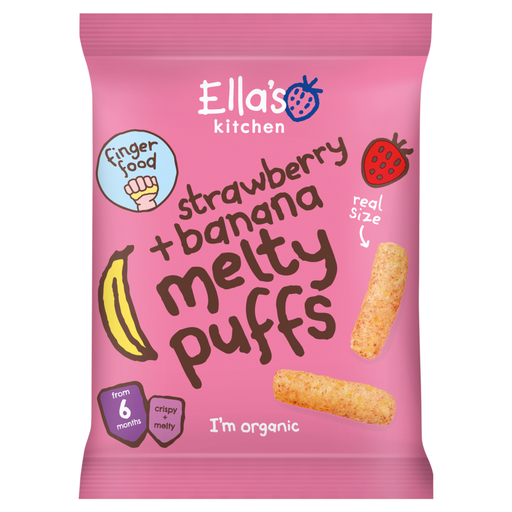
Ella’s Kitchen Organic Strawberry & Banana Melty Puffs, 20g
A finger-food option for a supervised snack. The product title says 6+ months, while its description says 7+ months, so check the age guidance on the actual pack before serving. Check the pack’s allergen information against the child’s needs.
View on Joybuy
 No image available
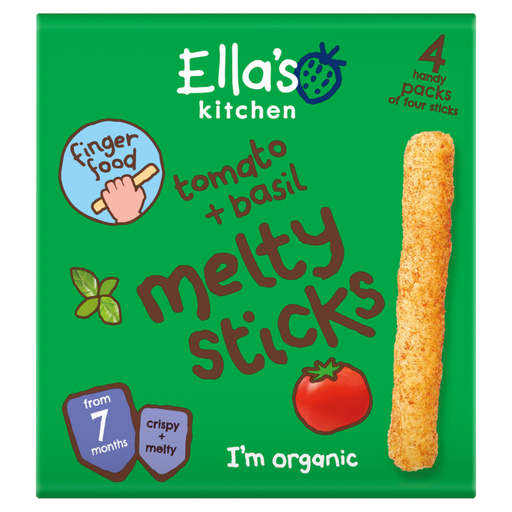
Ella’s Kitchen Tomato + Basil Melty Sticks, 7+ Months, 4 x 6g
The four individual 6g packs may be useful when packing a supervised finger-food snack. Follow the pack’s age and feeding directions, and check its allergen statement for the child’s needs.
View on Joybuy
 No image available
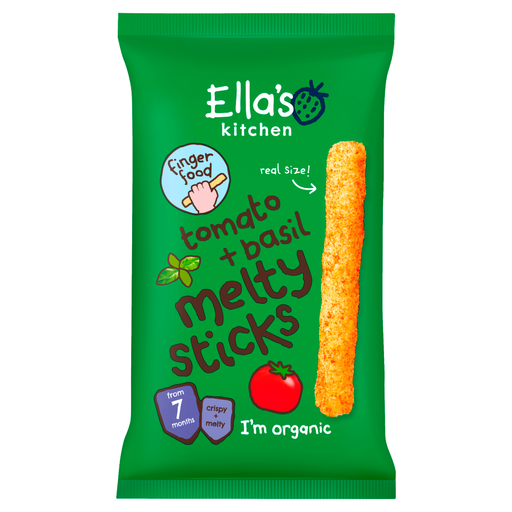
Ella’s Kitchen Tomato & Basil Melty Sticks, 7+ Months, 17g
A 17g finger-food pack labelled 7+ months. Serve with the child seated and supervised, following the pack’s feeding directions; check its allergen information before use.
View on Joybuy
Questions about toddler snacks and dark chocolate
Is dark chocolate an everyday snack choice for a toddler?
Choose from the NHS’s young-child snack examples for everyday occasions, such as fruit, plain unsweetened yoghurt, vegetable sticks, toast or crackers, rather than selecting chocolate by cocoa percentage. The Scientific Advisory Committee on Nutrition advises limiting energy-dense snacks high in saturated fat, salt or free sugars for children aged 1 to 5.
Does 70%, 85% or 100% cocoa change the toddler-snack decision?
A cocoa percentage alone does not make chocolate a routine toddler snack. For example, Lindt Shop UK lists 17g sugars per 100g for its EXCELLENCE 78% bar, while Montezuma’s describes its Absolute Black 100% cocoa bar as having no added sugar. Check the particular product’s nutrition panel, ingredients and allergens rather than assuming those two labels mean the same thing.
What if dark chocolate contains nuts?
Do not give whole nuts or peanuts to children under 5: the NHS identifies them as a choking risk. Check chocolate for nut inclusions and read its allergen statement; if the child has an allergy history, ask a GP or health visitor for advice relevant to that child.
How should a school in England assess a chocolate snack?
First establish whether the food falls under the school-food standards and check the applicable requirements. England’s Requirements for School Food Regulations 2014 define chocolate as confectionery, while Department for Education guidance says the standards do not apply to certain occasions, including celebrations and food occasionally brought in by parents or pupils. This does not establish the rules for nurseries or schools elsewhere in the UK.
Is an HFSS classification the same as England’s school-food treatment of chocolate?
No. England’s Food (Promotion and Placement) Regulations 2021 concern marketing and placement of certain less healthy foods, whereas the school-food regulations define chocolate as confectionery for a different framework. Do not assume a particular dark-chocolate product’s HFSS classification from its name or cocoa percentage.


