What should you check before buying?
Start with the job each ingredient has in the recipe, then check its form, cocoa percentage and pack information. A chocolate bar, chips and chewy toffee answer different baking needs.
| Priority |
What to check |
Your needs |
| Ingredient role |
Read whether the recipe calls for melted chocolate, chocolate pieces or a separate toffee centre or inclusion. Check that a chewy toffee product is intended for the role you have in mind. |
My recipe needs a toffee centre as well as chocolate, so I need to choose the ingredients separately. |
| Chocolate form |
For melting, check the product’s directions and the recipe method. For pieces, decide whether ready-made chips or a bar you can chop suits the required size. |
I want chocolate pieces throughout the biscuits without chopping a bar, so chips may be convenient. If the chocolate must be melted, I will check the heating directions. |
| Cocoa percentage |
Compare stated cocoa-solids percentages on the exact packs. Good Food says a higher stated content generally gives chocolate a deeper, more bitter taste; also consider the flavour the recipe calls for. |
A pronounced dark-chocolate flavour matters to me, but I do not want to assume every product labelled “dark” tastes alike. |
| Allergen information |
Read the current ingredients, highlighted allergens and precautionary statements for every ingredient. Check the exact product rather than relying on terms such as “dark” or “vegan”. |
Everyone eating the biscuits needs ingredients that fit their allergy requirements, including the chocolate and any separate toffee. |
Relevant brand references
These examples show how product descriptions distinguish cooking chocolate, chips and ready-to-eat toffee. Check the exact pack and recipe rather than treating a brand name as a specification.
Sainsbury's Taste the Difference
Sainsbury’s lists a 70% dark cooking-chocolate bar and separate 70% dark chocolate chips for sweet recipes.
- The 100g cooking bar is labelled 70% cocoa solids and has microwave and hob melting directions.
- The bar and chips have different ingredient and precautionary allergen information; check the pack you intend to use.
Lindt
Waitrose & Partners describes Lindt Intense Cooking Chocolate as a 70% dark cooking-chocolate bar for baking, including chocolate-chip cookies.
- The retailer identifies both its cocoa percentage and intended baking use.
- Inspect the current pack for its ingredients and allergen information before using it.
Food Thoughts
Food Thoughts offers 70% dark chocolate chips described for cookies and desserts.
- The chip format offers pieces without chopping a bar; the listing also describes them as suitable for vegan and vegetarian diets.
- Its precautionary statement lists possible contact with gluten-containing cereals, milk, nuts, peanuts, sesame and egg. Dietary labelling does not settle allergy suitability.
Tesco
Tesco lists dark cooking chocolate, while Tesco Real Food also shows how to use a distinct toffee centre in a chocolate cookie recipe.
- The cooking-chocolate listing describes melting use and names cocoa mass, sugar, cocoa butter and soya lecithins among its ingredients.
- Check the exact chocolate pack for the cocoa percentage your recipe calls for; the cookie recipe does not establish that any particular ready-to-eat toffee suits every bake.
M&S
M&S describes its Toffee Assortment as traditional chewy toffee in several flavours, rather than as high-cocoa baking chocolate.
- The product description identifies its chewy confectionery format for shoppers considering a separate toffee ingredient.
- Check whether the chosen flavour and texture suit your recipe; the assortment is not a like-for-like 70% dark-chocolate ingredient.
Dark chocolate options on Joybuy
These options cover dark chocolate bars and chips for biscuit recipes. If your recipe also calls for a toffee centre or pieces, choose that ingredient separately.
 No image available
Menier Dark Cooking Chocolate 70% Cocoa 100g
A cooking-chocolate bar to consider when the biscuit recipe calls for dark chocolate to be melted or chopped. The title states 70% cocoa and a 100g bar; check the recipe’s required method and the current pack’s directions.
The product information flags milk and possible egg, gluten and tree-nut allergens. Check the current pack against household allergy needs.
View on Joybuy
 No image available
Green & Black's Dark Chocolate 70% 90g
This 70% dark chocolate bar is an option when the stated cocoa percentage matters to the recipe. Before choosing it for melted chocolate or biscuit pieces, check that the bar suits the recipe method.
The product information flags possible almonds, hazelnuts and milk. Read the current pack if these allergens matter in your household.
View on Joybuy
 No image available
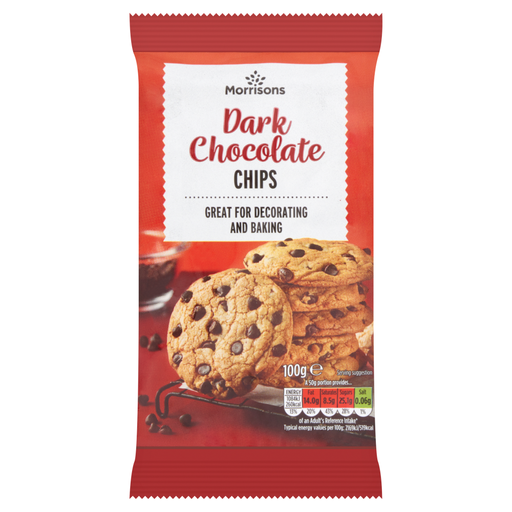
Morrisons Dark Chocolate Chips 100g
These chips offer chocolate pieces without chopping a bar. If the biscuit recipe specifies a cocoa percentage, compare that requirement with the current pack rather than assuming these chips match a 70% bar.
The product information flags soya and possible milk. Check the current pack against household allergy needs.
View on Joybuy
Questions about baking with chocolate and toffee
Does “dark” always mean high-cocoa chocolate?
No. Check the cocoa-solids percentage stated on the exact pack. Good Food notes that chocolate with a higher stated cocoa content generally tastes deeper and more bitter, so the percentage can help you judge whether its flavour fits the recipe.
Should I buy a bar or chocolate chips for biscuits?
Choose by the recipe method: a bar can be broken up for melting or chopped into pieces, while chips avoid chopping when you want pieces in the dough. Check the particular product’s directions and cocoa percentage; Sainsbury’s lists melting directions for its 70% cooking bar and describes its 70% chips as suitable for melting or use as pieces.
Can ordinary toffee replace 70% dark chocolate?
Not as a like-for-like ingredient. Tesco Real Food’s chocolate-and-toffee cookie recipe uses a gooey toffee centre as a separate component, while M&S describes its Toffee Assortment as chewy confectionery. Use toffee where your recipe calls for a centre or inclusion, and choose chocolate separately for its chocolate component.
What allergen information should I check?
Read the current pack’s ingredients, highlighted allergens and precautionary statements for every ingredient you plan to use. Similar-looking dark chocolates can carry different declarations, and a vegan label does not establish suitability for someone with a milk allergy.
How should I melt a dark cooking-chocolate bar?
Follow the directions for the exact bar. Sainsbury’s 70% cooking bar gives microwave and hob methods, including breaking up the bar first; do not assume those instructions apply unchanged to a different chocolate product.


